
Battery, Alternator, or Starter: Telling Apart Three Electrical Culprits
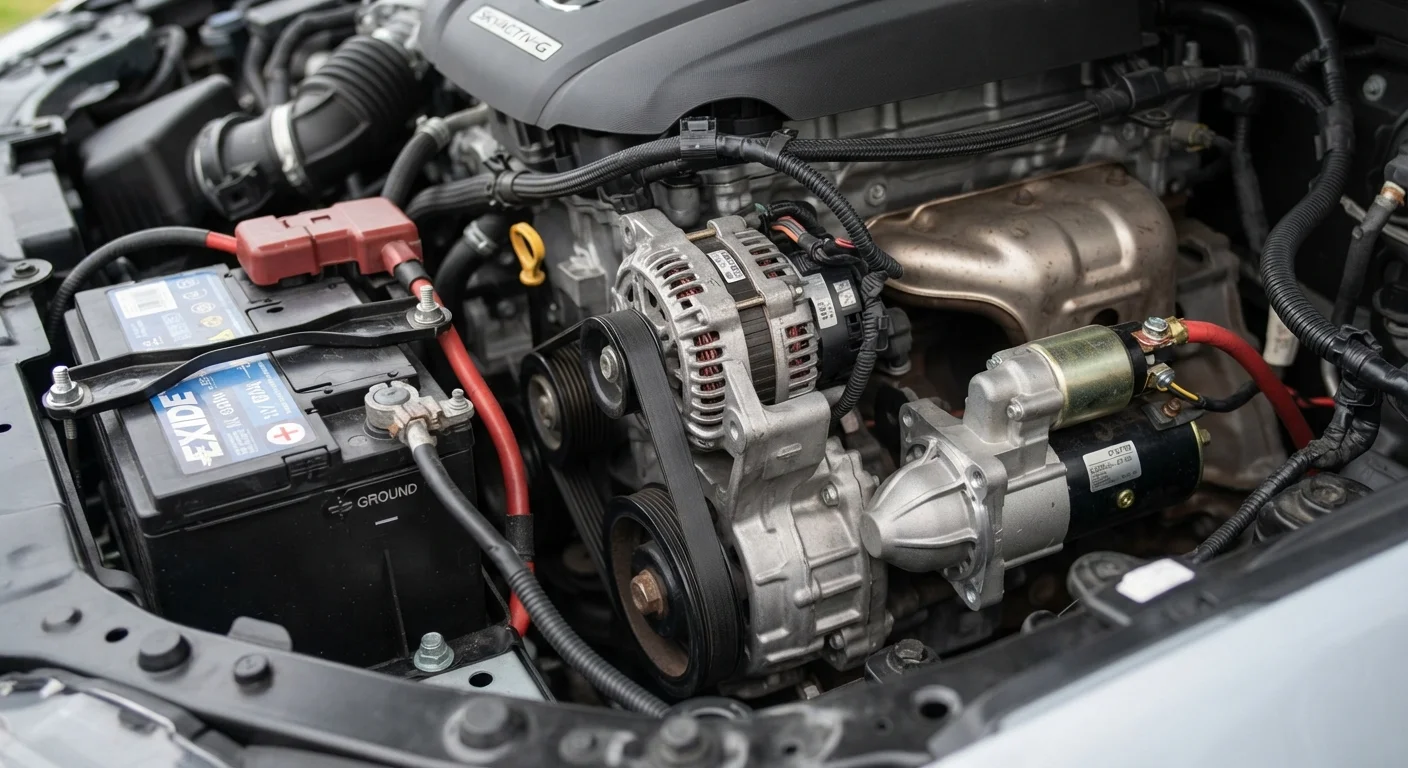
Photo credit: readerspanel.com
In this article
When your car won't start or keeps dying, the cause isn't always the battery. Learn how these three components differ and how to diagnose which one is failing.
Why these three get confused
Battery, alternator, and starter all sit inside the same electrical loop that gets your car running. When one fails, the symptoms often overlap: the engine won't crank, the lights behave strangely, or the car dies without warning. That overlap is why drivers frequently replace the wrong part first.
Understanding what each component actually does is the fastest way to narrow down the problem before spending money.
The battery stores electrical energy and delivers it on demand, most importantly during startup. The alternator is a generator driven by the engine's serpentine belt; it recharges the battery while the engine runs and powers the car's electronics during normal operation. The starter is a small but powerful electric motor that spins the engine over so combustion can begin.
Each one fails in a different way, and those differences show up in specific symptoms.
Reading the symptoms
| Battery | Alternator | Starter | |
|---|---|---|---|
| Primary function | Stores and delivers electrical energy | Recharges battery; powers electronics while running | Cranks the engine to start combustion |
| Common failure symptom | Slow crank, dim lights, won't start after sitting | Battery warning light, car dies while driving | Single click or silence; battery reads fine |
| Jump-start response | Starts with jump, dies again soon | Starts with jump, dies again after driving | Jump-start has no effect; engine won't crank |
| Typical lifespan | 3 to 5 years | 80,000 to 150,000 miles | Often full vehicle life |
| DIY testable? | Yes, with a voltmeter | Yes, with engine running voltmeter test | Symptom-based only; draw test needs a mechanic |
| Cold weather effect | Exposes existing weakness | Minimal direct effect | Harder starts strain a marginal unit |
A battery that can no longer hold a charge typically produces slow, labored cranking, especially after the car has sat overnight in cold weather. The headlights and interior lights may appear dim before you even turn the key. Jump-starting the vehicle gets it running, but the problem returns within a day or two if the battery itself is the issue.
An alternator problem often hides behind a battery warning light on the dashboard. The battery drains because the alternator is not replenishing it while the engine runs. A car with a failing alternator may start fine in the morning, drive for twenty minutes, then die at a stoplight as the battery runs out of reserve power. Headlights may dim noticeably at idle, then brighten when you rev the engine.
A starter failure usually announces itself with a single loud click when you turn the key, or with complete silence. The battery is fully charged, the lights work normally, but the engine will not crank at all. In some cases, the starter engages intermittently: it works one time, then refuses the next. Heat can worsen a failing starter, so a car that starts cold but not after a warm engine soak is a common pattern.
How to test before you replace
Auto parts stores and most repair shops can test battery voltage and alternator output quickly, often at no charge. A fully charged 12-volt battery should read between 12.4 and 12.7 volts at rest. With the engine running, alternator output should fall between roughly 13.5 and 14.7 volts at the battery terminals. A reading below that range with the engine running points toward the alternator.
Starter current draw testing requires more specialized equipment and is best left to a mechanic. However, the symptom pattern described above (normal battery voltage, no crank, single click) is a reliable starting point for that conversation.
Test the whole system, not just one part
When a car won't start, have the battery, alternator, and starter evaluated together rather than replacing components one at a time. A charging system test checks battery reserve capacity, alternator output voltage, and starter draw in a single session. This approach costs less than replacing the wrong part and reinstalling your old one.
If your battery tests as weak, ask the shop to also test the alternator before installing a new battery. A battery that fails within weeks of replacement is often a sign that the alternator was undercharging it the whole time.
Age and wear benchmarks
Most car batteries last three to five years under normal use, though hot climates can shorten that to two to three years because heat accelerates internal corrosion. Cold weather does not kill batteries so much as expose weaknesses that already exist.
Alternators typically last 80,000 to 150,000 miles, though this varies by vehicle and usage. Signs of wear include a whining or grinding noise from the accessory belt area, which may indicate worn internal bearings.
Starters are generally durable, with many lasting the life of the vehicle. High-mileage engines that are harder to crank, or vehicles that do frequent short trips with many start cycles, tend to wear starters faster.
Keeping a record of when each component was last tested or replaced helps you recognize when a failure is age-related versus unexpected. A mechanic can inspect all three during routine maintenance without a full diagnostic visit.

Author
Automotive Life Editorial Team
Automotive Life Editorial Team is the collective byline for our editorial team and contributor network. Articles published under this byline or an editorial pen name are researched, written, and reviewed according to our editorial standards for clarity, consistency, and independence before publication.
View all articles →