
Door Hinges, Strikes, and Latches: A Homeowner's Reference Guide
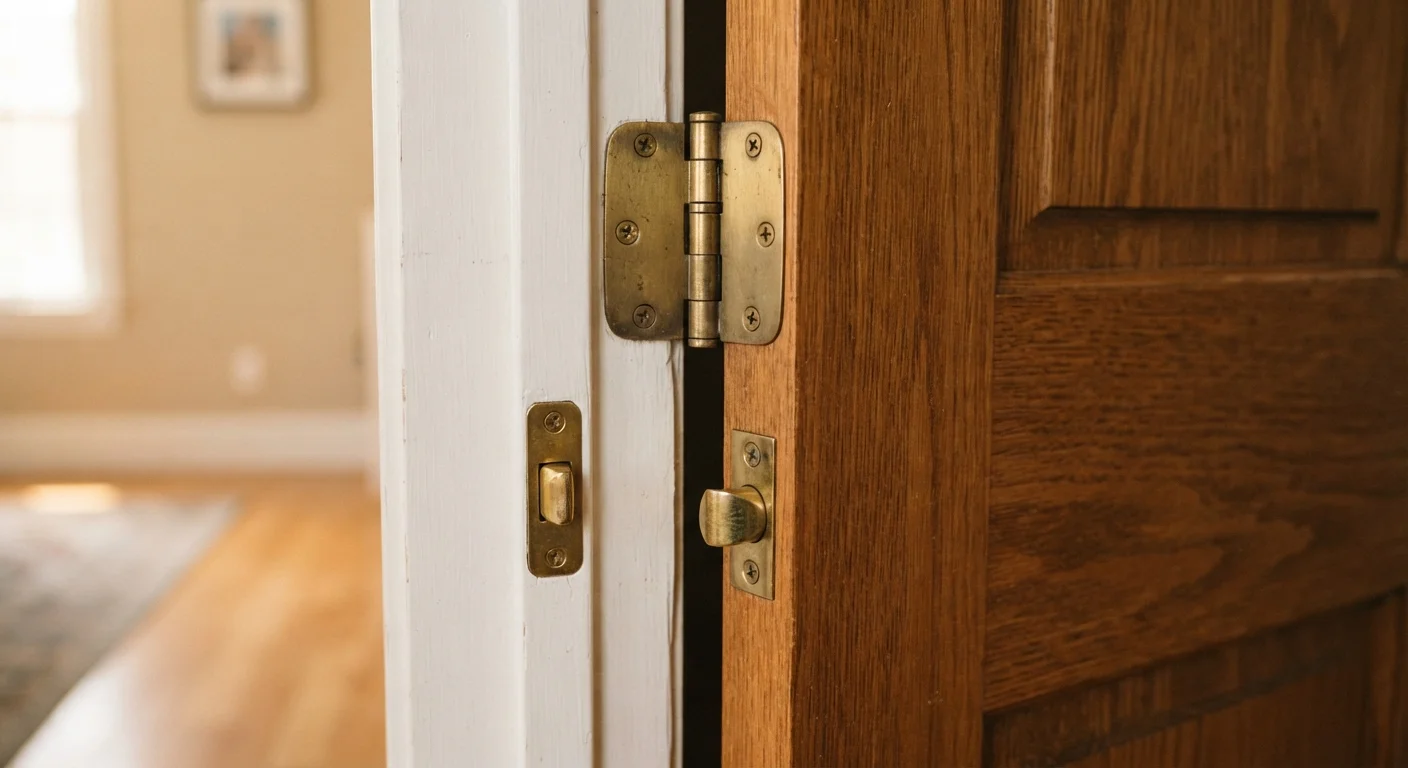
Photo credit: readerspanel.com
In this article
A quick-reference guide to interior door hardware: what each component does, standard sizes, and what to check when a door won't latch or close flush.
What each component does
An interior door relies on three hardware elements working together: hinges, the latch assembly, and the strike plate. When a door sticks, refuses to latch, or swings open on its own, one of these three is usually the cause.
Hinges bear the full weight of the door and hold it in alignment with the frame. Most interior doors in US homes use butt hinges, mortised (set into shallow recesses) in both the door edge and the door jamb. A standard interior door has two hinges; taller or heavier doors (solid-core, 80 inches or more) typically get a third hinge centered between the other two.
The latch assembly sits inside a bored hole in the door and includes the latch bolt, the spindle that connects to the knob or lever, and the face plate on the door edge. When you turn the handle, the spindle retracts the spring-loaded latch bolt so the door can swing free.
The strike plate is mortised into the jamb on the opposite side from the hinges. The latch bolt passes through its opening and seats inside a pocket cut into the jamb wood. A properly fitted strike plate sits flush with the jamb face; one that protrudes or sits recessed causes misalignment.
See our beginner's home repair overview if you are new to working with door hardware.
Standard sizes and measurements
Knowing the correct dimensions before you buy replacement hardware saves a trip back to the store.
| Standard butt hinge size (interior doors) | 3.5 inches (Common US residential specification) |
| Standard door latch backset options | 2-3/8 in. or 2-3/4 in. (Most US residential locksets) |
| Strike plate screw length (recommended) | 3 inches (General carpentry guidance for security) |
| Typical hinges per interior door | 2 to 3 (Standard US residential framing practice) |
| Standard door bore diameter (knob or lever) | 2-1/8 inches (Standard US residential bore size) |
For hinges, the 3.5-inch butt hinge fits the vast majority of interior doors. Exterior and heavier doors often use 4-inch hinges. The finish (satin nickel, oil-rubbed bronze, polished brass) should match the other hardware on the same door.
For latch sets, measure the backset before removing the old hardware. Hold a tape measure flat against the door face and measure to the center of the existing bore hole. If you get 2-3/8 inches, that is the short backset; 2-3/4 inches is the long backset. Many latch sets are adjustable between the two, but confirm before purchasing a replacement.
The door bore diameter is almost always 2-1/8 inches for the knob or lever hole, and 1 inch for the edge bore where the latch face plate sits. These dimensions are compatible with most replacement hardware sold in the US.
Diagnosing common door problems
Most door problems fall into a few categories, and the hardware component responsible is usually identifiable without specialized tools.
Door won't latch
Watch where the latch bolt lands as the door closes. If it hits below or above the strike plate opening, the door has shifted out of alignment, or the strike plate has moved. A small amount of misalignment (1/8 inch or less) can often be corrected by filing the strike plate opening slightly. Larger misalignment usually points to loose hinge screws or a hinge that has pulled away from the jamb.
Loose hinge screws are the single most common cause of a door that won't close flush. Tighten the screws first. If the screw holes are stripped and won't hold, remove the screw, fill the hole with a wooden toothpick and wood glue, let it cure fully, then reinstall the screw.
Door swings open or closed on its own
This usually means the door is not hanging plumb. Check the hinge leaves: if one is not fully seated in its mortise, the door will bind or drift. A hinge leaf that protrudes slightly (a condition called hinge-bound) can be corrected by deepening the mortise with a sharp chisel, or by adding a thin cardboard shim behind the leaf to push it forward.
Latch sticks or doesn't retract smoothly
The latch bolt can bind if paint or debris has built up around the face plate. Clean around the latch face plate and test the action with the door open. If the latch retracts freely by hand but sticks when the door closes, the strike plate opening is likely too tight or misaligned. Multiple layers of paint inside hinge mortises and around the strike plate are a frequent culprit after a repaint; scoring the paint line with a utility knife before assuming hardware failure can save you unnecessary work.
For related seasonal issues, the weatherstripping maintenance guide covers how door gaps and drafts interact with hardware alignment.
When to call a professional
Most hinge, latch, and strike plate repairs are within reach for a homeowner with basic tools. The essential home repair toolkit guide covers what you need on hand, and the pre-project checklist helps you prepare before starting.
Contact a licensed contractor or carpenter if the door frame itself is damaged, if the rough opening has shifted due to settling or moisture, or if you notice cracks in the surrounding drywall suggesting structural movement. Hardware fixes will not hold if the underlying frame is out of square. Work involving structural framing may require a permit depending on your local building code; verify requirements with your local building department before proceeding.
For styling ideas once hardware is in order, the home decor ideas hub includes door and trim guidance by room.

Author
Home & Garden Editorial Team
Home & Garden Editorial Team is the collective byline for our editorial team and contributor network. Articles published under this byline or an editorial pen name are researched, written, and reviewed according to our editorial standards for clarity, consistency, and independence before publication.
View all articles →