
Brake Fluid, Power Steering Fluid, and Differential Oil: Fluids Drivers Rarely Think About
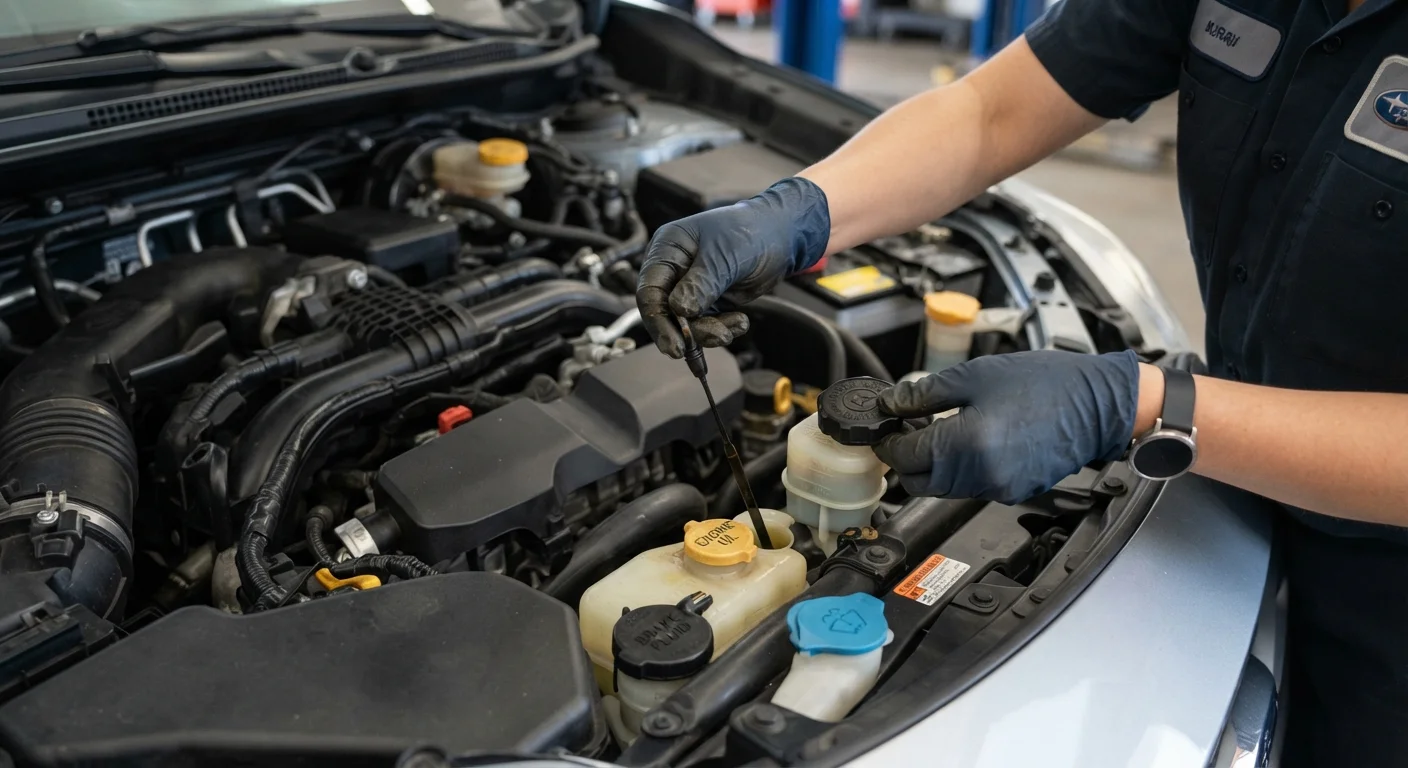
Photo credit: readerspanel.com
In this article
Beyond oil and coolant, several other fluids quietly keep your car safe. Here is what each one does and when it typically needs attention.
Why these fluids get ignored
Most drivers know to watch the oil level and fill the windshield washer fluid. Brake fluid, power steering fluid, and differential oil rarely come up in casual conversation, and many service reminders never mention them. That silence is partly practical: these fluids can last tens of thousands of miles before needing attention. But when they do degrade or run low, the consequences range from spongy brakes to a seized rear axle.
Your owner's manual is the authoritative source for service intervals on your specific vehicle. Reading the maintenance sections of your owner's manual can save you from guessing at intervals that vary widely between models.
| Brake fluid type | Check reservoir cap for DOT rating (DOT 3, 4, or 5.1 are most common) |
| Typical brake fluid flush interval | Every 2 to 5 years, or per manufacturer spec |
| Power steering fluid check | Inspect level and color every 50,000 miles |
| Differential fluid change interval | Commonly 30,000 to 60,000 miles; shorter under heavy use |
| Limited-slip differentials | Require friction modifier additive; standard gear oil causes chatter |
| Electric power steering | No hydraulic fluid reservoir; steering assist is motor-driven |
Brake fluid
Brake fluid transmits the force from your brake pedal through the hydraulic lines to the calipers and wheel cylinders that stop the car. Without sufficient pressure, braking distance increases. Without clean fluid, internal corrosion can damage calipers and master cylinders.
The property that matters most is the fluid's boiling point. Brake fluid is hygroscopic, meaning it absorbs moisture from the air over time. Absorbed water lowers the boiling point. Under hard braking, degraded fluid can boil inside the lines and create vapor, which compresses where liquid does not. Drivers describe this as a soft or spongy pedal that sinks toward the floor.
Most manufacturers specify a flush interval somewhere between two and five years, though some high-mileage or heavy-use vehicles may need it sooner. A simple test strip, available at auto parts stores, can measure moisture content. If moisture levels are high, a flush is warranted regardless of calendar time.
DOT rating (short for Department of Transportation specification) appears on the reservoir cap and the fluid bottle. Using the wrong DOT rating can damage seals. Always match what your owner's manual specifies.
Power steering fluid
Hydraulic power steering systems use pressurized fluid to reduce the effort needed to turn the wheel. The fluid also lubricates the pump and rack seals. Over time it picks up metal particles and degrades chemically, which accelerates seal wear and can eventually cause the pump to whine or fail.
Vehicles with electric power steering (increasingly common since the 2010s) have no fluid reservoir for steering assist. If your car has a separate power steering reservoir under the hood, it uses hydraulic fluid.
Checking the level takes about thirty seconds: locate the reservoir (typically labeled with a steering wheel icon), look at the min/max markings on the translucent plastic body or on the dipstick attached to the cap, and note the color. Fresh fluid is typically clear to light amber. Dark brown or black fluid with a burnt smell signals degradation.
Many manufacturers do not specify a fixed change interval for power steering fluid, but a general guideline from service technicians is to inspect it every 50,000 miles and flush it if the color or smell is noticeably off. Simple checks you can do between service visits include exactly this kind of quick visual inspection.
Differential oil
The differential is the gearset that splits power between the two wheels on an axle and allows them to rotate at different speeds during turns. It sits in a sealed housing and bathes in gear oil, which handles extreme pressure between metal gear teeth.
Front-wheel-drive vehicles typically combine the differential with the transmission in a transaxle. Rear-wheel-drive and four-wheel-drive vehicles have a dedicated rear differential, and 4WD vehicles often have front differentials and a transfer case as well, each with its own fluid.
Differential oil degrades with heat and contamination. Neglected oil thickens, loses its extreme-pressure additives, and allows metal surfaces to wear. The first symptom is often a whining or howling noise under load, by which point damage may already be underway.
Service intervals vary considerably. Many manufacturers specify a change somewhere between 30,000 and 60,000 miles for normal use, with shorter intervals for towing, off-road driving, or repeated water crossings. Limited-slip differentials require a fluid with a friction modifier additive; using standard gear oil in one of these causes chatter and shudder in turns.
Routine maintenance that prevents costlier repairs covers how differential neglect compares in cost to other deferred service items. A differential fluid change is one of the lower-cost services a shop performs; rebuilding a failed differential is not.
Putting it into practice
None of these fluids require specialized tools to check. A visual inspection of the power steering reservoir and a look at the brake fluid reservoir take under two minutes during any oil change. For the differential, checking the level requires removing a fill plug, which is a straightforward task for a shop during any undercar service.
The most reliable approach is to pull your owner's manual, note the specified intervals for each fluid, and add them to whatever reminder system you use for oil changes. Other overlooked maintenance items follow the same logic: degradation is gradual and easy to miss until something fails.
This article provides general vehicle maintenance information for educational purposes only. Service intervals, fluid specifications, and procedures vary by vehicle. Consult your owner's manual and a qualified mechanic for guidance specific to your car.

Author
Automotive Life Editorial Team
Automotive Life Editorial Team is the collective byline for our editorial team and contributor network. Articles published under this byline or an editorial pen name are researched, written, and reviewed according to our editorial standards for clarity, consistency, and independence before publication.
View all articles →