
Building a No-Equipment Routine That Actually Sticks
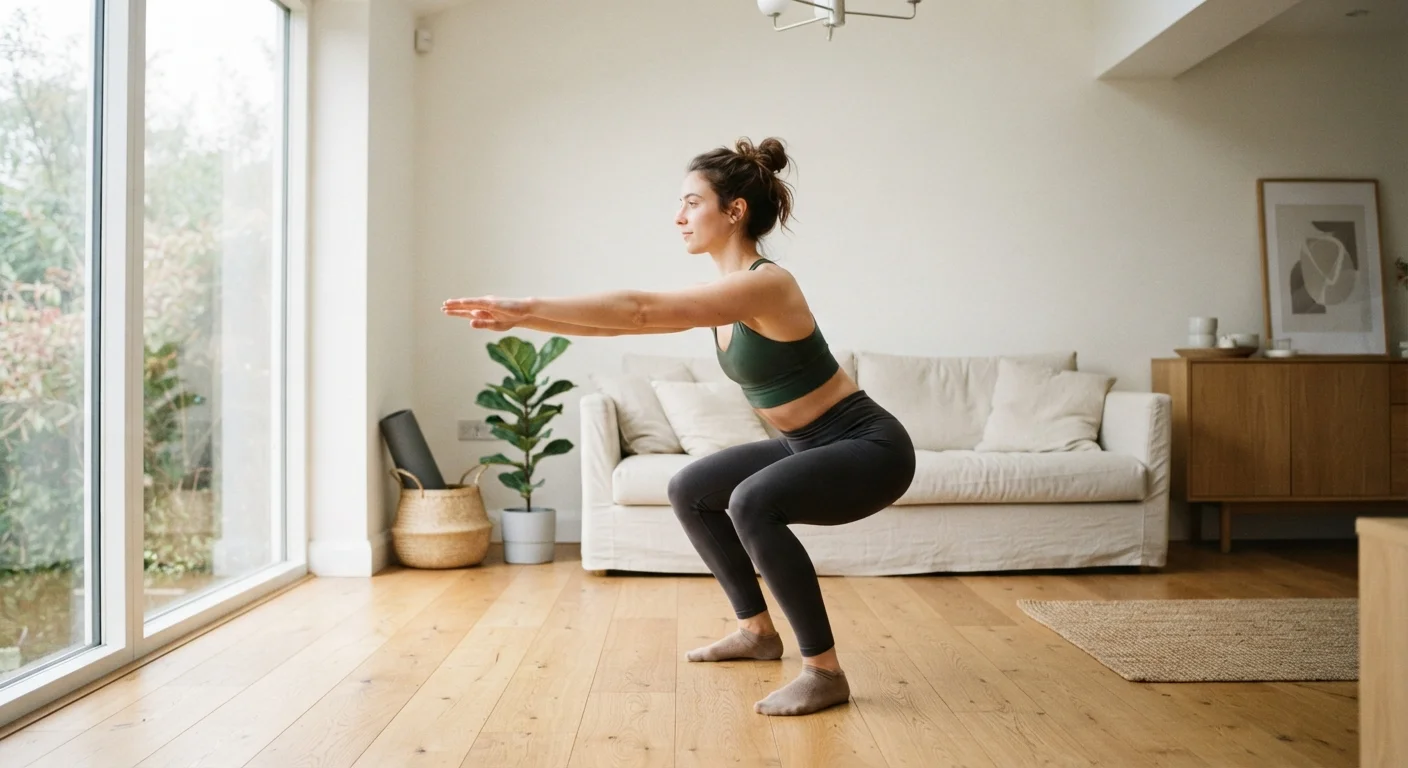
Photo credit: readerspanel.com
In this article
No gym membership needed. Learn how to structure a bodyweight routine at home that is sustainable for busy adults with limited time.
Key Takeaways
- Bodyweight training at home can build meaningful fitness when structured consistently.
- Short sessions done regularly outperform long sessions done sporadically.
- Scheduling your workout like an appointment dramatically improves follow-through.
- Progressive overload, adding reps or slowing tempo, applies to bodyweight training too.
- Recovery and sleep are part of any effective routine, not optional extras.
Why no-equipment routines fail, and how to prevent it
Most people who start a bodyweight routine quit within the first few weeks. The problem is rarely motivation. It is structure. A vague plan to "do some push-ups" leaves too many decisions open in the moment, and when life is busy, open decisions become skipped sessions. Understanding why routines fall apart early is the first step toward avoiding those same patterns.
The routines that last share a few features: a fixed time slot, a defined movement list, and a clear way to progress. Without those three elements, even a well-intentioned plan drifts.
It also helps to right-size your expectations from the start. A 15-minute session four days a week produces real results. Short workouts are not a compromise; they are a legitimate strategy for people with limited time. Building from there is far easier than burning out on an ambitious schedule and starting over.
Anchor your routine to an existing habit
One of the most reliable ways to make exercise stick is to attach it to something you already do every day, such as right after your morning coffee or immediately before your lunch break. Behavioral research consistently finds that habit stacking, linking a new behavior to an established one, shortens the time it takes for the new behavior to feel automatic.
How to structure your routine
A sustainable home routine covers three movement categories: pushing, pulling, and lower body. Planks and similar core work fit naturally within those categories or as brief finishers. You do not need a separate "core day."
A simple weekly structure might look like two or three sessions focused on full-body work, with at least one rest day between sessions. This spacing allows your muscles to adapt, which is where actual fitness gains come from. On other days, everyday movement such as stair climbing or yard work adds genuine activity without requiring another formal session.
For each session, choose four to six exercises, perform them in circuit format (one after another with brief rest), and repeat the circuit two to three times. Keep the total time between 15 and 30 minutes. That range is sustainable for most busy adults and still long enough to produce a training effect.
Choose a fixed time and location
Decide on a specific time of day and a spot in your home before you plan any exercises. Morning, lunch break, or evening all work; consistency matters more than timing. Clear enough floor space for you to lie flat and extend your arms. Treat this slot the same way you treat a work meeting.
Build your starter movement list
Select one pushing exercise (push-up or incline push-up), one lower-body exercise (squat or reverse lunge), one hinge movement (glute bridge), and one core exercise (plank or dead bug). Four exercises is enough to start. Write them down with your target reps or hold time for each.
Set your session format
Perform your four exercises back to back with 20 to 30 seconds of rest between each one. After completing all four, rest 60 to 90 seconds, then repeat the circuit. Start with two rounds. As this becomes comfortable over one to two weeks, add a third round before changing any exercises.
Schedule three sessions for the week
Put three specific days on your calendar, spacing them so you have at least one rest day between each session. Monday, Wednesday, and Friday works well, but any pattern with adequate rest is fine. On off days, ordinary physical activity counts toward your overall movement.
Track each session and adjust every two weeks
After each session, note the exercises, rounds completed, and how challenging it felt on a simple 1-to-10 scale. Every two weeks, review your notes. If a session feels like a 5 or below, apply one progression: add two reps per exercise, slow the tempo, or reduce rest time by 10 seconds. This keeps the routine from becoming too easy without requiring you to redesign everything.
Making progress without adding weight
One of the most common reasons bodyweight routines stall is that people repeat the same movements at the same difficulty indefinitely. Your body adapts, and without a new challenge, fitness gains plateau.
Progressive overload still applies without equipment. You can increase reps, slow the tempo (a three-second lowering phase on a push-up is significantly harder), reduce rest time between circuits, or advance to a harder movement variation. A standard squat can progress to a narrow-stance squat, then a single-leg squat with support. A push-up can progress from a wall push-up to an incline, then to a full floor push-up, then to an archer push-up.
Track what you do each session, even just in a notes app. Seeing your numbers improve is one of the most effective ways to stay consistent. For a broader look at the principles behind lasting exercise habits, the complete guide to building a sustainable fitness habit covers mindset and scheduling in depth.
Sleep is also part of this equation. Muscle repair happens during rest, and chronically poor sleep limits how well you recover between sessions. Good sleep habits support fitness progress in ways that are easy to overlook.
This article is for general informational purposes only and is not a substitute for personalized advice from a qualified healthcare or fitness professional. If you have any health conditions or concerns, consult your doctor before starting a new exercise program.

Author
Health & Wellness Editorial Team
Health & Wellness Editorial Team is the collective byline for our editorial team and contributor network. Articles published under this byline or an editorial pen name are researched, written, and reviewed according to our editorial standards for clarity, consistency, and independence before publication.
View all articles →