
The Essential DIY Home Repair Toolkit
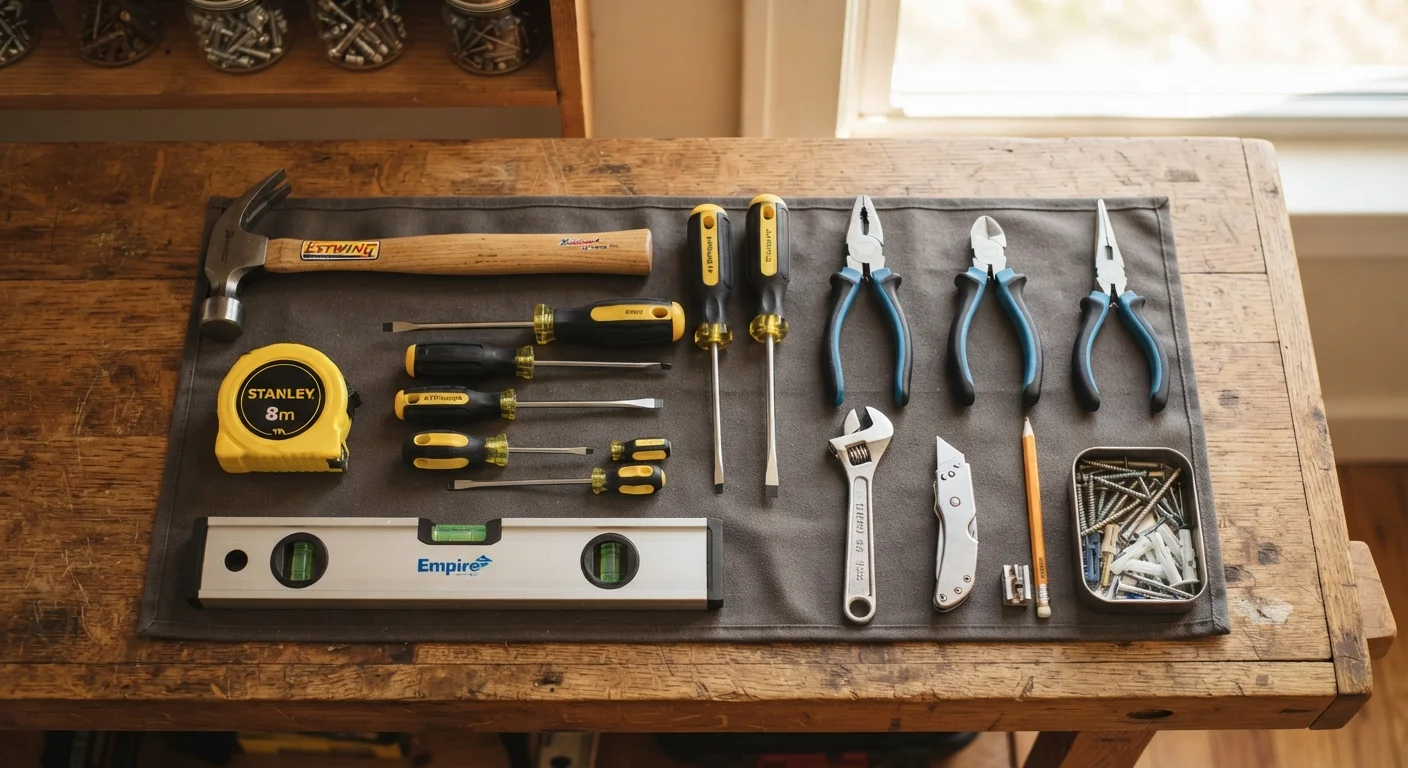
Photo credit: readerspanel.com
A practical breakdown of the tools every homeowner should have on hand before tackling common repairs, with notes on what each one actually does.
Key Takeaways
- A small set of core tools handles the majority of common household repairs.
- Buying quality hand tools once costs less over time than replacing cheap ones repeatedly.
- Knowing what each tool does helps you shop smarter and work more safely.
- Some repairs still require a licensed professional regardless of what tools you own.
- Organizing your toolkit before a problem arises saves time when something breaks.
Why your toolkit matters before a problem shows up
Most home repairs do not announce themselves in advance. A door hinge loosens on a Tuesday morning. A towel bar pulls out of drywall on the weekend. Having the right tools already on hand is the difference between a ten-minute fix and a frustrated trip to the hardware store mid-project.
This list covers the tools that handle the widest range of everyday repairs. Each entry explains what the tool actually does and why it earns space in a homeowner's kit. If you are new to DIY work, the First-Timer's Map to Home Repair covers safety basics and the repairs worth learning first. Before starting any project, also review the DIY Home Repair Pre-Project Checklist for guidance on permits, utility shutoffs, and material estimates.
Claw hammer
A 16-ounce claw hammer drives and pulls nails, taps hardware into place, and handles light demolition such as removing old trim. The curved claw on the back gives you leverage to pull nails cleanly without splitting the surrounding wood. Look for a handle length that feels balanced in your grip; a hammer that is too heavy causes fatigue and reduces accuracy.
A 16-ounce claw hammer handles nails, hardware, and light demolition with one tool.
Screwdriver set
A set covering Phillips (cross-head) and flat-head tips in at least two sizes handles the fasteners found in most fixtures, outlet covers, door hardware, and cabinet hinges. A magnetic tip holds screws to the driver, which matters when you are working in tight spaces or overhead. Screwdrivers with cushioned grips reduce hand strain during longer jobs.
Phillips and flat-head screwdrivers in two sizes cover the fasteners in most household fixtures.
Tape measure
A 25-foot tape measure with a locking blade is the standard for home use. You need accurate measurements before cutting lumber, hanging shelving, centering a picture, or ordering replacement materials. The standout (how far the blade extends before it bends) matters when you are measuring alone: a longer standout lets you reach across a room without a second person holding the other end.
Accurate measurements before cutting or ordering materials prevent costly mistakes.
Torpedo level
A 9-inch torpedo level fits in a toolbox and checks whether shelves, frames, and fixtures are plumb (vertically straight) or level (horizontally flat). The bubble vials tell you which way to adjust. A shelf installed even slightly off-level will be obvious once items are placed on it. For door hardware specifically, the Door Hinges, Strikes, and Latches Reference Guide explains how alignment affects whether a door latches correctly.
A torpedo level keeps shelves, frames, and fixtures straight without guesswork.
Utility knife
A retractable utility knife with replaceable blades cuts drywall patches, scores caulk lines, trims weatherstripping, and opens packaging without damaging contents. Always retract the blade when the knife is not in active use, and replace dull blades promptly. A dull blade requires more pressure, which increases the chance of slipping.
Replace dull blades promptly; a dull utility knife requires more force and is harder to control.
Adjustable wrench
A 10-inch adjustable wrench fits nuts and bolts across a range of sizes without requiring a full socket set. It is useful for tightening supply line connections under a sink, securing toilet tank hardware, and assembling furniture with hex bolts. Turn the wrench so the fixed jaw faces the direction of force; this reduces the chance of rounding off a fastener.
One adjustable wrench covers supply lines, toilet hardware, and bolt-fastened furniture assembly.
Needle-nose pliers
Needle-nose pliers grip small fasteners, bend wire, and reach into spaces too narrow for a full-size wrench or hand. They are useful when reconnecting drain stoppers, repositioning retaining clips, or working with the small screws inside electrical outlet covers. Any work inside a breaker panel or on live wiring should be handled by a licensed electrician; pliers do not make those jobs safe for untrained homeowners.
Needle-nose pliers reach fasteners and clips in spaces too narrow for standard tools.
Cordless drill and driver
A cordless drill with a driver mode speeds up screw-driving and bores holes for anchors, shelf brackets, and door hardware. Variable speed and adjustable torque settings matter: too much torque strips screws or cracks trim. A drill with a built-in clutch (the numbered ring around the chuck) lets you set a stopping point so the tool stops driving when a fastener is seated. Keep a spare battery charged so a dead pack does not stall a project.
Setting the correct torque on a cordless drill prevents stripped screws and cracked trim.
Drywall anchors and a stud finder
A stud finder locates the wooden framing members behind your walls. Screws driven into studs hold significantly more weight than screws anchored only in drywall. For fixtures that cannot land on a stud, the right drywall anchor (toggle bolt, self-drilling anchor, or molly bolt, depending on wall thickness and load) provides a secure hold. Check anchor packaging for the rated load capacity before hanging anything heavy such as a mirror or shelf.
Screws driven into studs hold far more weight than screws anchored in drywall alone.
Putty knife and spackle
A 3-inch flexible putty knife spreads spackle (a lightweight wall-patching compound) over nail holes, small dents, and minor cracks in drywall or plaster. Apply in thin layers, let each coat dry fully before adding the next, then sand lightly before painting. Thick single applications shrink as they dry and leave a visible depression. For larger holes, a patching kit with a backing mesh gives the compound something to grip.
Apply spackle in thin layers and let each one dry fully before adding the next.
Building from here
These ten tools address the repairs most homeowners encounter in a given year. Once you have them organized and accessible, you will spend less time hunting for equipment and more time on the actual fix. If a project involves electrical panels, gas lines, structural walls, or roofing, stop and call a licensed contractor. Those jobs require permits and professional training regardless of what is in your toolkit.
For a broader view of how tool purchases and home maintenance fit into your annual spending plan, the Annual Home Expense Budget Checklist can help you anticipate costs before they arrive.
Store tools where you will actually use them
A portable toolbox or canvas bag that you can carry from room to room is more practical than a wall-mounted system in a detached garage. Keep the tools listed here together so you are not hunting through multiple storage areas mid-repair. Label your tape measure with your name if you share storage space with housemates or family members; it is the tool most likely to disappear.

Author
Home & Garden Editorial Team
Home & Garden Editorial Team is the collective byline for our editorial team and contributor network. Articles published under this byline or an editorial pen name are researched, written, and reviewed according to our editorial standards for clarity, consistency, and independence before publication.
View all articles →