
How Engine Coolant Works and Why It Matters More Than You Think
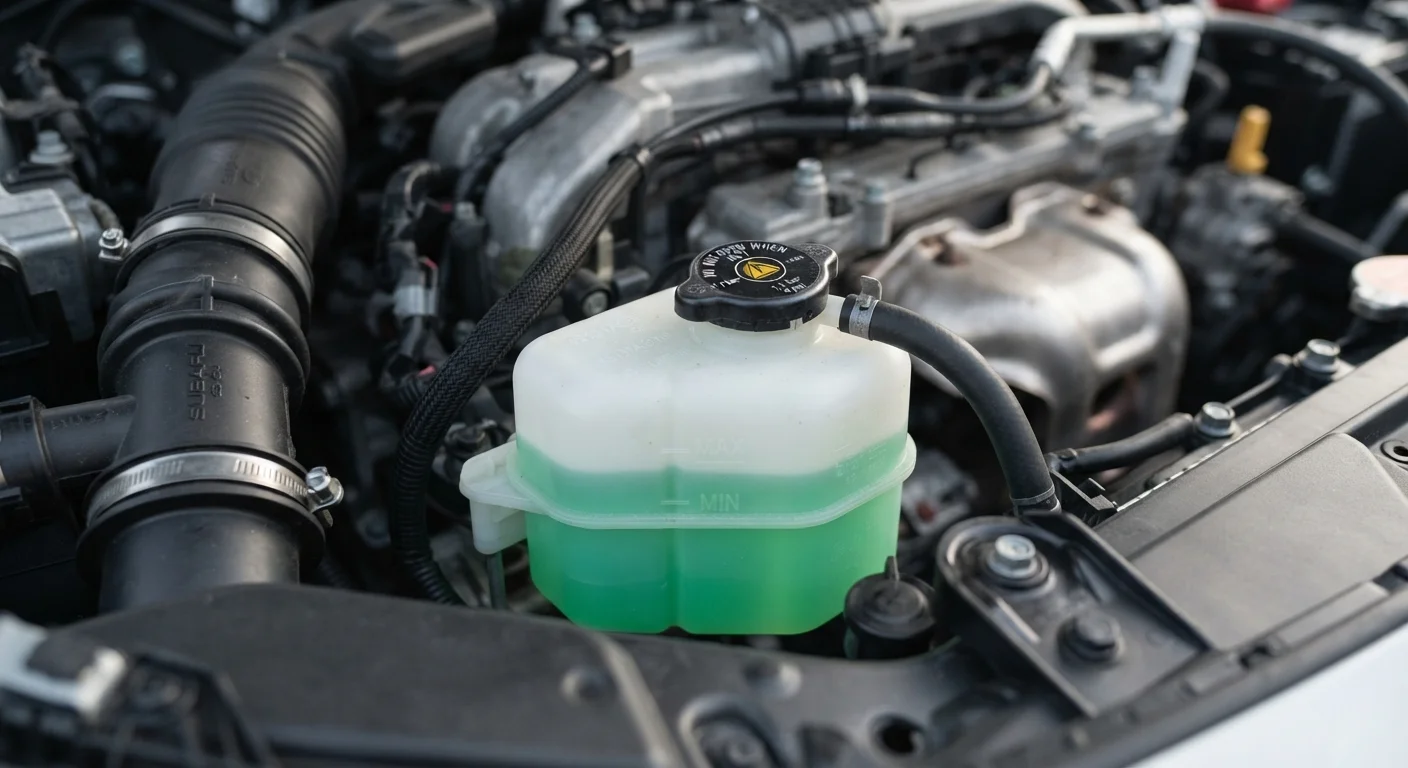
Photo credit: readerspanel.com
In this article
Coolant does more than prevent overheating. Learn what it actually does inside your engine and why the right mixture and flush schedule matter.
Key Takeaways
- Coolant does more than prevent freezing; it also protects metal parts from corrosion year-round.
- A 50/50 mix of coolant concentrate and distilled water suits most climates and is the standard starting point.
- Coolant degrades chemically over time even when the fluid level stays normal, so flush intervals matter.
- Using the wrong coolant type can damage seals, water pump components, and aluminum engine parts.
- Your owner's manual specifies the correct coolant type and flush interval for your vehicle.
What coolant actually does inside your engine
An internal combustion engine generates a large amount of heat during normal operation. Left unmanaged, that heat damages metal components, burns through gaskets, and causes the oil to break down faster. Coolant is the fluid that carries heat away from the engine block and cylinder head, moves it through the radiator, and releases it into the passing airflow.
The cooling system is a closed loop. A water pump pushes the coolant through passages cast into the engine block and head, where it absorbs heat. The hot fluid then travels to the radiator, a network of thin tubes and fins at the front of the vehicle. Air moving through the radiator draws the heat out of the fluid, and the cooled liquid cycles back to the engine.
Coolant also performs a second job that gets less attention: corrosion protection. The passages inside your engine and throughout the cooling system include aluminum, cast iron, copper, brass, and rubber. Without the corrosion inhibitors in coolant, water alone would degrade those surfaces over time, producing rust particles and scale that can clog passages and damage the water pump.
Check the reservoir, not just the level
When you check coolant, look at the color and clarity of the fluid in the translucent reservoir, not just whether it is between the min and max marks. Cloudy fluid, visible particles, or a brown tint are signs the system needs professional attention, regardless of the level reading.
Why the mixture ratio matters
Straight water transfers heat well, but it freezes at 32 degrees Fahrenheit and boils at 212 degrees Fahrenheit at standard pressure. Ethylene glycol concentrate on its own actually transfers heat less efficiently than water and has a higher freezing point than the mixed solution. The 50/50 blend exists because it gets the best of both: a freezing point near -34 degrees Fahrenheit, a boiling point well above 250 degrees Fahrenheit under system pressure, and adequate heat transfer.
Using distilled water rather than tap water matters too. Tap water contains minerals that leave deposits inside the cooling system. Those deposits reduce heat transfer and can clog the small tubes in the radiator. Distilled water avoids that problem.
Coolant that becomes too diluted (too much water) loses freeze and boil protection. Coolant that becomes too concentrated (too much glycol) transfers heat less effectively and can cause overheating in hot climates despite appearing to be in good condition.
Coolant types and why they are not interchangeable
Coolant formulas fall into three broad categories based on the corrosion inhibitor chemistry. Inorganic Additive Technology (IAT), the traditional green coolant, uses silicate-based inhibitors that protect metal surfaces quickly but deplete within about two years. Organic Acid Technology (OAT) coolants, often orange or pink, use organic acid inhibitors that last longer but take more time to form a protective layer. Hybrid Organic Acid Technology (HOAT) blends both approaches and is common in many vehicles made from the late 1990s onward.
Vehicle manufacturers specify which chemistry their cooling system requires because the wrong inhibitor package can attack seals, accelerate aluminum corrosion, or cause the water pump shaft seal to swell and fail. The correct specification appears in the owner's manual, usually in the maintenance or fluid specifications section.
Coolant marketed as 'universal' or 'all makes' should be confirmed against your vehicle's specification before use. When a full flush is not practical, topping off with the same type already in the system is generally safer than mixing types.
When to flush and what to watch for
Coolant degrades chemically over time. The corrosion inhibitors in the additive package are consumed as they protect metal surfaces, which is why a flush schedule exists independent of whether the fluid level is normal and the engine temperature reads correctly.
Signs that the cooling system needs attention include a persistent sweet smell near the engine, a film or oily sheen on top of the coolant in the reservoir, visible rust particles or a brownish tint in the fluid, or a coolant level that drops noticeably over weeks without a visible external leak. That last situation warrants inspection by a qualified mechanic, as it can indicate a leak at a hose, the water pump, the radiator, or in more serious cases, an internal leak past a head gasket.
Beyond coolant condition, the other fluids in your vehicle follow similar patterns: they degrade on a schedule, and condition is not always visible by looking at the reservoir. Treating all of them together as part of a regular maintenance review is a practical approach for any driver.
This article is for general informational purposes only. Always consult a qualified mechanic for diagnosis, repair, or any maintenance task you are not comfortable performing safely.
Frequently Asked Questions

Author
Automotive Life Editorial Team
Automotive Life Editorial Team is the collective byline for our editorial team and contributor network. Articles published under this byline or an editorial pen name are researched, written, and reviewed according to our editorial standards for clarity, consistency, and independence before publication.
View all articles →