
Nature, Movement, and Breathing: Three Low-Cost Stress Buffers Compared
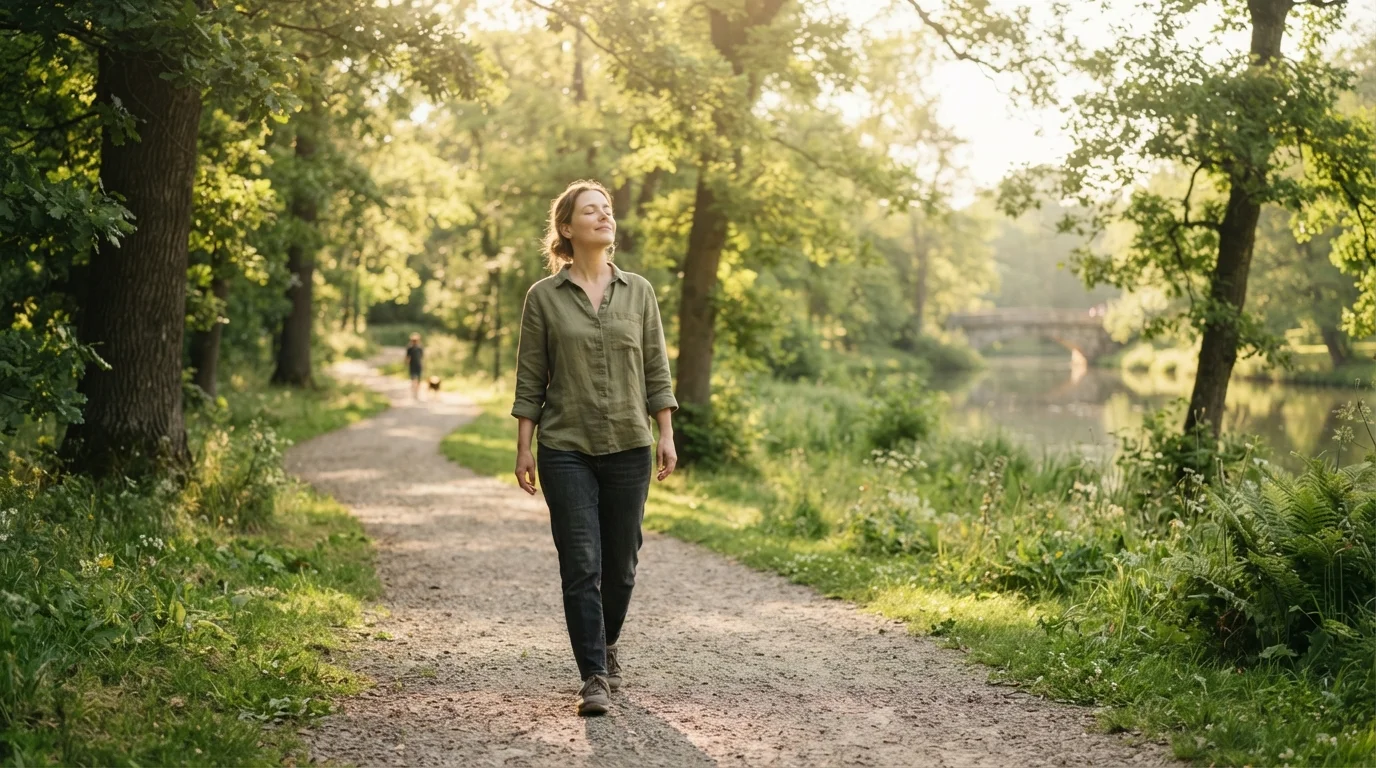
Photo credit: readerspanel.com
In this article
Spending time outdoors, physical movement, and controlled breathing all reduce stress, but in different ways. See how each approach holds up.
Key Takeaways
- Time in nature lowers cortisol and can shift mood within minutes, even in small doses.
- Physical movement reduces stress hormones and improves sleep, with benefits accumulating over time.
- Controlled breathing is the fastest-acting of the three, producing calm within a few minutes.
- Each approach works through a different biological pathway, so they complement rather than replace each other.
- None of these methods require equipment, gym memberships, or significant time investment.
Why low-cost stress buffers matter
Stress is a constant for most American adults, and professional mental health support, while genuinely valuable, is not always accessible, affordable, or necessary for everyday strain. Three approaches stand out because they cost almost nothing, require no special equipment, and have a meaningful body of evidence behind them: spending time in nature, physical movement, and controlled breathing.
Each works through a different mechanism. Understanding those differences helps you choose the right tool for the moment, or build a routine that uses more than one. For a broader look at how repeatable habits support emotional health over time, see small daily practices for long-term mental wellness.
This article is for general informational purposes only and is not medical or mental health advice. If you are experiencing significant distress, anxiety, or depression, please speak with a qualified healthcare professional.
Time in nature
Exposure to natural environments, whether a city park, a tree-lined street, or a woodland trail, appears to lower cortisol levels and reduce activity in brain regions associated with rumination. Research published in Proceedings of the National Academy of Sciences found that participants who walked in a natural setting reported less repetitive negative thinking and showed reduced activity in the prefrontal cortex compared with those who walked along a busy urban road.
The effect does not require a long hike. Even 20 minutes in a green outdoor space has been associated with measurable reductions in stress hormones, according to work published in Frontiers in Psychology. The proposed explanation involves reduced sensory overload: natural environments make fewer demands on directed attention, allowing the brain a form of passive restoration.
The main limitation is access. People in dense urban areas or with mobility constraints may find consistent outdoor time harder to arrange. Weather is another factor. Nature exposure also tends to produce a broader mood lift rather than addressing acute, immediate stress the way breathing techniques can.
| Time in nature | Physical movement | Controlled breathing | |
|---|---|---|---|
| Speed of effect | 20+ minutes | 30-60 minutes | 2-5 minutes |
| Works for acute stress | Moderate | Limited in the moment | Strong |
| Builds long-term resilience | Moderate | Strong | Limited |
| Access requirements | Outdoor space needed | Minimal space needed | None required |
| Physical effort | Low | Moderate to high | Very low |
| Cost | Free | Free to low-cost | Free |
| Usable at work | Rarely | Sometimes | Yes |
Physical movement
Exercise reduces circulating levels of cortisol and adrenaline after the initial exertion phase, while stimulating the release of endorphins. These are not minor effects. Regular aerobic activity is associated with reduced symptoms of anxiety and depression across multiple clinical reviews, and even moderate-intensity movement, such as brisk walking, appears to provide benefit.
Movement also improves sleep quality, which itself is one of the most direct regulators of emotional resilience. Unlike nature or breathing, physical activity produces adaptations over time: the stress-buffering effect grows stronger with consistent practice, not just in the moment.
The trade-off is that exercise requires more physical output than the other two methods, and for people who are new to activity, beginning can feel like an additional stressor rather than a relief. Start small, and build gradually. If you sit most of the day, strategies for adding movement to a desk job offer practical starting points. See the Fitness and Movement hub for more guidance on building sustainable activity habits.
Controlled breathing
Controlled breathing is the most immediately accessible of the three. Techniques such as slow diaphragmatic breathing or the 4-7-8 pattern (inhaling for four counts, holding for seven, exhaling for eight) activate the parasympathetic nervous system, effectively shifting the body out of a fight-or-flight state. This can happen within a few minutes, making it useful for acute stress at moments when movement or outdoor access is not possible.
The physiological pathway is well established: slow, deliberate exhalation increases heart rate variability, a marker of the autonomic nervous system's capacity to regulate stress responses. This mechanism is documented in cardiology and psychophysiology literature.
Breathing techniques have a short-term ceiling, however. They manage a stress response in the moment but do not build the same long-term resilience that regular movement does, nor do they provide the mental restoration that nature appears to offer. If you want to understand how breathing fits within a wider set of structured relaxation tools, comparing structured relaxation with unstructured downtime covers the tradeoffs. For workplace stress in particular, protecting your headspace in a demanding job is worth reading alongside this.
How the three approaches compare
Each method has a distinct profile of speed, accessibility, and depth of effect. The table below summarizes the practical differences to help you decide where to start.
No single approach covers every situation. A person dealing with chronic work stress may find that movement improves their baseline mood over weeks, while breathing techniques help them get through a tense meeting, and a weekend walk in a park provides a fuller mental reset. Used together, the three approaches address different layers of the stress response.
If you want to pair these habits with other wellness strategies, a realistic look at mindfulness is a useful companion read for honest expectations about what any single practice can and cannot do.

Author
Health & Wellness Editorial Team
Health & Wellness Editorial Team is the collective byline for our editorial team and contributor network. Articles published under this byline or an editorial pen name are researched, written, and reviewed according to our editorial standards for clarity, consistency, and independence before publication.
View all articles →