
Hydration and Food: How Much What You Eat Affects Your Water Intake
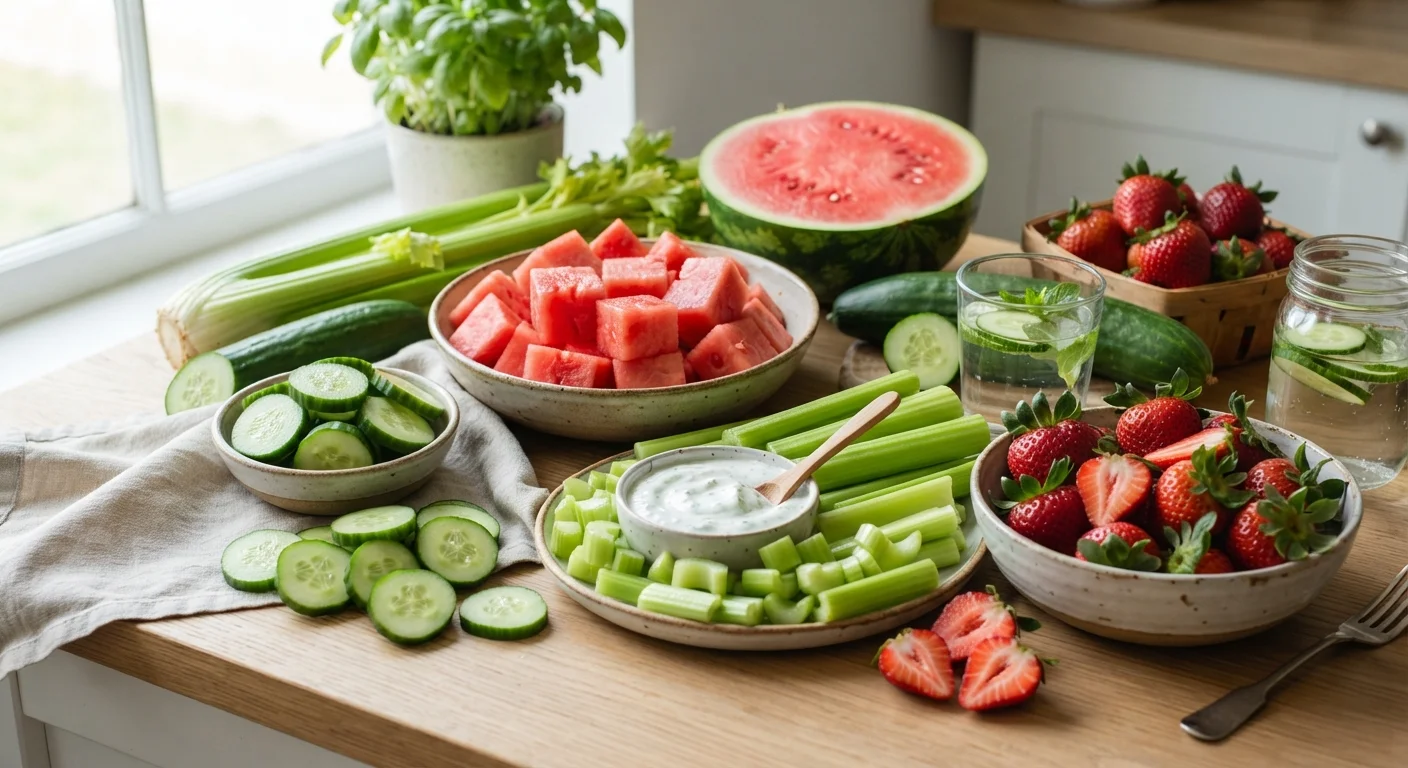
Photo credit: readerspanel.com
In this article
Roughly 20 percent of daily water intake comes from food. Learn which foods contribute most and how eating habits affect hydration.
Key Takeaways
- About 20 percent of most adults' daily water intake comes from food, not beverages.
- Fruits and vegetables with high water content, such as cucumber and watermelon, contribute the most.
- Heavily processed and dry foods provide very little water and can shift more of the hydration burden onto beverages.
- Eating patterns, not just drink habits, influence whether you stay adequately hydrated throughout the day.
- Individual needs vary based on activity level, climate, age, and health status. A healthcare provider can help assess personal needs.
Why food is a real part of hydration
Most hydration advice focuses on how many glasses of water to drink each day. That framing is useful, but it leaves out something consistent and measurable: the water already present in what you eat. For a typical adult, food accounts for roughly 20 percent of daily water intake, according to estimates from nutrition researchers and bodies such as the National Academies of Sciences, Engineering, and Medicine.
This is not a trivial amount. For someone with a total daily fluid requirement of around 2.7 liters (women) or 3.7 liters (men), as cited in those same national guidelines, food-derived water can represent more than half a liter per day. What you put on your plate affects how much fluid your body actually has to work with.
Total fluid intake includes more than water
The National Academies' guidelines for daily water intake count all sources: plain water, other beverages, and water from food. So when you see a recommendation for total daily fluid intake, food is already factored in as a contributor. You do not need to calculate food water separately; simply eating a varied diet with plenty of produce naturally moves you toward that total.
Foods that contribute the most water
Water content in food varies widely. At the high end, cucumbers, lettuce, celery, tomatoes, zucchini, strawberries, and watermelon all contain more than 90 percent water by weight. A large cucumber, for example, can contain more than a cup of water. Cantaloupe, peaches, and citrus fruits fall in the 85 to 90 percent range.
Cooked grains and legumes absorb water during preparation, so plain oatmeal, lentil soup, and rice all contribute to fluid intake even though they start out dry. Broth-based soups are particularly efficient because they deliver both water and electrolytes like sodium and potassium, which help the body retain fluid.
Dairy foods such as plain yogurt and milk also supply substantial water alongside protein and calcium. A cup of low-fat milk is roughly 88 percent water.
Foods that provide little or no hydration
On the opposite end, dry and heavily processed foods add almost nothing to fluid intake and can actually increase the body's water demand. Crackers, chips, cured meats, and shelf-stable snack foods are very low in water and often high in sodium. Higher sodium intake prompts the kidneys to excrete more water in urine as they work to maintain the body's sodium balance, so a diet heavy in processed foods can quietly increase daily fluid requirements.
Nuts and seeds are nutrient-dense but contain very little water. Cooking methods matter too: roasting or grilling vegetables drives off a significant portion of their moisture compared with eating them raw or lightly steamed.
A simple way to add water-rich foods
You do not need to overhaul your diet to eat more water-rich foods. Adding sliced cucumber or tomato to a sandwich, swapping chips for raw vegetables with a dip, or starting dinner with a broth-based soup are small changes that cumulatively improve both hydration and nutrient intake. These swaps tend to stick because they fit around existing meals rather than replacing them.
How eating patterns affect your hydration balance
People who eat a diet centered on whole fruits, vegetables, and minimally processed foods tend to get more water from food than those who rely heavily on packaged and fast foods. This does not mean one group never gets dehydrated, but it does mean the gap they need to close through drinking is smaller.
Meal timing also plays a role. Eating water-rich foods earlier in the day, at breakfast and lunch, spreads hydration support across waking hours rather than front-loading it through morning coffee and then relying solely on beverages in the afternoon.
For people who find drinking plain water throughout the day tedious, increasing water-rich foods is a practical, sustainable approach to closing part of the hydration gap. It adds nutrients alongside fluid, and it does not require tracking ounces.
This article is for general informational purposes only and is not a substitute for medical or dietary advice from a qualified healthcare professional. Individual hydration needs vary based on health status, activity level, medications, and other factors. Consult a registered dietitian or physician for guidance specific to your situation.
Frequently Asked Questions

Author
Health & Wellness Editorial Team
Health & Wellness Editorial Team is the collective byline for our editorial team and contributor network. Articles published under this byline or an editorial pen name are researched, written, and reviewed according to our editorial standards for clarity, consistency, and independence before publication.
View all articles →