
Tackling Basement Moisture: What's a DIY Fix and What Needs a Pro
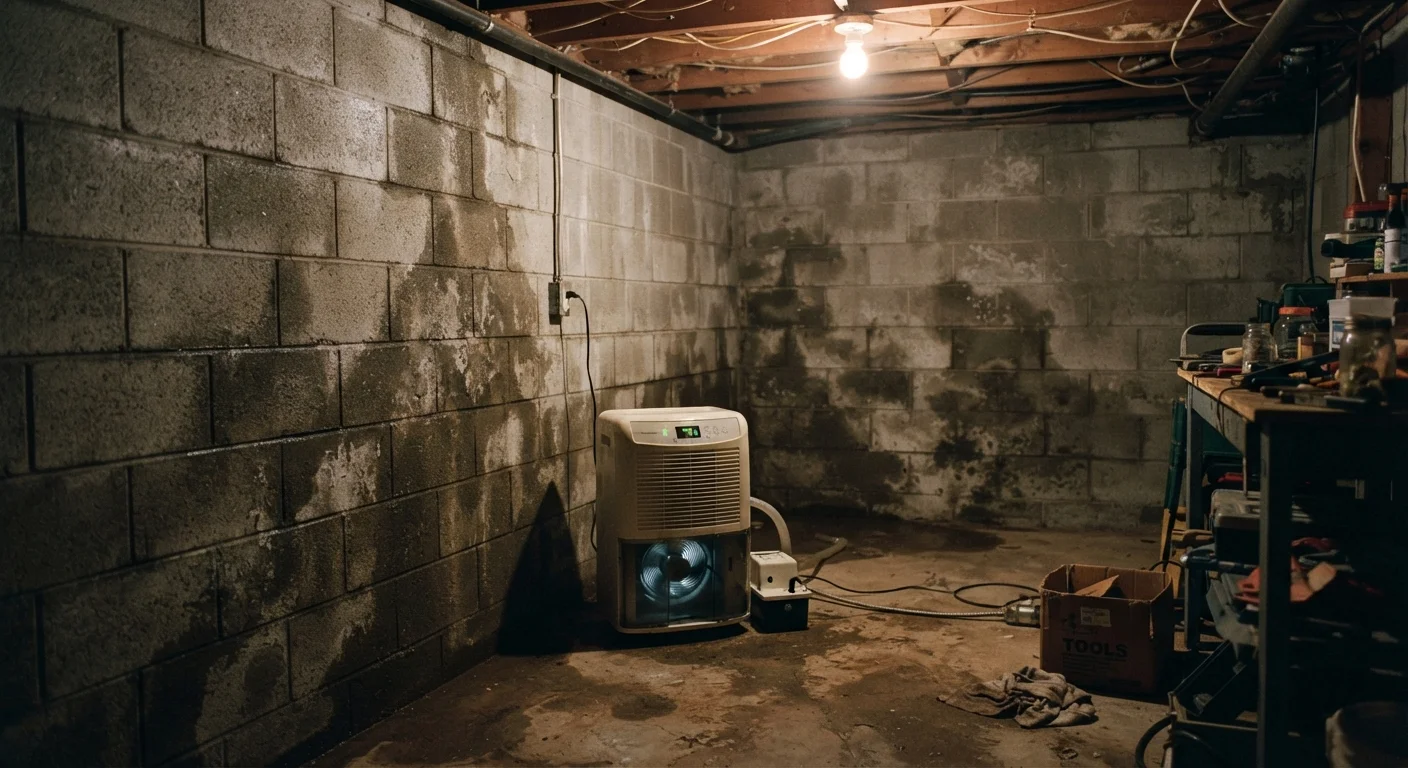
Photo credit: readerspanel.com
In this article
Surface condensation and minor seepage can be DIY projects; hydrostatic pressure problems need professional attention. Learn how to tell the difference.
Key Takeaways
- Condensation on walls and pipes is a humidity problem you can address yourself with ventilation and a dehumidifier.
- Minor efflorescence and hairline cracks in poured concrete can be patched with hydraulic cement as a DIY project.
- Water actively pushing through walls due to hydrostatic pressure requires a licensed waterproofing professional.
- Permits may be required for interior drainage systems or exterior excavation work; verify with your local building department.
- Misidentifying the moisture source is the most common reason DIY basement repairs fail.
Saves money on straightforward moisture problems
Condensation control and small crack repairs cost a fraction of professional waterproofing. A homeowner who correctly identifies the source and applies the right fix avoids contractor fees entirely.
Immediate action possible for minor seepage
Hydraulic cement sets in minutes and can stop a slow, active drip in a single session. Waiting for a contractor appointment is unnecessary when the problem is genuinely small.
Builds useful diagnostic knowledge
Walking through the tape test and grading inspection teaches you how your foundation behaves, which makes future problems easier to catch early.
Ground-level drainage fixes prevent recurrence
Correcting gutter downspout extensions and improving lot grading addresses the water source rather than just the symptom, reducing the chance the problem returns.
Misdiagnosis makes the problem worse
Waterproofing paint applied over active hydrostatic seepage traps pressure behind the wall surface. When the coating eventually fails, spalling and cracking are often more extensive than the original leak.
Structural issues require licensed professionals
Bowing walls or floor-to-wall joint leaks signal foundation movement or excessive soil pressure. Attempting a cosmetic fix on a structural problem can mask warning signs that indicate serious risk.
Permit and code requirements apply to major work
Interior drainage systems and exterior excavation typically require permits in most U.S. jurisdictions. Unpermitted work can complicate home sales and may void homeowner insurance claims related to water damage.
DIY warranty protection is limited
A reputable waterproofing contractor typically provides a transferable warranty on interior drainage systems, which adds value at resale. A DIY patch carries no such protection.
How to identify where the moisture is actually coming from
Before reaching for any product or calling anyone, you need to know whether the water in your basement originates inside the house or outside it. The tape test is a reliable starting point. Dry a small section of the damp wall, tape a 12-inch square of plastic sheeting flat against it with all edges sealed, and leave it for 24 to 48 hours. If moisture collects on the outer face of the plastic, the problem is interior humidity condensing on the cool wall. If moisture appears on the wall side of the plastic, groundwater is migrating through the masonry.
Condensation problems are common in humid summers when warm indoor air contacts cool basement walls. Active seepage shows as water tracks, white mineral deposits called efflorescence, or wet spots that worsen after heavy rain. Hydrostatic pressure produces bowing walls, cracks that are wider at one end, or water entering at the floor-wall joint. That last category is not a DIY situation.
Before picking up any tools, run through the steps in the DIY home repair pre-project checklist, which covers safety gear and material estimates for exactly this kind of job.
DIY repairs that are reasonable for most homeowners
If the tape test points to condensation, the fix involves reducing humidity rather than waterproofing. A properly sized dehumidifier, improved exhaust ventilation, and insulating cold-water pipes to prevent dripping are all within reach. Check that gutters discharge at least six feet from the foundation and that the grading slopes away from the house; correcting drainage at ground level resolves a surprising number of damp-basement complaints.
Hairline cracks in poured concrete walls (narrower than 1/8 inch, not actively leaking) can be sealed with a polyurethane or epoxy injection kit. Larger cracks that are stable and dry can be routed and filled with hydraulic cement. Efflorescence (a chalky white crust) is a sign that water has been moving through the wall, but the deposit itself is harmless; wire-brush it off and apply a masonry water-repellent after confirming the underlying seepage has stopped.
Saves money on straightforward moisture problems
Condensation control and small crack repairs cost a fraction of professional waterproofing. A homeowner who correctly identifies the source and applies the right fix avoids contractor fees entirely.
Immediate action possible for minor seepage
Hydraulic cement sets in minutes and can stop a slow, active drip in a single session. Waiting for a contractor appointment is unnecessary when the problem is genuinely small.
Builds useful diagnostic knowledge
Walking through the tape test and grading inspection teaches you how your foundation behaves, which makes future problems easier to catch early.
Ground-level drainage fixes prevent recurrence
Correcting gutter downspout extensions and improving lot grading addresses the water source rather than just the symptom, reducing the chance the problem returns.
If you are new to this kind of work, the first-timer's guide to home repair covers the basic tools and safety habits that apply to concrete and masonry projects.
When to stop and call a professional
Certain conditions indicate that water is entering under significant pressure or that the foundation itself is compromised. These go beyond what hydraulic cement and a dehumidifier can address.
Misdiagnosis makes the problem worse
Waterproofing paint applied over active hydrostatic seepage traps pressure behind the wall surface. When the coating eventually fails, spalling and cracking are often more extensive than the original leak.
Structural issues require licensed professionals
Bowing walls or floor-to-wall joint leaks signal foundation movement or excessive soil pressure. Attempting a cosmetic fix on a structural problem can mask warning signs that indicate serious risk.
Permit and code requirements apply to major work
Interior drainage systems and exterior excavation typically require permits in most U.S. jurisdictions. Unpermitted work can complicate home sales and may void homeowner insurance claims related to water damage.
DIY warranty protection is limited
A reputable waterproofing contractor typically provides a transferable warranty on interior drainage systems, which adds value at resale. A DIY patch carries no such protection.
Interior drainage systems (sometimes called French drains or interior footing drains) require cutting the concrete slab, trenching along the perimeter, and installing a sump pump. This work almost always requires a permit and typically falls under licensed contractor requirements in most states. Exterior waterproofing, which involves excavating down to the footer and applying a membrane, is heavy equipment work with real structural risk if done incorrectly. Do not attempt either of these as DIY projects.
Permits and licensed trades: what to verify locally
Requirements for basement waterproofing work vary by state and municipality. Some jurisdictions require a permit for any interior slab cutting; others regulate sump pump installation separately. Contact your local building department before starting work beyond basic crack patching. A contractor who resists pulling permits is a red flag worth taking seriously.
Foundation repair that involves wall stabilization (carbon fiber straps, steel braces, or underpinning) is structural work. Consult a licensed structural engineer before any contractor begins that scope.
Weighing the real costs of DIY versus professional work
DIY condensation control typically costs less than $300 when a dehumidifier is already on hand. Crack injection kits and hydraulic cement run $30 to $80 for most small repairs. The labor savings are real, but only when the diagnosis is correct. Applying waterproofing paint or crack filler over active hydrostatic seepage does not stop the water; it delays visible symptoms while pressure builds behind the coating, often making the eventual repair more expensive.
Professional interior drainage systems carry costs that vary widely by basement size, regional labor rates, and site conditions. Exterior excavation and waterproofing costs more and is far less commonly needed. Get written estimates from at least two licensed waterproofing contractors, ask what warranty covers the work, and verify that any required permits will be pulled by the contractor, not left to you.
Much of the same cost-versus-expertise thinking applies to other home systems. For comparison, a problem like a dripping fixture often stays firmly in DIY territory: the guide to fixing a leaky faucet shows how far methodical diagnosis takes you before professional help is needed.
98%
Basements that experience some water intrusion
The American Society of Home Inspectors has reported that a large majority of basements will experience some form of water intrusion over the life of the home.
1 in 50
Insured homes with a water damage claim each year
Insurance industry data indicates approximately 1 in 50 insured homes files a water damage or freezing claim annually, with basement sources among the common contributors.

Author
Home & Garden Editorial Team
Home & Garden Editorial Team is the collective byline for our editorial team and contributor network. Articles published under this byline or an editorial pen name are researched, written, and reviewed according to our editorial standards for clarity, consistency, and independence before publication.
View all articles →