
Painting Over Water Stains: Why the Primer Step Cannot Be Skipped
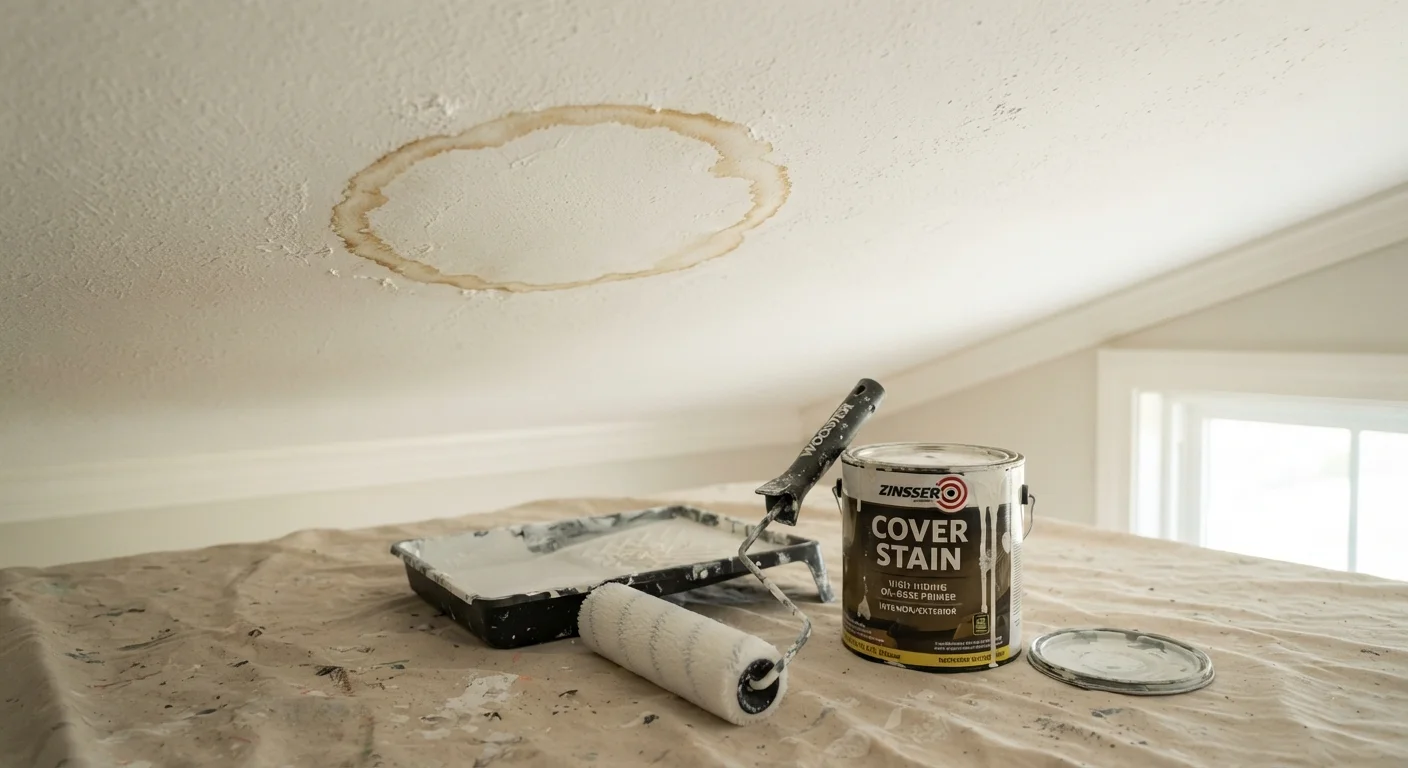
Photo credit: readerspanel.com
In this article
Latex paint alone won't cover water stains permanently. Learn why stain-blocking primer is necessary and how to prep the surface correctly.
Key Takeaways
- Latex paint alone cannot seal water stains; they will bleed through even multiple coats.
- Stain-blocking primer chemically seals the tannins and salts that cause stain bleed-through.
- The water source must be fixed before any painting begins or stains will return.
- Oil-based and shellac-based primers offer the strongest barrier against heavy or old stains.
- Surface prep, including cleaning and drying, determines whether the primer bonds correctly.
Why water stains keep coming back through paint
A water stain is not just a discoloration sitting on the surface. When water soaks into drywall, plaster, or wood, it carries dissolved minerals, tannins, and organic compounds that deposit as it evaporates. Those residues are water-soluble, so when you brush latex paint over them, the moisture in the paint reactivates the stain and pulls it right back to the surface. The result is a yellowish-brown ring that shows through even three or four fresh coats of paint.
This is why the problem is not a paint coverage issue. No amount of additional latex topcoat will stop the bleed-through, because the underlying chemistry has not changed. The stain residues need to be chemically sealed before any finish coat is applied.
Check for mold before painting
Water damage that has been present for more than a day or two can allow mold to grow beneath the paint surface. If you see black, green, or fuzzy discoloration, or detect a musty odor, do not simply paint over the area. Mold remediation must happen first. Painting over mold traps it and allows it to continue growing.
Common mistakes homeowners make when painting over stains
Understanding where the process goes wrong helps you avoid repeating the same repair twice.
Applying latex paint directly over the stain without any primer.
Why it happens: Homeowners assume a stain is a color problem that more paint will cover. Latex paint looks opaque in the can, which reinforces that assumption.
Painting before the water source is repaired.
Why it happens: The visible stain is the obvious problem, so many people address it first while the repair feels more complicated or expensive. The result is a fresh stain appearing within weeks.
Priming over a surface that has not fully dried.
Why it happens: After fixing a leak, the area may look and feel dry on the surface while the drywall core or wood framing still holds significant moisture. Rushing feels efficient when the repair is finally done.
Using a general-purpose primer instead of a stain-blocking formula.
Why it happens: General primers are commonly available and the packaging can look similar. Without reading the label closely, homeowners select the wrong product.
Skipping surface cleaning before priming.
Why it happens: If the stained area looks dry and stable, cleaning can seem unnecessary. However, mineral deposits and any mold spores on the surface will interfere with primer adhesion.
Choosing and applying the right stain-blocking primer
Stain-blocking primers fall into three main categories: water-based (latex), oil-based alkyd, and shellac-based. For light, recent water stains on drywall, a water-based stain blocker can work adequately. For older stains, heavy discoloration, or stains on wood surfaces where tannin bleed is also a factor, oil-based or shellac-based primers give a stronger and more reliable seal.
Shellac-based primer dries fast, bonds to almost any surface, and is widely regarded as the most effective option for stubborn stains. However, it has a strong odor and requires denatured alcohol for cleanup, so ventilation matters. Oil-based alkyd primers are also very effective and are a practical choice when shellac's odor is a concern in an occupied space.
48+ hrs
Minimum drying time after a leak is fixed
Building material guidance generally recommends at least 48 hours of drying time for standard drywall, though actual time varies with humidity and material thickness.
2-3 coats
Latex-only coats needed before bleed-through appears
Contractors commonly observe that water stain tannins bleed through two to three coats of standard latex paint when no stain-blocking primer is used first.
Apply primer in a single even coat covering the stain with a small margin of overlap. Let it dry completely according to the manufacturer's instructions before applying the finish coat. Rushing this step reintroduces moisture before the seal has cured.
Surface preparation steps that determine success
Primer adhesion depends on a clean, dry surface. Before opening a can of primer, complete these steps in order.
- Fix the water source. A repaired pipe, sealed roof, or corrected drainage problem must come first. Painting over an active or recurring moisture source will fail regardless of the primer used. If moisture returns, the stain returns.
- Let the area dry fully. Drywall that feels dry to the touch may still hold moisture inside. A general guideline is to wait at least 24 to 48 hours after fixing the leak, though thick plaster or wood framing may need longer. A moisture meter can confirm when the reading is safe for painting.
- Clean the stained surface. Wipe the area with a mild detergent solution to remove any mold residue, dust, or efflorescence (the white mineral crust that sometimes forms along stain edges). Rinse and let the surface dry again.
- Sand any raised or peeling paint edges. Where old paint has bubbled or peeled from water exposure, sand those edges smooth so the primer coat lies flat without bridging a ridge.
This article provides general home maintenance information. For suspected mold growth behind walls, significant structural damage, or repairs involving electrical wiring near water-damaged areas, consult a licensed professional before starting any work.

Author
Home & Garden Editorial Team
Home & Garden Editorial Team is the collective byline for our editorial team and contributor network. Articles published under this byline or an editorial pen name are researched, written, and reviewed according to our editorial standards for clarity, consistency, and independence before publication.
View all articles →