
Silicone Caulk vs. Latex Caulk: Picking the Right Sealant for the Job
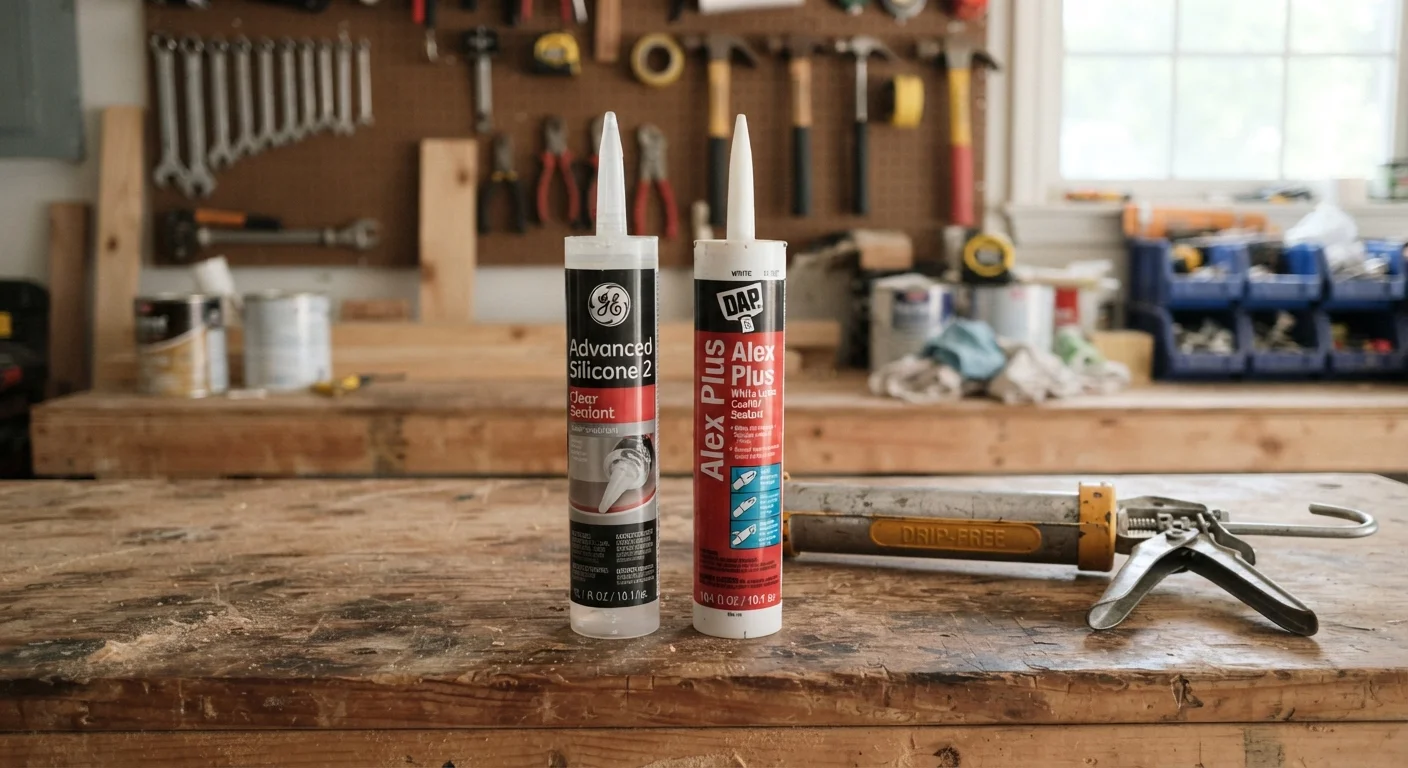
Photo credit: readerspanel.com
In this article
Silicone and latex caulk look similar but behave very differently. Compare flexibility, paintability, and the surfaces each one is suited for.
Key Takeaways
- Silicone caulk resists water and temperature swings far better than latex.
- Latex caulk accepts paint and cleans up with water, silicone does not.
- Silicone bonds well to glass, metal, and ceramic; latex works best on wood and drywall.
- Silicone stays flexible over time; latex can crack if a joint shifts significantly.
- Using the wrong type in a wet area often leads to mold and early sealant failure.
What sets these two sealants apart
Silicone and latex caulk are both gun-applied sealants, but their base chemistry produces very different working properties. Silicone is made from a synthetic polymer derived from silicon and oxygen. It cures to a rubbery, non-porous film that water cannot penetrate and that flexes repeatedly without losing its bond. Latex caulk (also called acrylic latex or painter's caulk) is water-based, cures to a firm but slightly porous film, and bonds reliably to porous surfaces such as wood and drywall.
The practical consequence is straightforward: silicone belongs in wet, high-movement, or outdoor joints; latex belongs on interior trim and wall surfaces that will be painted.
| Criterion | Silicone caulk | Latex caulk |
|---|---|---|
| Water resistance | Excellent, non-porous film | Moderate, can absorb moisture |
| Flexibility after cure | High, stretches repeatedly | Low to moderate |
| Paintability | Does not accept paint | Accepts paint once cured |
| Best surfaces | Glass, tile, metal, fiberglass | Wood, drywall, plaster |
| Cleanup (wet) | Requires mineral spirits | Water only |
| UV and outdoor durability | Good | Poor without paint protection |
| Mold resistance | High (mold-resistant formulas available) | Lower in wet conditions |
Flexibility and joint movement
A joint that expands and contracts, such as the gap between a bathtub and tile wall, needs a sealant that moves with it. Silicone handles this well because its cured film stretches and returns to shape without cracking. Latex caulk is less forgiving. Narrow trim gaps in a climate-controlled room rarely move enough to matter, but the same latex caulk applied around an exterior window can crack within a season or two as the frame expands and contracts with temperature changes.
If a gap is wider than about half an inch, neither product performs reliably on its own. A backer rod (a foam cord pressed into the gap before caulking) reduces the depth the sealant must span and improves the final result for either type.
Adhesion and surface compatibility
Silicone bonds strongly to non-porous surfaces: glass, glazed ceramic tile, porcelain, metal, and fiberglass. It does not bond well to bare wood or raw drywall because those porous surfaces absorb the sealant unevenly before it can cure. Latex caulk is the opposite: it adheres readily to wood, drywall, and plaster, but performs poorly on smooth, non-porous surfaces where it has little to grip.
Some products are sold as "siliconized latex" or "latex plus silicone," which blends properties from both formulas. These hybrids offer better flexibility than standard latex and are paintable, but they do not match pure silicone's water resistance in a shower or tub surround.
A note on siliconized latex products
Siliconized latex caulks are paintable and somewhat more flexible than standard acrylic latex, but they are not a substitute for pure silicone in a continuously wet environment such as a shower. For tub surrounds and areas with standing water exposure, a 100% silicone product is the more reliable long-term choice.
Paintability and finishing
Latex caulk accepts paint once it cures, typically within one to two hours for a thin bead, though full cure takes longer. Standard latex house paint, primer, and even semi-gloss adhere to it without peeling. This makes latex the standard choice for any joint that will be painted, including where baseboards meet drywall or where window casing meets the wall.
Silicone does not accept paint. Paint applied over cured silicone peels or beads up because silicone's surface is chemically inert. If a silicone-caulked joint needs to blend visually with a painted surface, the caulk must be applied neatly and matched as closely as possible to the finish color at purchase. There is no reliable field fix for painting over it.
Application and cleanup
Latex caulk cleans up with water while it is still wet, which makes tool cleanup and finger-smoothing simple. Uncured latex wipes off most surfaces without leaving a residue. Silicone requires mineral spirits or a dedicated silicone remover to clean wet excess off surrounding surfaces. Once either product cures, removal involves cutting and scraping; silicone tends to peel away in strips while latex requires more abrasion.
Both types need a clean, dry surface to adhere properly. Any trace of soap residue, old caulk, or surface moisture will reduce bond strength. In a tub surround, filling the tub with water before applying and curing the caulk is a common technique that pre-loads the joint in its most expanded state, reducing the chance of future gaps.

Author
Home & Garden Editorial Team
Home & Garden Editorial Team is the collective byline for our editorial team and contributor network. Articles published under this byline or an editorial pen name are researched, written, and reviewed according to our editorial standards for clarity, consistency, and independence before publication.
View all articles →