
Why Your Toilet Keeps Running (And What's Actually Causing It)
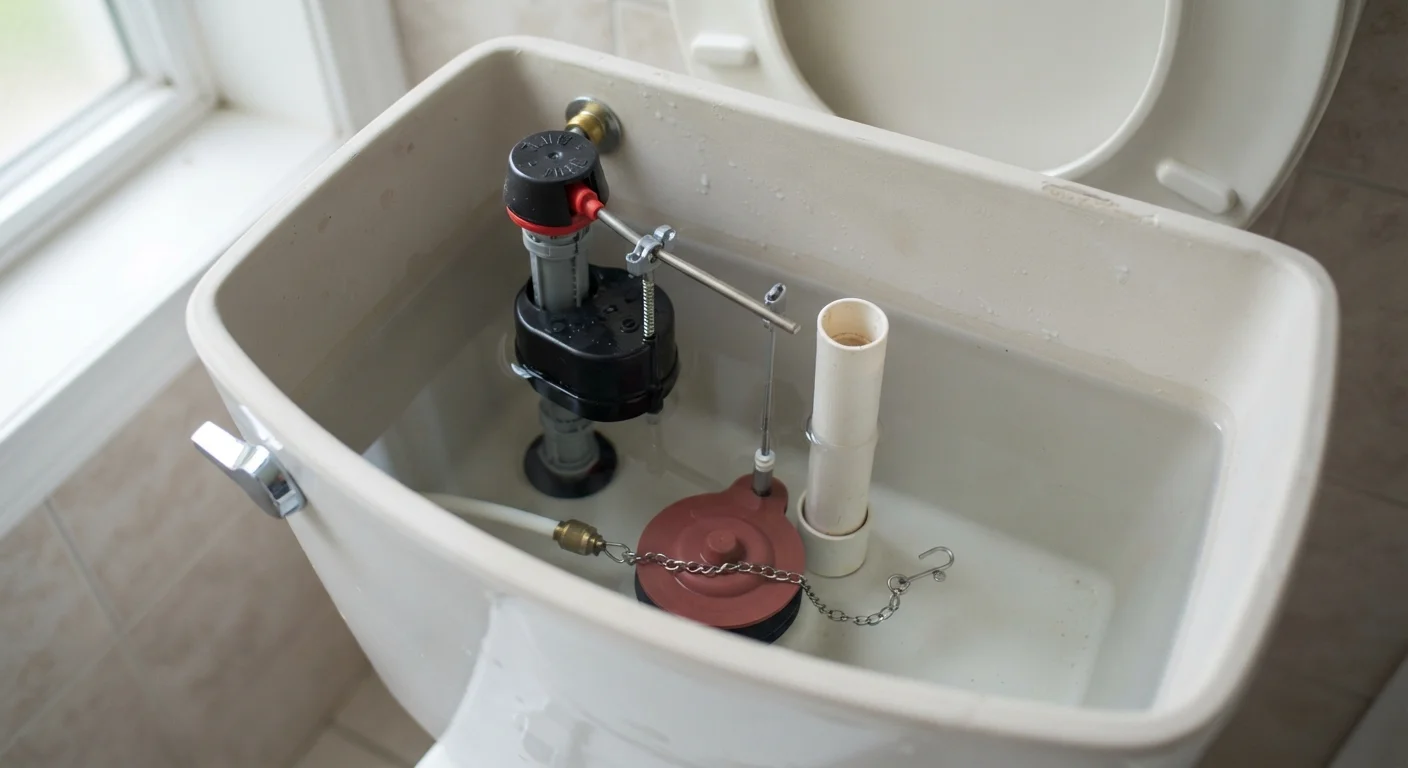
Photo credit: readerspanel.com
In this article
A running toilet wastes hundreds of gallons a week. Understand the three most common internal causes and how to diagnose which one is yours.
Key Takeaways
- A running toilet can waste several hundred gallons of water per week.
- The flapper is the most common cause and is inexpensive to replace yourself.
- A faulty fill valve causes continuous water flow and a hissing sound from the tank.
- An incorrectly set float keeps the fill valve open past the correct water level.
- You can diagnose which part is failing with simple visual checks before buying any parts.
- Most running toilet repairs do not require a plumber, but persistent leaks or cracked components may.
How a toilet tank actually works
Every flush follows the same sequence. Pressing the handle lifts a flapper at the bottom of the tank, releasing water into the bowl. Once the tank empties, the flapper drops back down to seal the drain hole. The fill valve then opens to refill the tank, and the float rises with the water level until it signals the fill valve to shut off.
When any part of that sequence fails to complete, water keeps moving when it should be still. The noise you hear is the fill valve running continuously because it cannot detect that the tank is full, or because water is escaping faster than the valve can account for.
Understanding those roles makes diagnosis straightforward. You are looking for the point in the cycle where control breaks down.
The three most common causes
A worn or warped flapper
The flapper is a rubber seal that sits over the drain opening at the base of the tank. Rubber degrades over time, and mineral deposits in hard water can coat the flapper or its seat, preventing a proper seal. Even a small gap lets water seep into the bowl constantly, keeping the fill valve running.
Signs of a failing flapper include a faint hissing sound, water trickling into the bowl between flushes, and the fill valve cycling on and off at irregular intervals. The food coloring test described in the FAQ below confirms it definitively.
A failing fill valve
The fill valve controls water flow from the supply line into the tank. As valves age, their internal seals wear out and the valve loses the ability to fully shut off. Water continues to enter the tank past the full mark, spills over the overflow tube, and runs down into the bowl continuously.
A fill valve problem typically produces a steady hissing sound that does not stop even when the tank appears full. You may also see a thin sheet of water running down the inside back of the bowl.
An incorrectly set or damaged float
Quick float adjustment on older toilets
On older ball-float assemblies, you can often bend the metal arm slightly downward by hand to lower the water level. The target level is about one inch below the top of the overflow tube. On newer cylinder-float valves, look for a twist-lock collar or adjustment screw near the top of the fill valve shaft.
The float tells the fill valve when the water level is high enough to close. On older toilets, the float is a ball attached to a metal arm. On newer models, it is a cylinder that slides up and down the fill valve shaft. If the float is set too high, the fill valve never receives the signal to stop, so water overflows into the tube and drains away constantly.
A float set too low is a less obvious problem: the tank does not fill completely, which can cause weak flushes and repeated partial refills. Adjusting the float is usually the simplest fix of the three.
How to diagnose which part is causing the problem
Start by removing the tank lid and observing the water level while the toilet is at rest. If water is spilling into the overflow tube (the tall open pipe in the center of the tank), the float is set too high or the fill valve is not closing. Bend the float arm down slightly on older ball-float models, or turn the adjustment screw on a cylinder float, and watch whether the water level drops below the tube.
If the water level sits below the overflow tube but the fill valve is still running, do the food coloring test to check the flapper. Add a few drops to the tank and wait 15 minutes without flushing. Color in the bowl means the flapper is leaking.
If neither test points to the problem clearly, press down on the flapper with a finger while the fill valve is running. If the sound stops immediately, the flapper is not seating properly under its own weight and needs replacement.
~200 gal/day
Water wasted by a leaking flapper
The U.S. Environmental Protection Agency estimates a single leaking toilet can waste approximately 200 gallons of water per day.
1 trillion gal
Annual household leak waste nationally
According to the EPA's WaterSense program, household leaks across the United States waste close to 1 trillion gallons of water each year.
Replacement flappers cost a few dollars at any hardware store and install in minutes without tools. Fill valves are slightly more involved but still a reasonable DIY task for most homeowners: shut the water supply valve, flush to empty the tank, disconnect the supply line, and swap the valve according to the manufacturer's instructions.
When to call a plumber
Call a licensed plumber if the shutoff valve beneath the toilet will not close (working on a tank with live water pressure is unsafe), if you find cracks in the porcelain tank, or if water is pooling on the floor rather than staying contained in the bowl. These situations go beyond a simple internal repair.
Permit requirements do not typically apply to toilet tank component repairs, but any work that involves cutting into water supply lines or changing drain configurations will vary by local code. Check with your municipality if you are unsure about the scope of a repair.
Frequently Asked Questions

Author
Home & Garden Editorial Team
Home & Garden Editorial Team is the collective byline for our editorial team and contributor network. Articles published under this byline or an editorial pen name are researched, written, and reviewed according to our editorial standards for clarity, consistency, and independence before publication.
View all articles →