
A Starter's Roadmap to Personal Saving and Wealth Building
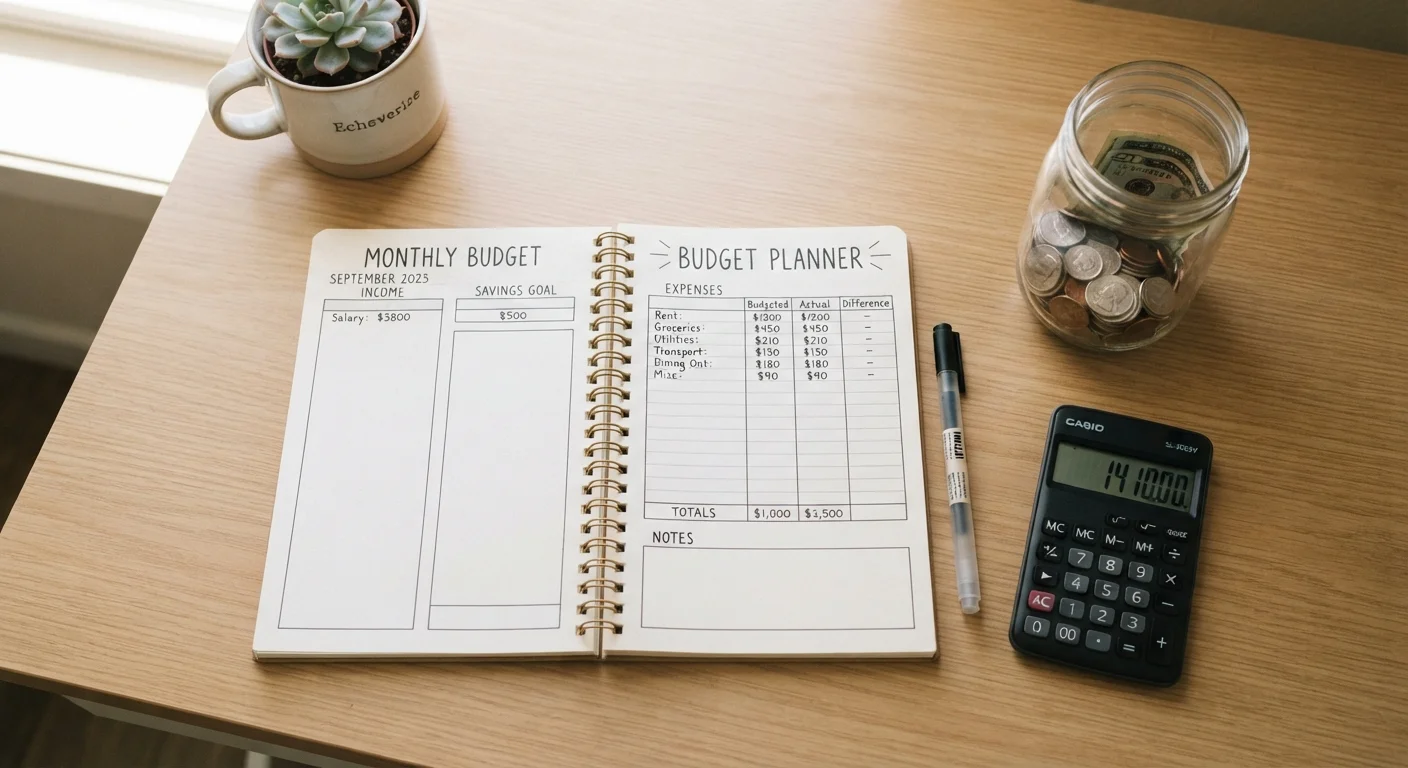
Photo credit: readerspanel.com
In this article
New to managing money? This guide walks through the foundational concepts and ordered steps for building financial stability.
Key Takeaways
- A written budget is the single most reliable tool for creating consistent saving behavior.
- An emergency fund of three to six months of essential expenses protects every other financial goal you have.
- Tax-advantaged accounts such as 401(k)s and IRAs let your money grow more efficiently over time.
- Matching where you save to when you need the money reduces both risk and missed opportunity.
- Small, automatic contributions compound meaningfully over years, even when the individual amounts seem modest.
Why saving feels hard (and how to change that)
Most people do not fail to save because they lack discipline. They fail because saving is structurally set up to lose against spending. Income arrives, bills and purchases come first, and whatever is left over is supposed to become savings. There is rarely anything left over.
The fix is mechanical: treat savings as an expense that gets paid first, not last. This reordering is the core insight behind every durable saving system. Once you build that into your routine, consistency follows without relying on willpower.
Before anything else, get a clear picture of where your money goes each month. The budgeting basics hub covers how to track spending and build a workable budget from scratch. That foundation makes every step below more effective.
Automate before you can spend it
Set up an automatic transfer to your savings account on the same day your paycheck arrives. When the transfer happens before you see the money in your checking account, you are far less likely to redirect it toward discretionary spending. Even a small fixed amount builds the habit reliably.
The foundation: a budget that actually holds
A budget is simply a written plan for your money before the month begins. Without one, you are reacting to expenses rather than directing income. With one, you can see exactly how much is available to save after covering necessities.
A straightforward starting framework is the 50/30/20 guideline: roughly 50% of take-home pay toward needs (rent, groceries, utilities, minimum debt payments), 30% toward wants, and 20% toward savings and extra debt payoff. These proportions are a starting point, not a rule. High cost-of-living areas often require adjusting the needs category upward and trimming elsewhere.
The specific method matters less than the consistency of tracking. A spreadsheet, a notebook, or a budgeting app all work. What fails is not tracking at all. For ideas on stretching day-to-day spending further, the smart budgeting tips hub covers practical strategies worth reviewing alongside your budget.
Emergency fund
A dedicated cash reserve set aside to cover unexpected expenses or income loss, typically enough to pay essential bills for three to six months.
Compound growth
When your savings or investment returns themselves earn returns over time, so the balance grows at an accelerating pace the longer it is left untouched.
Tax-advantaged account
A savings or investment account that receives a special tax treatment from the IRS, such as a 401(k) or IRA, allowing your money to grow more efficiently.
Liquidity
How quickly and easily you can access money without penalty. A checking account is highly liquid; a retirement account is not.
Net worth
The total value of what you own (assets) minus what you owe (liabilities). It is a simple snapshot of your overall financial position.
Building your emergency fund first
Before directing money toward investments or other financial goals, most financial educators recommend building an emergency fund. The target is three to six months of essential living expenses held in a liquid, accessible account such as a high-yield savings account.
This fund does one job: it stops an unexpected expense (a job loss, a car repair, a medical bill) from forcing you to carry high-interest debt or raid a retirement account. Without it, every other financial goal is fragile.
If three to six months feels far off, start with a smaller target, such as $500 or $1,000, and build from there. Reaching that first milestone provides a real cushion while you continue adding to it. Put the account somewhere slightly inconvenient to access, such as a separate bank from your checking, so it does not blend into daily spending money.
Early withdrawal from retirement accounts carries real costs
Withdrawing from a 401(k) or traditional IRA before age 59.5 typically triggers a 10% early withdrawal penalty on top of ordinary income tax on the amount taken out. Treat these accounts as genuinely long-term; they are not a substitute for an emergency fund.
Where to put money once the basics are covered
Once a budget is in place and an emergency fund is growing, the next question is where additional savings should go. The answer depends on your goals and time horizon, but a few categories apply to most people.
Employer retirement plans: If your employer offers a 401(k) with a matching contribution, contributing at least enough to get the full match is the first priority. An employer match is an immediate, guaranteed return on your contribution.
Individual Retirement Accounts (IRAs): A Roth IRA or traditional IRA can supplement a workplace plan or stand alone for self-employed individuals. The tax-advantaged accounts overview explains how 401(k)s, IRAs, HSAs, and 529s work and who generally benefits from each.
Taxable brokerage accounts: After maxing out tax-advantaged options, a standard brokerage account provides flexibility for goals that fall outside retirement. Returns here are subject to capital gains tax, so they suit goals that do not fit neatly into a tax-sheltered structure.
Each option involves tradeoffs between liquidity, tax treatment, and growth potential. A licensed financial adviser can help assess which mix fits your situation.
Matching accounts to goals and timelines
Where you keep money should depend on when you need it. Mixing up short-term and long-term money is one of the most common beginner mistakes.
- Money you may need within one to two years belongs in stable, liquid accounts. Savings accounts and money market accounts preserve the principal.
- Money for goals three to ten years out can tolerate some risk and may be suited to a mix of conservative investments, though market values can fall.
- Money you will not need for ten or more years (retirement, for example) can generally absorb more short-term market swings in exchange for greater long-term growth potential.
For a detailed look at how to line up accounts with specific goals, see the article on matching your money to your timeline.
Wealth building is not a single action. It is the result of a budget followed consistently, an emergency fund that stays intact, and money directed toward accounts suited to each goal's time horizon. Those three elements, repeated over years, account for most of the financial progress ordinary Americans make.
This article is for general informational purposes only and is not personalized financial, investment, tax, or legal advice. Consult a licensed financial professional for guidance tailored to your situation.
This is general information, not personal advice
The guidance in this article is educational and applies broadly to common financial situations in the U.S. Your income, debts, goals, and tax situation are unique. A licensed financial professional can help you apply these concepts to your specific circumstances.
Frequently Asked Questions

Author
Personal Finance Editorial Team
Personal Finance Editorial Team is the collective byline for our editorial team and contributor network. Articles published under this byline or an editorial pen name are researched, written, and reviewed according to our editorial standards for clarity, consistency, and independence before publication.
View all articles →