
Building a Grocery Budget That Actually Reflects How Your Household Eats
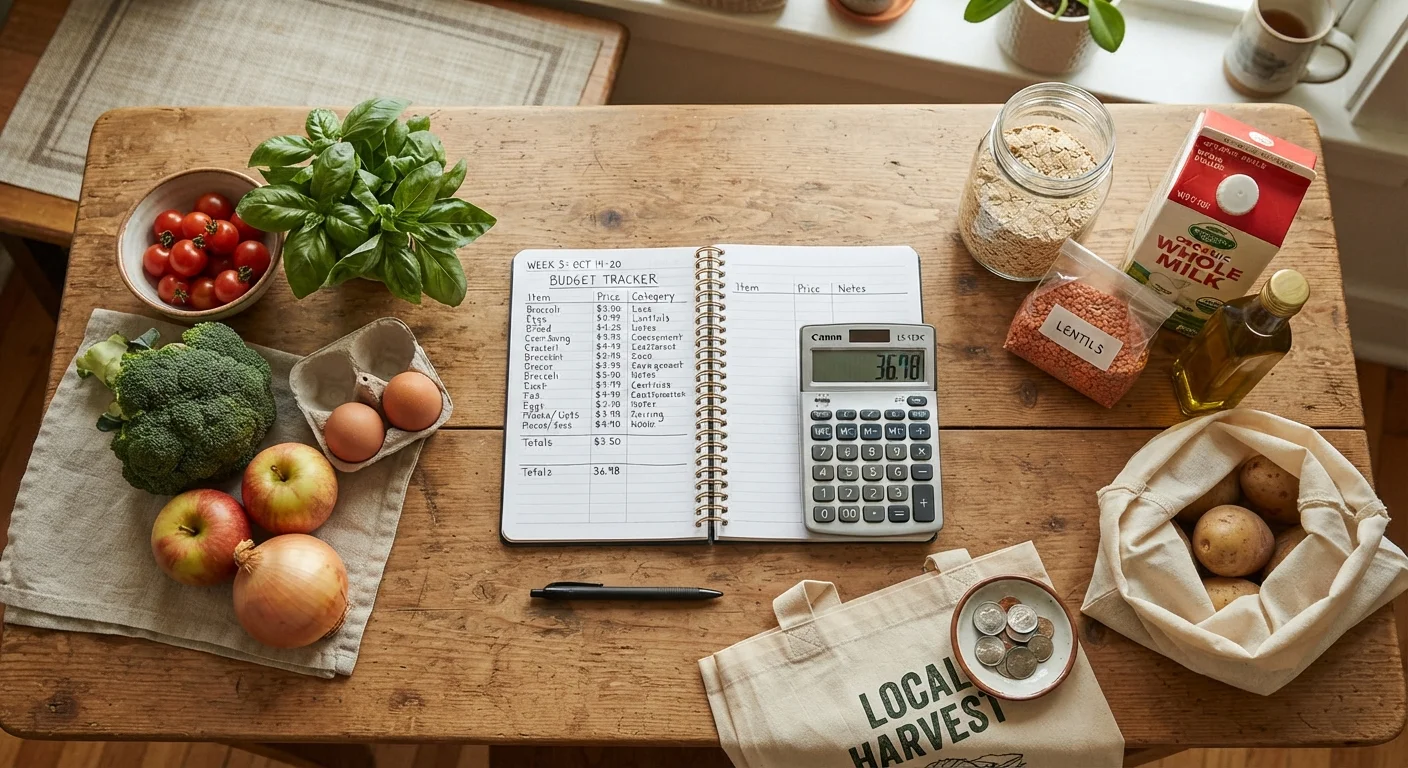
Photo credit: readerspanel.com
In this article
A grocery budget that ignores your real eating patterns will fail fast. Learn how to set a number grounded in your actual habits and household size.
Key Takeaways
- Start with actual spending data, not an arbitrary target number.
- Account for household size, dietary needs, and how often you cook at home.
- Separate recurring staples from variable spending to spot where overruns happen.
- A working grocery budget needs a monthly review cycle to stay accurate.
- Combining your budget with smarter shopping habits reduces waste and cost.
Why most grocery budgets fail before the second month
The typical grocery budget starts with a round number picked from a general guideline or a gut feeling. That number rarely survives contact with an actual shopping trip because it was never built from the household's real behavior. It ignores how many people are eating at home on a given week, whether anyone has dietary restrictions, and how much of the budget quietly exits through waste or impulse additions at checkout.
A budget grounded in your own data is harder to ignore and easier to adjust because you can see exactly where the money went. The steps below walk through building that foundation. For context on how a grocery budget connects to your broader financial picture, budgeting basics covers the fundamentals of tracking and planning household spending.
What you will need
What you need before you start
Gathering materials first keeps the process from stalling partway through. At minimum, you need access to recent transaction records and a way to organize the figures. If your grocery and non-grocery purchases are mixed together at certain stores, physical receipts help you sort them accurately.
Bank or credit card statements
Provides your real historical grocery spending to use as a baseline.
Spreadsheet app (e.g., Google Sheets or Excel)
Organizes spending categories and tracks monthly totals over time.
Budgeting or expense-tracking app
Automates transaction categorization so you spend less time on manual entry.
Grocery receipts
Breaks down store totals into product categories for more detailed analysis.
Step-by-step: building your grocery budget
Follow these steps in order. Each one builds on the last, so skipping ahead typically means revisiting earlier steps when the numbers do not add up.
Pull your actual grocery spending for the past three months
Go through your bank or credit card statements and total every grocery store transaction for the past three months. Do not estimate from memory. What people think they spend and what they actually spend are often far apart.
If you shop at stores that mix groceries with general merchandise (warehouse clubs, for example), review your receipts to separate food items from non-food items as closely as you can. Combining them inflates your grocery figure and makes the budget harder to use.
Calculate your monthly average and note the variation
Add the three monthly totals and divide by three. That average is your current baseline. Then note the highest and lowest months. A wide range (say, $200 apart) often signals seasonal shifts, stocking-up trips, or irregular hosting that your budget needs to account for.
If one month included a holiday or a large one-time purchase like a pantry restock, set it aside and recalculate without it. You want a number that reflects ordinary weeks, not outliers.
Break spending into categories that match how you actually shop
Generic budget lines like 'groceries' hide the patterns that matter. Split your spending into categories that reflect your real habits. Common ones include: fresh produce, proteins (meat, fish, eggs, legumes), dairy and alternatives, dry and canned goods, frozen foods, beverages, snacks, and household consumables (paper goods, cleaning supplies) if you buy those in the same trip.
Assign each receipt or transaction to its dominant category. You do not need perfect precision. The goal is to see where money flows so you can make deliberate choices rather than vague ones. For more on reading spending categories, see what your budget categories are actually telling you.
Factor in your household's specific eating patterns
Household size is the most obvious variable, but it is not the only one. Consider how many nights per week you cook at home versus eat out, whether anyone follows a specialized diet, and how much food waste you currently produce. A household that throws out a third of its fresh produce each week has a different budget problem than one that cooks everything it buys.
Children's ages matter too. Teenagers typically consume significantly more than young children, and that change happens gradually enough that many families do not notice their grocery spend has crept up until it is well above where they budgeted.
Set a target range, not a single fixed number
Use your baseline average as the midpoint of a range. Set a floor (the minimum you could realistically spend while still eating well) and a ceiling (the maximum you are willing to spend before investigating overruns). A range of roughly 10 to 15 percent below and above your average gives you flexibility without abandoning discipline.
If your goal is to reduce spending, lower the ceiling gradually over two to three months rather than making a sharp cut. Abrupt reductions tend to fail because they require overhauling habits all at once. Small structural changes, like shifting one meal category toward less expensive ingredients, are easier to sustain. Eating well on a tight budget covers specific ways to do this without compromising nutritional quality.
Schedule a monthly review and adjust as needed
A grocery budget is not a one-time setup. Prices change, household composition shifts, and seasons affect what you buy. Set a 15-minute monthly check-in to compare actual spending against your range, look at which categories ran high, and decide whether to adjust your targets or your shopping approach.
For a broader view of how grocery spending fits into overall household finances, the annual home expense budget checklist is a useful companion. And if you want to go deeper on the gap between planned and actual spending, running a spending audit walks through that process step by step.
Pair your budget with better shopping habits
A budget tells you how much to spend; your shopping approach determines whether that money goes far. Structuring your store trips around a weekly meal plan, buying versatile staples in consistent quantities, and shopping with a list all reduce both overspending and food waste. See grocery shopping habits that make healthy eating easier for practical strategies that complement your budget work.
Common places budgets break down
Even well-built budgets drift. A few patterns come up repeatedly. First, households treat the grocery store as the default stop for items that belong in other budget categories (birthday candles, batteries, over-the-counter medicine). Those purchases inflate the grocery line without reflecting actual food costs.
Second, seasonal spending spikes (holiday cooking, summer grilling, back-to-school meal prep) catch people unprepared because they budgeted for an average month. Building a small buffer into your ceiling for three or four predictable high-spend months prevents this.
Third, price increases happen gradually enough that people absorb them without noticing until the budget is consistently over. A monthly review catches this drift early. Building stronger saving habits can help you think about what to do with the difference when you do bring spending down.
Budget figures from the internet may not apply to you
General guidelines about what a household 'should' spend on groceries are averages across many different locations, dietary needs, and food costs. Your number will depend on where you live, store prices in your area, and what your household actually eats. Use those figures only as rough reference points, not as targets.

Author
Smart Shopping Editorial Team
Smart Shopping Editorial Team is the collective byline for our editorial team and contributor network. Articles published under this byline or an editorial pen name are researched, written, and reviewed according to our editorial standards for clarity, consistency, and independence before publication.
View all articles →