
New Orleans Neighborhoods: Each District's Character and What It Offers Visitors
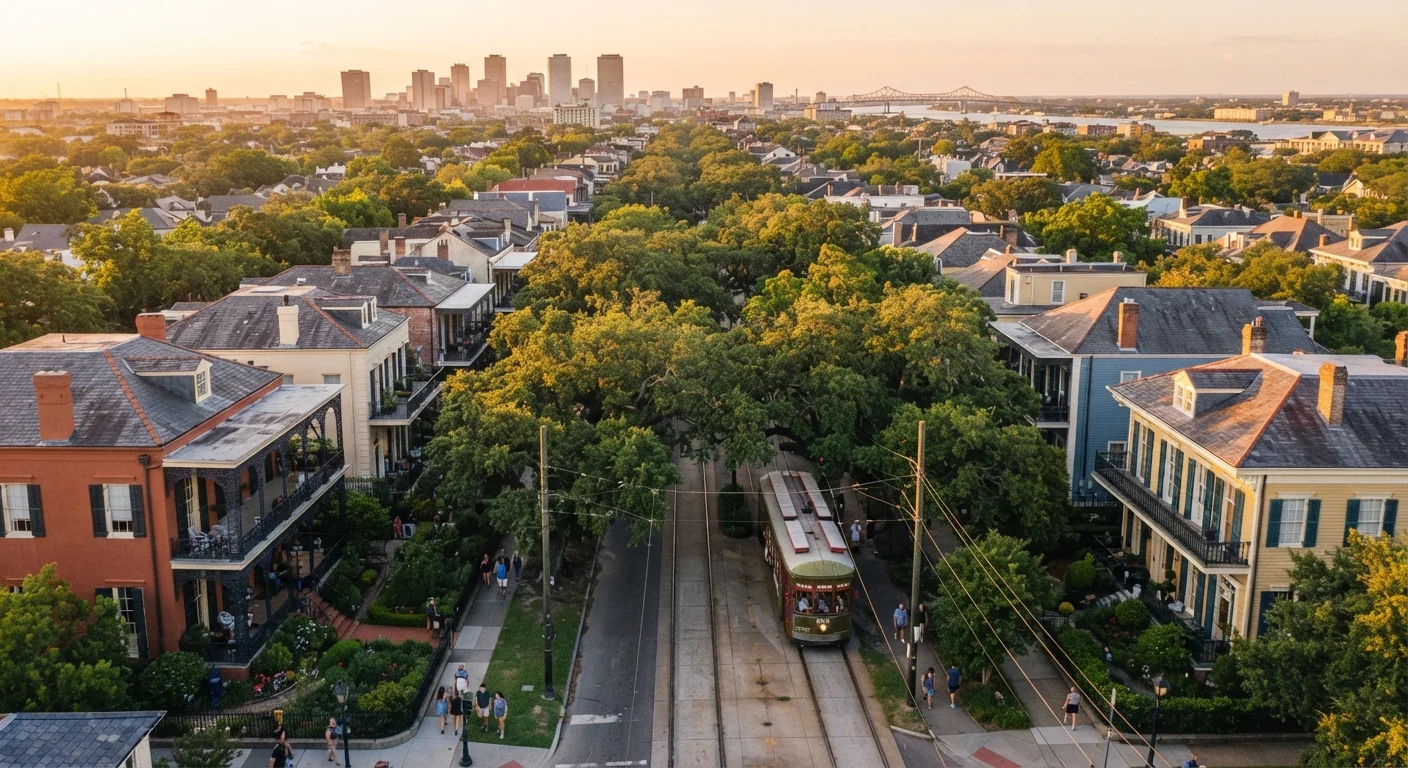
Photo credit: readerspanel.com
In this article
From the French Quarter to Tremé and the Garden District, explore how each New Orleans neighborhood tells a distinct story about the city.
Why neighborhoods are the real map of New Orleans
New Orleans is not one city with a uniform atmosphere. It is a collection of distinct neighborhoods, each shaped by a different mix of history, architecture, music, food, and community. Tourists who stick to the French Quarter get one version of the city. Those who cross into Tremé or wander Magazine Street in the Garden District find something else entirely.
This guide treats each major district as its own entry point. Whether you are planning a first trip or your fifth, knowing what each neighborhood actually contains helps you spend your time more intentionally.
French Quarter and Tremé
The French Quarter (also called the Vieux Carré) is the oldest section of the city, platted in 1722. Its signature features are the Spanish colonial buildings with wrought-iron galleries, the dense cluster of restaurants and bars on Bourbon Street, and the calmer cultural life along Royal Street and Chartres Street. Jackson Square anchors the lower end of the Quarter, with St. Louis Cathedral facing the Mississippi.
Bourbon Street gets the most foot traffic, but visitors looking for live music rooted in the city's jazz tradition tend to gravitate toward Frenchmen Street, which sits just past Esplanade Avenue in the Faubourg Marigny.
Tremé, directly behind the Quarter, is one of the oldest African American neighborhoods in the country. It is closely tied to the origins of jazz and brass band culture. Congo Square, now part of Louis Armstrong Park, was a gathering place for free and enslaved Black people in the nineteenth century and a crucible of musical forms that spread across American culture. The neighborhood has fewer tourist-facing businesses than the Quarter, but its cultural weight is considerable.
Vieux Carré
French for 'Old Square,' the formal name for the French Quarter. The term is used interchangeably by locals and in historical contexts.
Faubourg
A French term for suburb or outlying district. In New Orleans, it refers to the historic neighborhoods that grew up just outside the original city grid, such as Faubourg Marigny and Faubourg Tremé.
Shotgun house
A style of narrow, single-story house where rooms are arranged in a straight line from front to back with no hallways. The form is common throughout New Orleans neighborhoods like Bywater and the Marigny.
Creole cottage
A low, four-room house type built close to the street, common in New Orleans from the late 18th century onward. The style blends French, Spanish, and West African building traditions.
Garden District and Uptown
The Garden District developed in the early 1800s as a residential area for wealthy Americans who settled outside the French Creole city. The architecture here is Greek Revival and Italianate, with wide front porches and gardens behind cast-iron fences. Magazine Street, the district's main commercial corridor, runs through more than six miles of shops, cafes, and galleries.
Uptown extends further along the St. Charles Avenue streetcar line and includes Tulane and Loyola universities. Audubon Park sits between the universities and the river. The streetcar itself, one of the oldest continuously operating street railway lines in the world, is a practical way to move between downtown and these uptown neighborhoods.
The Garden District and Uptown are quieter than the Quarter after dark and tend to draw visitors interested in architecture, local dining, and neighborhood life rather than nightlife.
Mid-City, Bywater, and the Marigny
Mid-City sits at the geographic center of the city and was heavily affected by flooding after Hurricane Katrina in 2005. The neighborhood has a strong local character built around City Park, the New Orleans Museum of Art, and the weekly farmer's market at the park's entrance. Bayou St. John runs through the area and is a good spot for an easy walk or bike ride.
The Bywater and Faubourg Marigny occupy the downriver side of the French Quarter. Both have drawn artists, musicians, and younger residents for decades. The architecture is Creole cottage and shotgun house, painted in a range of colors that make these blocks immediately recognizable. Frenchmen Street in the Marigny is the closest the city gets to a locals-preferred music scene: small clubs presenting jazz, brass band, and funk most nights of the week.
Bywater has more of a gallery and cafe atmosphere, with several converted warehouse spaces now used for arts programming. Neither neighborhood is especially tourist-saturated, which is part of the appeal for visitors willing to take the short walk or streetcar ride from the Quarter.
Practical notes for moving between neighborhoods
New Orleans neighborhoods are generally walkable within themselves, but the distances between them add up. The St. Charles streetcar connects the downtown area to the Garden District and Uptown. The Rampart-St. Claude streetcar runs along the edge of the French Quarter toward the Marigny and Bywater. Ride-share services are widely available and often the fastest option for cross-city trips after dark.
Weather matters here. Summers are hot and humid, with frequent afternoon rain. Spring and fall are the most comfortable seasons for walking between districts. The city's flat topography means there is almost no elevation change, but flooded streets after heavy rain can disrupt walking routes in lower-lying areas like Mid-City.
Visitors should verify current hours, schedules, and local conditions before traveling, as they can shift with seasons and events. Official city and state tourism resources carry the most reliable current information.
This article is for general travel information purposes only. Conditions, access, and schedules in any destination can change. Always confirm details with official local sources before your trip.
Author
Travel & Adventure Editorial Team
Travel & Adventure Editorial Team is the collective byline for our editorial team and contributor network. Articles published under this byline or an editorial pen name are researched, written, and reviewed according to our editorial standards for clarity, consistency, and independence before publication.
View all articles →