
Commonly Misunderstood Car Insurance Terms, Clarified
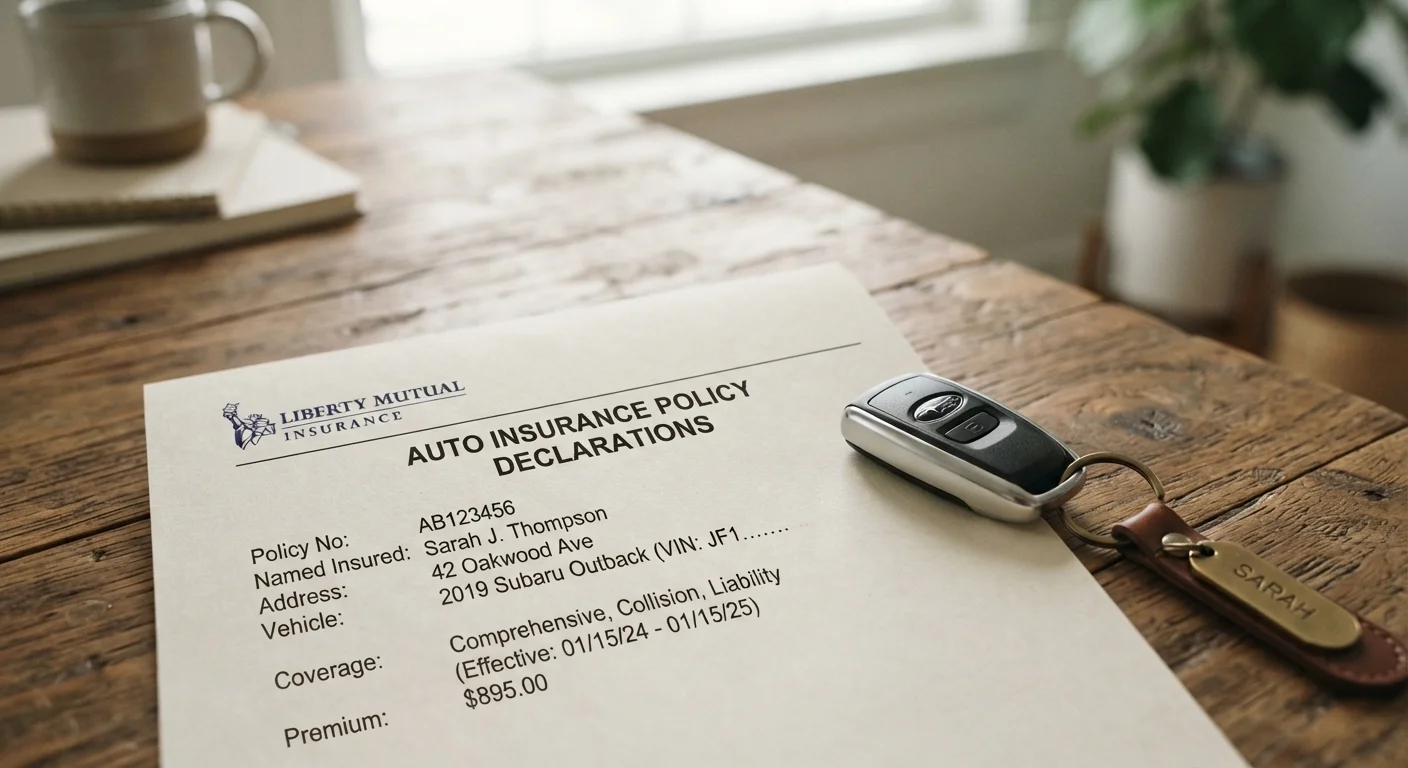
Photo credit: readerspanel.com
Collision, comprehensive, gap coverage, underinsured motorist: a clear glossary of the terms that matter most on your auto insurance policy.
Key Takeaways
- Collision and comprehensive coverage protect against different types of damage and are not interchangeable.
- GAP insurance covers the difference between what you owe and what your car is worth, not repair costs.
- A deductible is the amount you pay before your insurer pays, not a fee for filing a claim.
- Liability limits are per-incident caps, and low limits can leave you personally responsible for the remainder.
- Uninsured and underinsured motorist coverage are separate add-ons, not automatic parts of every policy.
Why policy language trips people up
Auto insurance policies are dense legal documents, and most drivers only read them carefully after a loss. That delay costs money. Misreading a term before you buy can mean choosing the wrong coverage level, carrying a deductible you cannot afford, or assuming protection that your policy does not actually provide.
The terms below appear on nearly every personal auto policy in the United States. Getting them straight before renewal or a new purchase gives you a clearer basis for comparing options and deciding what coverage fits your situation. For a broader look at what car ownership actually costs annually, see the car ownership cost audit.
Myth
Comprehensive coverage means my car is covered for everything.
Fact
Comprehensive covers damage from events other than a collision, such as theft, weather, fire, and animal strikes. It does not cover collision damage.
The word 'comprehensive' implies total coverage, but in insurance it describes a specific, limited category. Comprehensive (sometimes called 'other than collision') pays when your vehicle is damaged by hail, flooding, a falling tree, vandalism, theft, or hitting an animal. Damage from striking another car or object falls under collision coverage, which is a separate line on your policy with its own deductible. You can carry one without the other, which is why reading both sections of your policy matters.
Myth
My deductible is the fee I pay every time I file a claim.
Fact
The deductible is the portion of a covered loss you pay before your insurer pays the rest. It applies to the repair or replacement cost, not as an administrative charge.
If your car sustains $3,000 in collision damage and your collision deductible is $500, your insurer pays $2,500 and you pay $500. Choosing a higher deductible lowers your premium because you are taking on more of the financial risk yourself. The tradeoff is that a high deductible can create a cash-flow problem if a loss happens before you have set aside the funds to cover it. Consider your emergency savings when selecting a deductible amount.
Myth
GAP insurance covers repair costs if my car is totaled.
Fact
GAP (Guaranteed Asset Protection) insurance covers the difference between the insurance payout on a totaled vehicle and the outstanding loan or lease balance. It does not pay for repairs.
When a car is totaled, the insurer pays its actual cash value (ACV), which accounts for depreciation. New vehicles lose value quickly, so a car worth $22,000 at the time of an accident might carry a $26,000 loan balance. Standard insurance pays $22,000. GAP coverage pays the remaining $4,000 to the lender. Without it, you would still owe that $4,000 on a car you no longer have. GAP is most relevant in the first few years of ownership when depreciation outpaces loan payoff. For more on auto financing vocabulary, see key auto financing terms.
Myth
Liability insurance covers damage to my own vehicle.
Fact
Liability insurance pays for damage and injuries you cause to other people and their property. It does not pay for your own vehicle or your own medical bills.
Liability coverage has two components: bodily injury liability, which pays for injuries to others when you are at fault, and property damage liability, which pays to repair or replace the other party's vehicle or property. Neither applies to your own car or your own injuries. Your own vehicle damage requires collision or comprehensive coverage. Your own medical costs may be covered by personal injury protection (PIP) or medical payments coverage, both of which are separate policy components.
Myth
If the other driver is uninsured, my insurance will automatically cover me.
Fact
Uninsured motorist (UM) coverage is an optional add-on in most states, not a default part of every policy. Without it, you may have no coverage for losses caused by an uninsured driver.
Uninsured motorist coverage pays for your injuries and, in some states, vehicle damage when an at-fault driver has no insurance. Underinsured motorist (UIM) coverage applies when the at-fault driver has insurance but not enough to cover your costs. The two are often sold together but are technically distinct. State requirements vary: some states mandate UM coverage, others make it optional. Check your declarations page to confirm whether you carry it and at what limits. Consumer protection rules can also affect how insurers handle dispute resolution if a claim is denied.
Myth
A no-fault state means no one is responsible for the accident.
Fact
In no-fault states, each driver's own insurance pays their medical costs regardless of who caused the accident. Fault still matters for property damage and serious injury claims.
No-fault refers to how medical and lost-wage claims are handled, not to who caused the crash. In no-fault states, drivers carry personal injury protection (PIP), which pays their own medical expenses without waiting for fault to be determined. This speeds up payment but limits the ability to sue the at-fault driver for minor injuries. For significant injuries that exceed a threshold defined by state law, the right to sue the at-fault party typically remains. Property damage claims are generally still handled on a fault basis even in no-fault states.
Reading your policy with the right vocabulary
Once you understand these terms individually, look at how they combine on your declarations page (the summary sheet at the front of your policy packet). Your liability limits appear as a split number such as 100/300/100, meaning $100,000 per person for bodily injury, $300,000 per accident for bodily injury, and $100,000 for property damage. The deductible appears separately for collision and comprehensive. Any add-on coverages such as uninsured motorist protection appear as line items with their own limits.
If you carry a loan or lease, your lender almost certainly requires both collision and comprehensive. Once the vehicle is paid off, you can reassess whether those coverages make financial sense relative to the car's current market value.
State minimums may not be enough
Every state sets a minimum liability coverage requirement, but those floors are often low relative to the actual cost of a serious accident. If damages exceed your policy limits, you may be personally responsible for the difference. Review your limits with your state's requirements in mind, and consider whether your asset level warrants higher coverage.
Auto insurance decisions involve tradeoffs between premium cost and financial risk. This article is general educational information, not personalized financial or legal advice. A licensed insurance professional can evaluate the coverage options that match your specific situation and state requirements.

Author
Automotive Life Editorial Team
Automotive Life Editorial Team is the collective byline for our editorial team and contributor network. Articles published under this byline or an editorial pen name are researched, written, and reviewed according to our editorial standards for clarity, consistency, and independence before publication.
View all articles →