
Driving in Heavy Rain: Visibility, Hydroplaning, and When to Pull Over
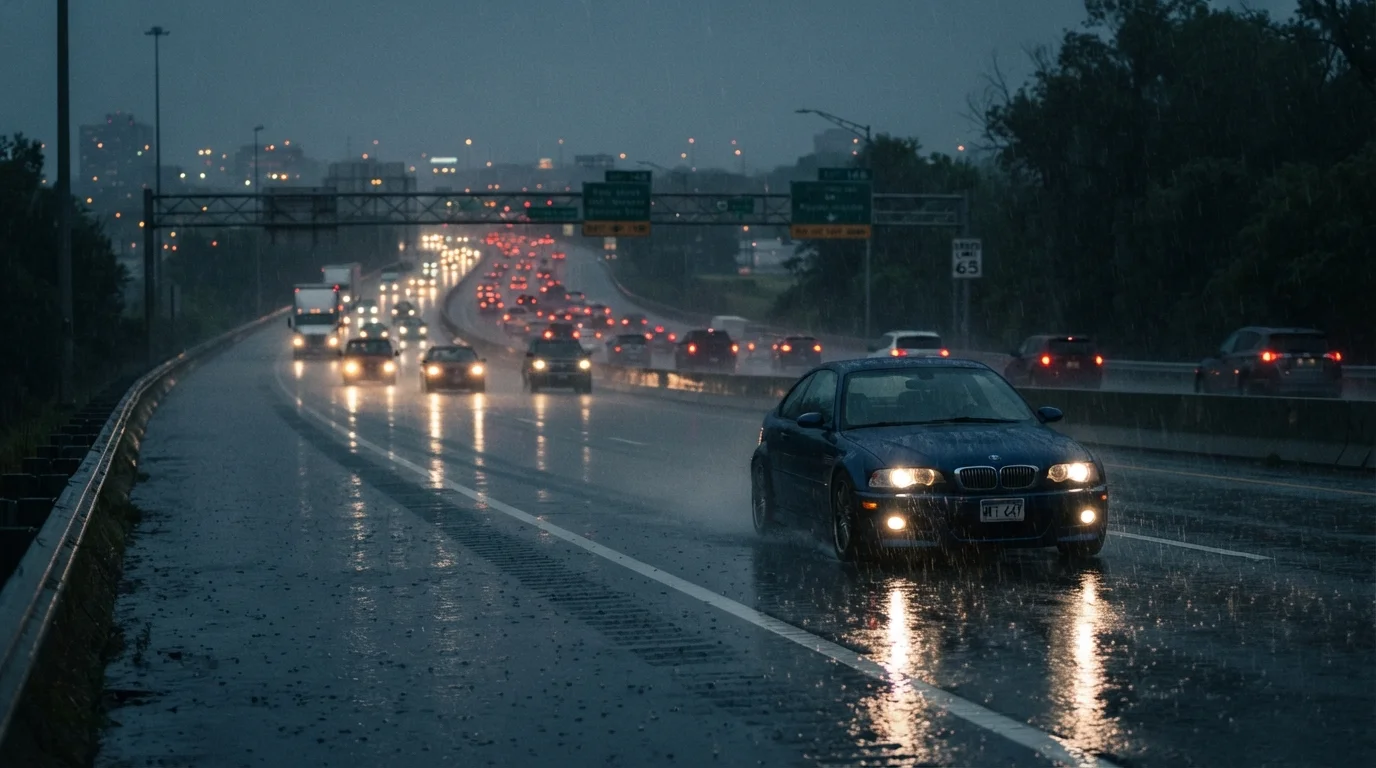
Photo credit: readerspanel.com
In this article
Heavy rain is one of the most dangerous weather conditions on U.S. roads. Know the steps to take before, during, and after a downpour behind the wheel.
Key Takeaways
- Slow down and increase following distance the moment rain begins, not once visibility worsens.
- Hydroplaning can occur at speeds as low as 35 mph on standing water with worn tires.
- Headlights should be on in rain, not just fog, and this is required by law in many states.
- If visibility drops to near zero, pulling completely off the road is safer than crawling forward.
- After a heavy rain, watch for flooded dips, debris, and slick paint markings.
Why rain is more dangerous than it looks
Rain-related crashes kill more Americans each year than tornadoes, hurricanes, and floods combined, according to the Federal Highway Administration. The danger is not just reduced visibility. Water mixes with road-surface oils in the first 10 to 20 minutes of a shower, creating a slick film before the rain is heavy enough to wash it away. Drivers who feel confident in light rain often carry those habits straight into a downpour.
Tire tread depth matters more in rain than in any other condition. A tire at 4/32 of an inch of tread displaces water significantly less efficiently than a new tire, and the difference becomes critical on a road with standing water. If your tires are approaching the 2/32 legal minimum, wet-road braking distances can more than double compared to a tire with adequate tread. See the pre-drive safety checklist for a practical routine that includes tire inspection before any long drive.
Speed compounds every risk. At highway speeds, even a thin sheet of water can lift a tire off the pavement entirely, which is the mechanics behind hydroplaning. The physics of traction loss on wet roads explains why contact between rubber and pavement is never guaranteed once water enters the equation.
What to do before you drive in rain
What you will need
Check your wiper blades before departure if rain is forecast. A blade that streaks or skips at low speed will be nearly useless at highway speed in a downpour. Most manufacturers suggest replacing blades every six to twelve months, though driving through dusty or sandy conditions accelerates wear.
Verify that all exterior lights work. In many states, law requires headlights whenever wipers are in use. Beyond the legal obligation, running lights make your vehicle visible to other drivers from the rear, which matters more than most drivers realize when spray from passing trucks cuts visibility sharply.
Step-by-step: driving safely through a downpour
Follow these steps in order. Each one compounds the one before it.
Turn on headlights immediately
Switch headlights on as soon as rain starts, even in daytime. Do not rely on daytime running lights alone; they typically do not activate taillights, which means following drivers may not see you clearly through rain spray. Most modern vehicles have an auto-light setting, but verify it activates low beams rather than just running lights.
Reduce speed and increase following distance
Drop your speed by at least 5 to 10 mph below the posted limit in moderate rain, and more in heavy rain. Increase your following distance to at least four seconds instead of the standard two. Count from when the vehicle ahead passes a fixed point until your front bumper reaches it. Wet braking distances can be 50 percent longer than dry-road distances at the same speed.
Steer smoothly and brake gently
Abrupt steering inputs or hard braking can break traction on a wet surface. Brake progressively by applying steady, even pressure well before you need to stop. If your vehicle has anti-lock brakes (ABS), press the brake pedal firmly and hold it; do not pump. ABS will pulse automatically to prevent wheel lockup.
Handle a hydroplane calmly
Hydroplaning feels like a sudden lightness in the steering wheel, sometimes accompanied by a slight drift. If it happens: ease off the accelerator gradually, do not brake hard or steer sharply, and hold the wheel straight or turn gently in the direction of drift. As the tire regains contact, you will feel normal steering resistance return. See the full traction loss guide for a deeper walkthrough of skid recovery.
Manage visibility inside the cabin
Rain raises humidity inside the car, which fogs windows quickly. Turn on the air conditioning (even in cool weather) and direct vents toward the windshield. Modern climate systems with a defrost setting handle this automatically. If rear glass fogs, use the rear defroster. A clear view out of all glass is not optional; it is the one thing every other safe-driving action depends on.
Watch for pooling water and road spray
Low-lying sections of road, highway on-ramps, and underpasses collect water faster than the surrounding pavement drains it. Approach these areas at reduced speed. When a large truck passes in the opposite direction, a wall of spray can momentarily block your entire windshield. Slow down slightly before the pass and hold the wheel firmly but without overgripping.
Recognizing when to pull over
There is a threshold where driving slowly through rain becomes more dangerous than stopping. If windshield wipers on high speed cannot clear the glass fast enough to give you a two-second forward view, that threshold has been crossed.
When you decide to stop, pull well off the roadway onto a paved shoulder or into a parking lot. Stopping on the edge of a travel lane is dangerous; a driver behind you may not see your vehicle until they are nearly on top of it. Turn on your hazard lights immediately after stopping and leave them on until you resume driving.
Never stop under an overpass or bridge. These areas create a choke point, reduce lanes, and become extremely hazardous when multiple drivers have the same idea. If you must wait on a shoulder, stay inside the vehicle with your seatbelt fastened. Exiting the vehicle on a highway shoulder in low visibility carries serious risk.
Never drive into floodwater
Flooded roadways are responsible for more weather-related vehicle fatalities than any other cause in the U.S. Water depth is almost impossible to judge from a driver's seat, and currents beneath the surface can be far stronger than the water appears. If a road is flooded, turn around and find an alternate route.
After the rain stops
Roads do not become safe the moment rain ends. Painted lane markings, crosswalks, and metal surfaces like manhole covers and bridge expansion joints stay slick long after the pavement itself dries. Intersections collect oil runoff and can remain greasy for several minutes.
Watch for road debris that washed across lanes, especially on rural roads and highways that run through wooded areas. Flooded dips and low-water crossings are a separate hazard entirely: as little as six inches of moving water can cause a loss of vehicle control, and two feet can sweep most passenger cars off a road. Do not attempt a flooded crossing if you cannot clearly see the road surface beneath the water. The guide to traction loss situations covers how to respond if your vehicle begins to slide on a wet surface after the storm.

Author
Automotive Life Editorial Team
Automotive Life Editorial Team is the collective byline for our editorial team and contributor network. Articles published under this byline or an editorial pen name are researched, written, and reviewed according to our editorial standards for clarity, consistency, and independence before publication.
View all articles →