
Urban Driving Hazards Most Drivers Stop Noticing Over Time
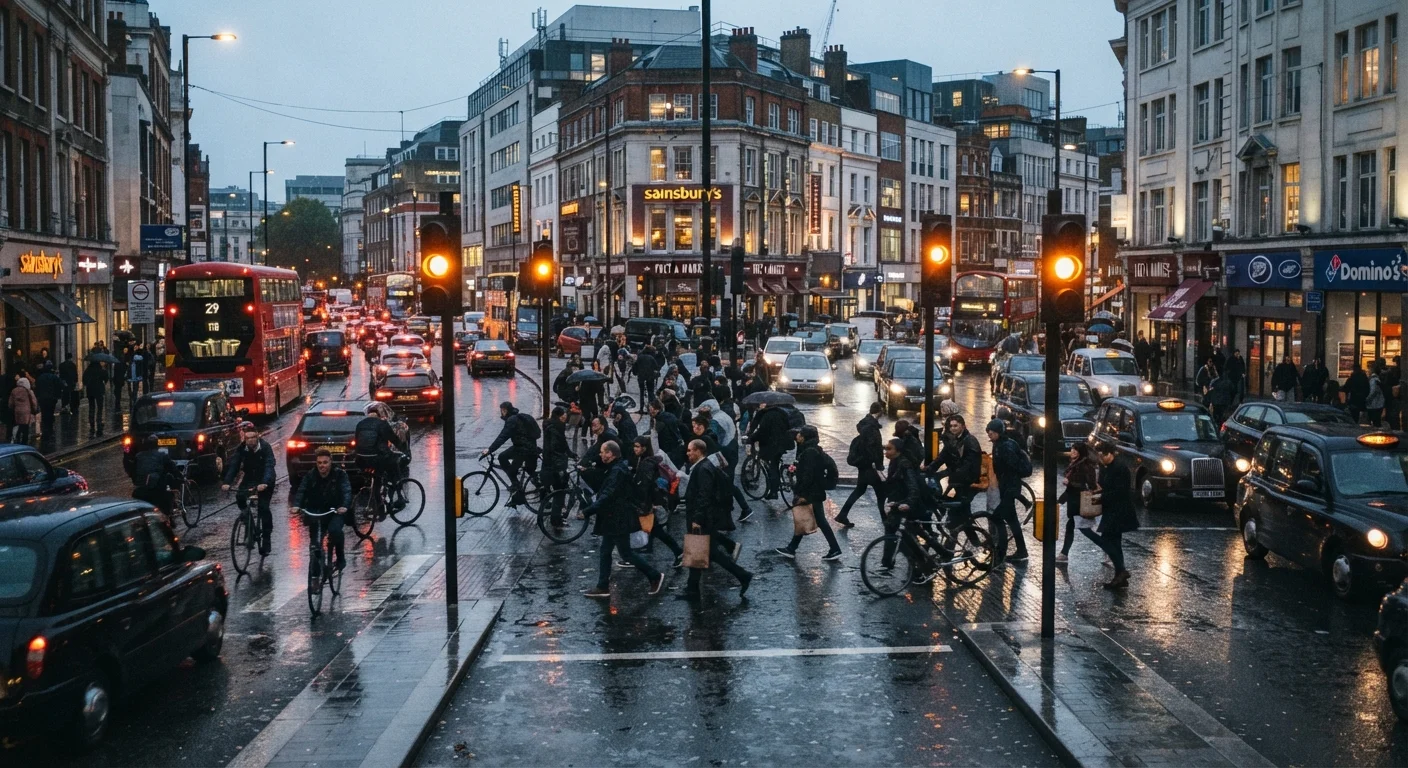
Photo credit: readerspanel.com
In this article
Familiarity breeds complacency in city driving. A look at the intersections, pedestrian patterns, and blind spots that experienced urban drivers tune out.
Key Takeaways
- Familiarity with a route can suppress the alertness needed to spot genuine hazards.
- Pedestrians and cyclists frequently appear outside expected zones in dense urban areas.
- Short urban trips carry disproportionate crash risk because full attention is rarely engaged.
- Drivers commonly underestimate the danger at low-speed intersections near home.
- Rebuilding active scanning habits takes deliberate effort but measurably reduces exposure.
Why experience can work against you in city traffic
New drivers are cautious because everything is unfamiliar. Experienced urban drivers face the opposite problem: their brains have catalogued so many repetitions of the same scenes that genuine attention is no longer required to navigate them. The result is a form of functional blindness, not a vision problem but a prediction problem. The brain substitutes the expected scene for the actual one.
This substitution is efficient for routine tasks. On a road shared with cyclists, pedestrians, and delivery traffic, it is a reliable source of near-misses and, sometimes, collisions. The hazards covered below are not unusual or obscure. They are the ones that experienced urban drivers stop seeing because familiarity has made them invisible.
Urban vs. highway risk profiles differ significantly
Highway driving tends to get more attention in safety discussions, but urban environments produce a higher share of pedestrian and cyclist fatalities. Lower speeds do not translate to lower consequences when vulnerable road users are involved. If you drive both environments regularly, be aware that the mental mode suited to one does not automatically carry over to the other. The differences between highway and city driving are worth reviewing deliberately.
Six hazards that fade into the background
The neighborhood intersection you cross every day
Familiarity with a specific intersection does not make it safer. Crash data collected by the National Highway Traffic Safety Administration consistently shows that a large share of urban collisions occur within a few miles of the driver's home, where pattern recognition replaces active attention. When you have turned left at the same corner 400 times, your brain stops scanning for the cyclist who is there today but wasn't the other 399 times.
The practical fix is to treat each approach as if you have never driven it before. That means a full stop before the limit line, a deliberate head check in both directions, and a pause for pedestrians who may be mid-crossing before your signal changes. For a deeper look at right-of-way rules that often cause confusion at these spots, see this guide to intersection priority.
A large share of urban collisions happen within a few miles of the driver's home.
Delivery vehicles stopped in travel lanes
Urban streets increasingly carry delivery traffic, and drivers adapt to it in ways that create new risk. When a large van is stopped in the right lane, the natural response is to drift left without a full mirror-and-signal check. What the van also blocks is your view of a pedestrian stepping around it, a cyclist filtering past on the right, or a child chasing something into the street.
Slow down before you reach the obstruction, not as you pass it. Check the left mirror for vehicles already overtaking you, signal your intent, and scan the space beyond the vehicle before committing. The risk is not the van itself; it is everything the van is hiding.
The risk is not the parked van itself; it is everything the van is hiding from view.
Pedestrians outside marked crosswalks
In cities, pedestrians cross mid-block constantly. Drivers who have driven the same corridor for years often scan only at marked crossings, effectively removing the spaces in between from their mental map. In most states, the law requires drivers to yield to pedestrians crossing a roadway even when no crosswalk is present, so legal exposure matches the physical risk.
Urban pedestrian behavior is not predictable by location alone. People step off curbs between parked cars, cross diagonally, and enter the roadway while looking at a phone. Scanning the full width of the road, not just the stripes painted on it, keeps these situations visible before they become emergencies.
Scanning only at marked crosswalks removes most of a city block from a driver's attention.
The slow creep of distraction on short trips
Short urban trips, the school run, the two-mile grocery store loop, generate a specific form of inattention. The drive is brief enough that the mind treats it as nearly complete before it has started. Research in driver behavior has documented that task-switching, including reaching for a phone, adjusting climate controls, or monitoring a child in the back seat, spikes during these familiar, low-speed segments precisely because drivers feel the situation is under control.
The distance between full attention and a collision at 25 mph is very short. At that speed, a vehicle travels about 37 feet per second. A one-second glance away covers the length of a typical bus.
At 25 mph, a one-second distraction covers roughly the length of a transit bus.
Cyclists filtering through stopped traffic
When traffic is backed up at a signal, cyclists often move forward along the right edge or between lanes. Many drivers do not scan for this movement when the light turns green because their attention goes to the vehicle in front. A cyclist who was behind a driver moments ago can be alongside or slightly ahead by the time the driver accelerates, creating a right-hook collision risk if the driver turns without checking.
Before moving from a stop, check the right mirror and the right blind spot, particularly if there is a bike lane or sufficient shoulder width for a cyclist to have filtered forward. This habit takes about one second and removes a common urban crash type from your exposure.
A cyclist can move from behind your vehicle to alongside it while you wait at a red light.
Aggressive driving that feels normal after years in traffic
City driving gradually normalizes behaviors that are statistically dangerous: rolling stops, late merges, following at distances measured in feet rather than seconds, and using an oncoming left-turn gap that requires acceleration to make. Drivers who commute daily in dense traffic often report these habits as simply "how city driving works."
They are also behaviors associated with elevated crash risk. The patterns linked to aggressive driving include the smaller, incremental decisions as much as the obvious confrontations. Recalibrating what feels normal is harder than learning a new skill, but it starts with noticing the specific moments where the margin for error has quietly been reduced to near zero.
Daily exposure to dense traffic gradually reframes dangerous habits as normal driving.
Reset your attention on familiar routes
On routes you drive frequently, try narrating hazards out loud for one week: 'pedestrian on the left, van blocking sightlines, cyclist at the light.' Spoken observation forces active scanning rather than passive pattern-matching. Drivers who do this report noticing things on familiar streets they had genuinely stopped seeing.
Getting attention back once it has drifted
Attention in familiar environments does not restore itself automatically. Deliberate habits are more reliable than intention. Checking mirrors on a set cycle, committing to full stops, and creating a brief mental pause before each trip are all documented approaches in driver safety education. They work because they interrupt the automatic mode rather than competing with it.
Fatigue deepens the problem significantly. A driver who is tired in familiar surroundings is especially likely to rely on habitual responses rather than active scanning. The impairment that fatigue causes is easy to underestimate precisely because the driver is still technically awake and moving through a route they know. Short urban trips and tired drivers are a combination that generates more incidents than most people expect.

Author
Automotive Life Editorial Team
Automotive Life Editorial Team is the collective byline for our editorial team and contributor network. Articles published under this byline or an editorial pen name are researched, written, and reviewed according to our editorial standards for clarity, consistency, and independence before publication.
View all articles →