
Driving Fatigue: Why Tired Drivers Underestimate How Impaired They Are
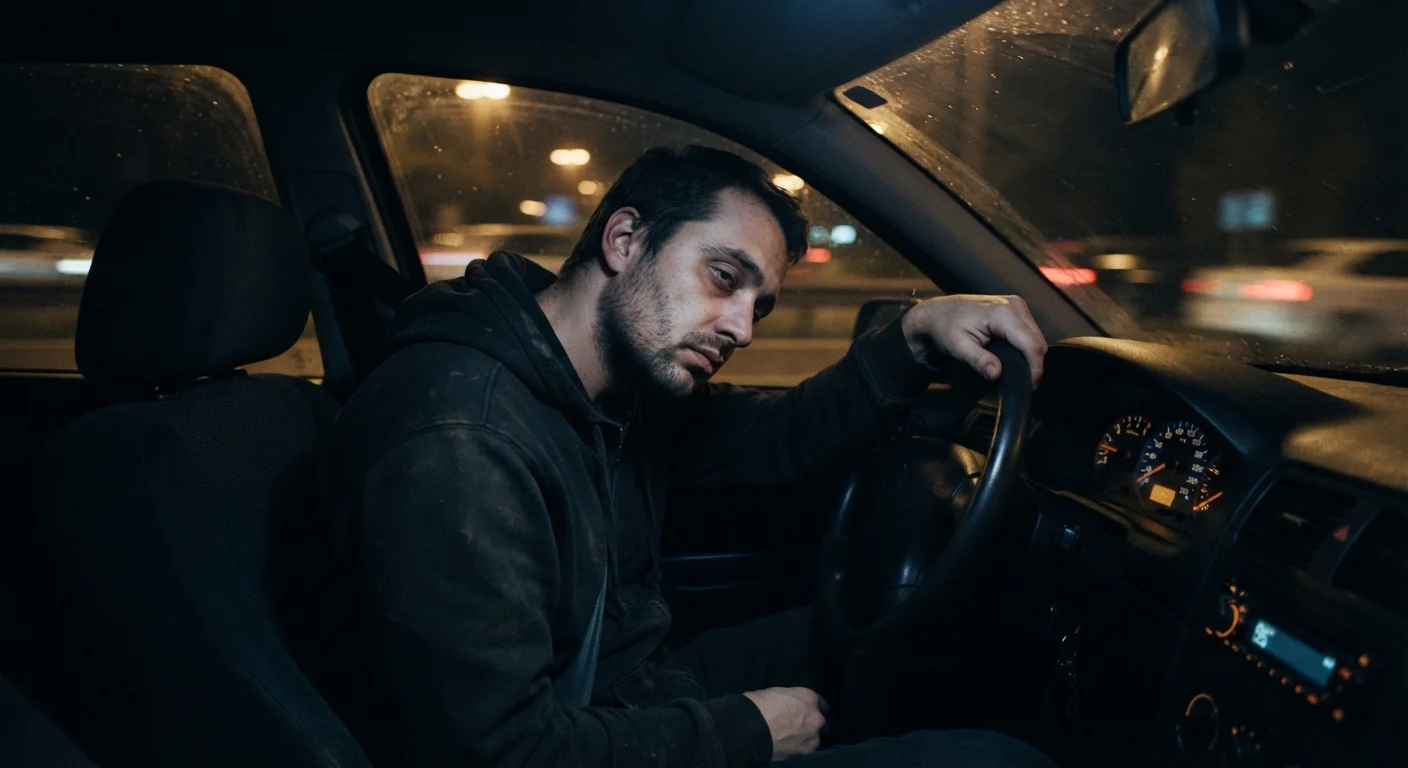
Photo credit: readerspanel.com
In this article
Fatigue affects reaction time and judgment in ways that mirror alcohol impairment. Understand the warning signs and the only reliable fix.
Key Takeaways
- Fatigue impairs judgment and reaction time at levels comparable to alcohol impairment.
- Drivers consistently underestimate how tired they are because fatigue dulls self-awareness.
- Microsleeps, which last two to five seconds, can occur without the driver knowing.
- Caffeine and opening a window do not reliably restore safe alertness.
- The only effective remedy for driving fatigue is sleep, not stimulants or willpower.
- Warning signs include frequent yawning, lane drift, and difficulty remembering recent miles driven.
Why fatigue is a harder problem than it looks
Most drivers accept that alcohol impairs driving. Far fewer treat fatigue with the same caution, even though the physiological effects overlap in meaningful ways. The reason fatigue gets less attention is partly structural: there is no roadside test for sleepiness, no legal limit, and no obvious visible symptom to others on the road.
What makes fatigue particularly dangerous is that it degrades the mental faculties needed to assess itself. A driver who is severely sleep-deprived will typically rate their own alertness as higher than objective measures would support. This gap between perceived and actual impairment is not laziness or denial. It is a direct effect of how fatigue acts on the brain's prefrontal cortex, the region responsible for self-monitoring and risk assessment.
This article covers the mechanics of fatigue-related impairment, the warning signs that are worth taking seriously, and what actually works as a countermeasure. For a broader look at how mental state affects driving, see our piece on the real risks of distracted driving.
What fatigue does to driving ability
Reaction time is the most measurable casualty of sleep deprivation. A well-rested driver typically reacts to a hazard in about 0.25 seconds. At 17 to 19 hours without sleep, that delay increases substantially, and the driver may not notice any change at all.
Beyond raw reaction speed, fatigue affects:
- Decision-making under uncertainty
- Sustained attention over time
- Ability to track multiple objects (other cars, pedestrians, signs)
- Resistance to distraction
One consequence that surprises many drivers is the microsleep. A microsleep is an involuntary episode of sleep lasting two to five seconds. At 60 mph, five seconds covers about 440 feet of road. The driver typically has no memory of the episode and may not realize it happened at all.
100,000+
Drowsy-driving crashes reported annually in the U.S.
The National Highway Traffic Safety Administration (NHTSA) has estimated that drowsy driving contributes to tens of thousands of crashes each year, though actual figures are considered underreported.
17-19 hrs
Wakefulness that equals roughly 0.05% BAC impairment
Research published in peer-reviewed sleep science journals found cognitive impairment at this wakefulness level comparable to a blood alcohol concentration of 0.05%.
440 feet
Distance covered during a 5-second microsleep at 60 mph
At highway speed, a two-to-five-second involuntary sleep episode covers enough road to pass through an intersection or into oncoming traffic.
Fatigue also affects lane discipline. Tired drivers show more lateral drift and make larger, less controlled steering corrections. These patterns mirror what researchers observe in drivers at or above the legal alcohol limit, which is one reason stopping distance and reaction time matter so much more when a driver is sleep-deprived.
The self-assessment problem
In multiple sleep research studies, participants who had been kept awake for extended periods consistently rated their own performance as better than objective testing showed. After two or three nights of reduced sleep, many subjects stopped noticing further decline even as their performance continued to worsen.
This matters because many drivers rely on subjective alertness as their primary guide for whether to continue driving. The internal signal that normally says "I am too tired to drive safely" becomes unreliable precisely when it is most needed.
New drivers may be especially vulnerable to this effect because they have less experience reading their own fatigue cues in a driving context. For more on how inexperience compounds road risk, see the safety gaps affecting teen and new drivers.
Warning signs worth stopping for
Some signals are reliable enough to treat as a reason to pull over safely:
- Yawning repeatedly within a short span of time
- Eyes that feel heavy or that close briefly without intention
- Drifting out of your lane or onto rumble strips
- Missing a turn, exit, or traffic sign you would normally notice
- Being unable to remember the last several miles of road
- Difficulty holding a consistent following distance
Rumble strips along lane edges exist partly to catch this last type of inattention. They do not prevent a crash; they provide a moment to react. Treating that vibration as a cue to continue driving is a significant error in judgment, and fatigue is exactly the condition that makes such errors feel reasonable.
Emotional irritability and poor judgment are also associated with sleep deprivation, which connects to the patterns described in our piece on road rage and aggressive driving.
What works and what does not
Several popular countermeasures offer less protection than drivers assume:
- Caffeine: Provides a limited alertness window and masks tiredness without correcting impairment. It does not restore reaction time to baseline.
- Opening a window or turning up music: These may provide a brief stimulus response, but neither addresses the underlying sleep debt. The effect fades quickly.
- Talking to a passenger: Conversation does produce mild alertness effects, though as noted in research on passenger dynamics and driver behavior, passengers also create their own attentional demands.
What does work is sleep. A 20-minute nap taken in a safe, parked location reduces acute sleepiness and has shown measurable improvement in alertness in research settings. Planning driving schedules to avoid the 2 a.m. to 6 a.m. window, when circadian drive for sleep is strongest, also reduces risk substantially. If a long drive is unavoidable, stopping every two hours allows partial recovery and keeps fatigue from compounding.
This article is for general informational purposes only and does not constitute medical or safety advice specific to your circumstances. If you have concerns about a sleep disorder affecting your driving, consult a qualified healthcare professional.
Frequently Asked Questions

Author
Automotive Life Editorial Team
Automotive Life Editorial Team is the collective byline for our editorial team and contributor network. Articles published under this byline or an editorial pen name are researched, written, and reviewed according to our editorial standards for clarity, consistency, and independence before publication.
View all articles →