
The Real Risks of Distracted Driving (And It Isn't Just Phones)
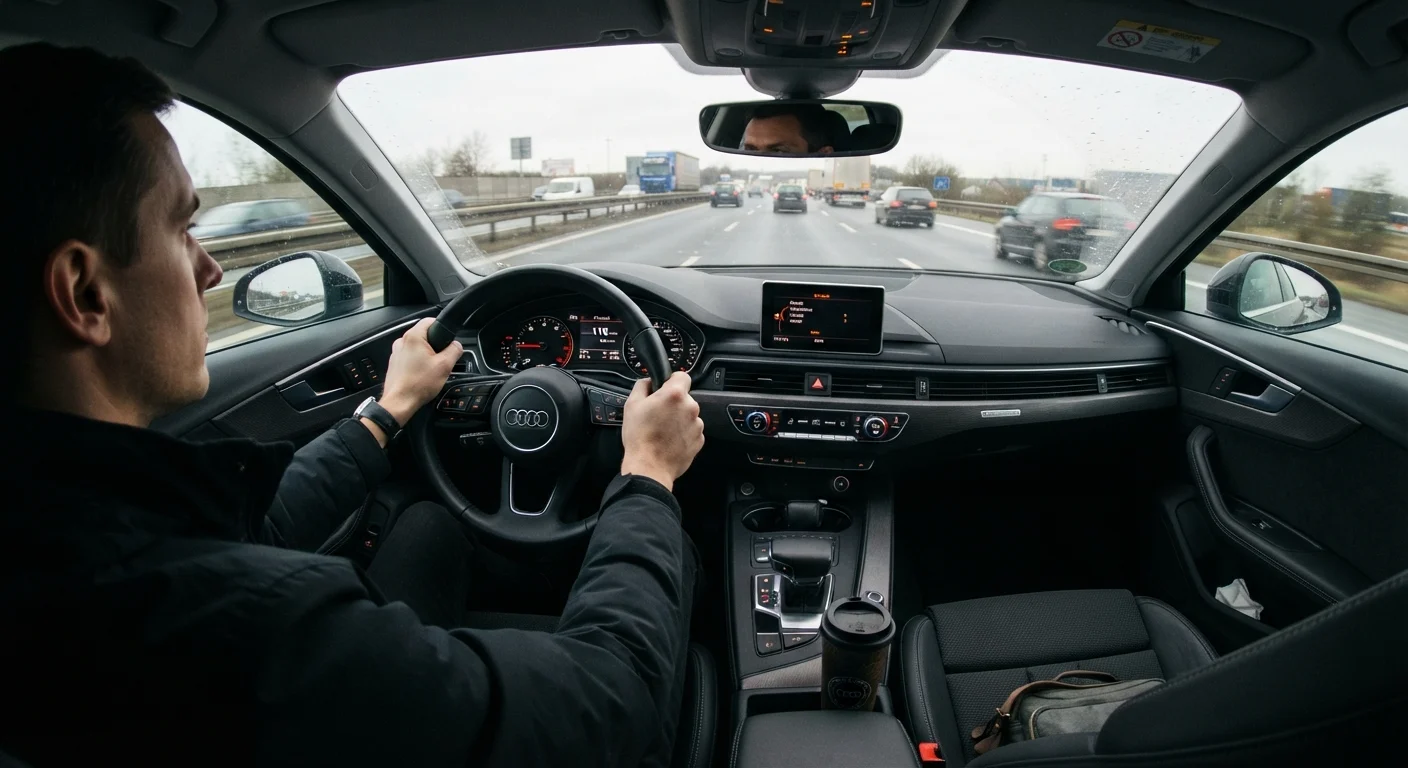
Photo credit: readerspanel.com
In this article
Phone use is the headline, but eating, in-car conversations, and mental distraction are just as dangerous. Here's what the research actually shows.
Key Takeaways
- Manual, visual, and cognitive distraction each impair driving, and many common activities combine all three.
- Eating while driving, in-car conversations, and daydreaming cause a significant share of distraction-related crashes.
- Hands-free phone calls still create cognitive distraction that slows reaction time and narrows attention.
- The National Highway Traffic Safety Administration (NHTSA) reports that distraction is a factor in roughly 8% of all fatal crashes annually.
- Addressing distraction requires changing habits, not only putting down a phone.
Why 'just put down your phone' misses most of the problem
Phone use gets the headlines, and that attention is deserved. Texting while driving takes a driver's eyes off the road for an average of five seconds, according to NHTSA data. At 55 mph, five seconds covers the length of a football field. But phone use accounts for a fraction of distraction-related crashes. The broader category includes eating, adjusting controls, talking with passengers, grooming, and a form of distraction that leaves no physical trace: cognitive load, the mental drift that happens when a driver's mind is somewhere other than the road.
The three categories of distraction are manual (hands leave the wheel), visual (eyes leave the road), and cognitive (attention leaves the driving task). Many everyday habits trigger all three at once. Understanding that split helps drivers make better decisions than a phone-only focus allows.
Myth
Distracted driving is mainly a phone problem. If you put down your phone, you're driving safely.
Fact
Phone use is one source of distraction among many. Eating, daydreaming, adjusting controls, and passenger conversations all impair driving in measurable ways.
NHTSA categorizes distraction into manual, visual, and cognitive types. A driver eating a burger while navigating traffic hits all three. A driver lost in thought about a work problem may keep both hands on the wheel and eyes forward, yet miss a red light because cognitive attention has left the driving task entirely. Phone bans address one input; they do not touch the broader problem.
Myth
Hands-free phone calls are safe because your hands stay on the wheel and your eyes stay on the road.
Fact
Hands-free calls eliminate manual and visual distraction but leave cognitive distraction intact, which is enough to slow reaction time and narrow the driver's field of attention.
The AAA Foundation for Traffic Safety has published research showing that hands-free calls produce moderate cognitive distraction comparable to a handheld call. The brain does not fully multi-task; it switches between tasks rapidly. During a phone conversation, the brain devotes resources to language processing, social awareness, and memory that would otherwise support hazard detection. A driver on a hands-free call can look directly at a pedestrian and fail to register them, a phenomenon researchers call "inattention blindness."
Myth
If I'm an experienced driver, I can handle minor distractions without risk. Muscle memory handles the basics.
Fact
Experience reduces some risks, but distraction impairs the cognitive and perceptual processes that experience cannot automate.
Experienced drivers do handle routine traffic more automatically than beginners, which is a genuine advantage. However, hazard detection, decision-making under time pressure, and anticipating other drivers' behavior all require active cognitive engagement. Distraction degrades exactly those functions. Studies of crash involvement show that experienced drivers are not immune to distraction-related errors; they are simply better at the routine portions of driving that don't require them.
Myth
Eating or drinking something simple, like coffee, is basically harmless because it only takes a second.
Fact
Even brief manual distraction increases crash risk, and repeated brief interruptions across a trip accumulate into significant exposure time.
NHTSA's research on secondary tasks found that reaching for or handling food and drink produces distraction durations that are longer than drivers estimate, and that the startle response to a sudden hazard mid-task often results in jerky or delayed steering inputs. A coffee cup that slips, a lid that leaks, or a wrapper that needs unwrapping can extend a "one second" distraction to several seconds at the worst possible moment.
Myth
Daydreaming isn't really distracted driving because nothing external is competing for my attention.
Fact
Cognitive distraction from mind-wandering is one of the most common distraction types in crash data and is harder to self-monitor than device use.
"Lost in thought" consistently appears as a top distraction type in NHTSA fatality data. Unlike phone use, mind-wandering produces no external signal that a driver or observer can see. Drivers typically don't realize they've been cognitively absent until a near-miss or external event breaks the trance. This makes it harder to correct through simple rule-following. High mental fatigue, stress, and emotional arousal all increase the likelihood of mind-wandering while driving. Digital overload and mental fatigue can spill directly into this kind of behind-the-wheel cognitive drift.
What the data says about non-phone distractions
NHTSA crash data consistently shows that "generally distracted" or "lost in thought" is among the most commonly cited distraction types in fatal crashes, often outranking phone use in raw numbers. Eating and drinking are present in a meaningful share of property-damage crashes. The AAA Foundation for Traffic Safety has found that internal cognitive tasks, including conversations and mind-wandering, reduce the brain's processing of visual information even when the driver's eyes are technically on the road.
~8%
Fatal crashes involving distraction
According to NHTSA's annual traffic safety data, distraction is a reported factor in roughly 8% of all fatal crashes in the United States.
5 sec
Average eyes-off-road time when texting
NHTSA research shows that sending or reading a text takes a driver's eyes off the road for an average of five seconds.
4x
Crash risk increase with phone use
The AAA Foundation for Traffic Safety and NHTSA both cite research suggesting phone use while driving roughly quadruples crash risk compared to undistracted driving.
Passenger conversations deserve particular attention. Research published through the AAA Foundation shows that adult passengers sometimes moderate their conversation when they sense driving demands increase, a self-regulating effect that phone callers cannot replicate. That distinction matters: hands-free calls still carry measurable cognitive risk, because the other person cannot see traffic and does not pause.
Fatigue compounds all of this. A drowsy driver has slower reaction times and reduced vigilance, which makes any secondary distraction more consequential. Tired drivers consistently underestimate how impaired they are, a pattern that mirrors how distracted drivers rate their own performance.
Practical habits that actually reduce distraction
Reducing distraction does not require abandoning technology or refusing to carry passengers. It requires a few deliberate defaults.
- Set navigation before moving. Adjusting a GPS mid-trip combines visual, manual, and cognitive distraction simultaneously.
- Pull over to eat. Eating behind the wheel occupies at least one hand and draws attention to the task whenever something spills or needs unwrapping.
- Treat complex conversations as a cue to pause or pull over. Emotionally charged phone calls, whether hands-free or not, are among the highest-cognitive-load distractions a driver can encounter. Social dynamics inside the car affect driver behavior in measurable ways as well.
- Recognize mind-wandering as a real risk. If you arrive somewhere with no memory of the last few miles, cognitive distraction was present the entire time.
New and young drivers face elevated risk because they have less automatic pattern recognition to fall back on when attention drifts. The safety gaps that affect new license holders go beyond phone use and include exactly these non-obvious distraction sources.

Author
Automotive Life Editorial Team
Automotive Life Editorial Team is the collective byline for our editorial team and contributor network. Articles published under this byline or an editorial pen name are researched, written, and reviewed according to our editorial standards for clarity, consistency, and independence before publication.
View all articles →