
Drip Irrigation vs. Soaker Hoses: Choosing the Right Slow-Water System
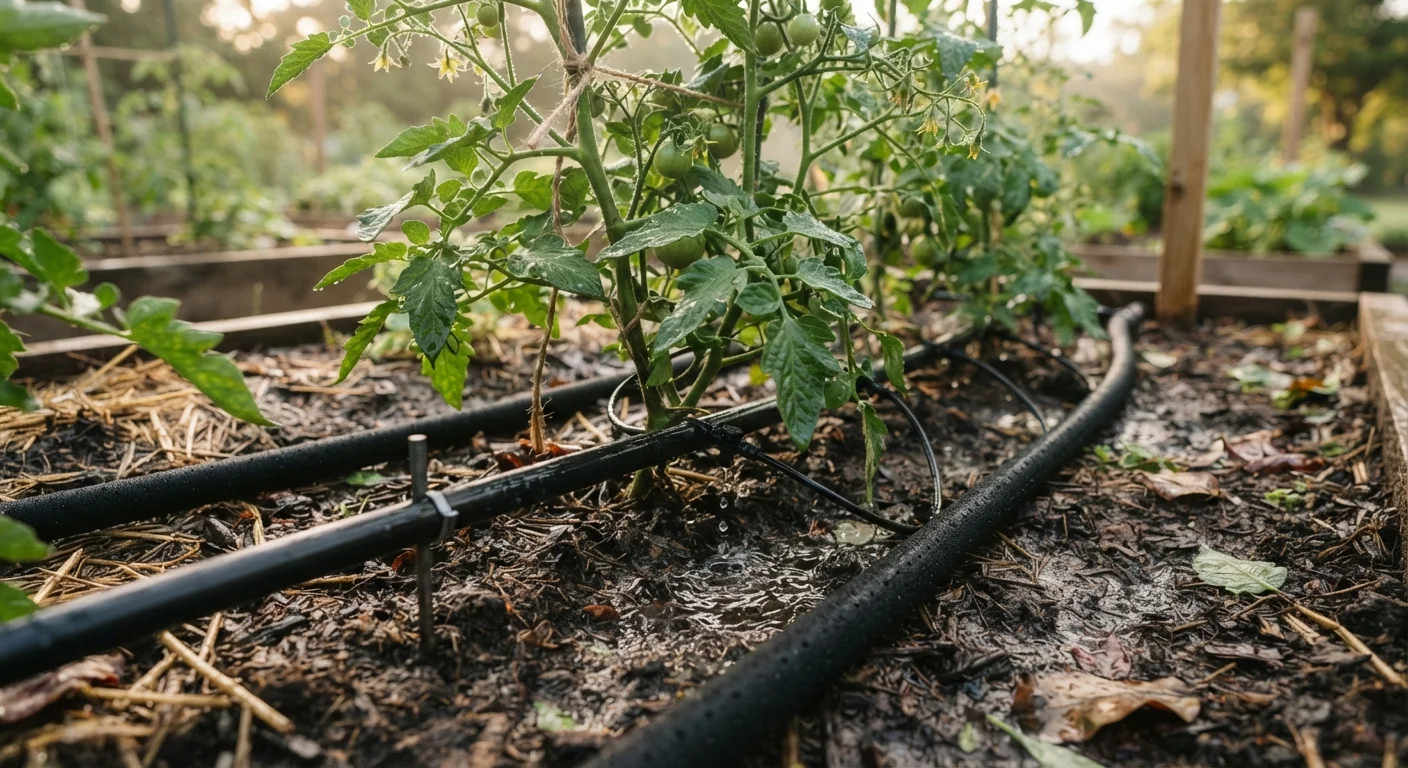
Photo credit: readerspanel.com
In this article
Both deliver water slowly at root level, but drip irrigation and soaker hoses suit different garden setups. Here is how to think through the choice.
Key Takeaways
- Drip irrigation uses emitters to target specific plants; soaker hoses seep water along their entire length.
- Soaker hoses cost less upfront and are easier to set up for straight, dense plantings.
- Drip systems handle slopes, mixed plant spacing, and longer runs more reliably than soaker hoses.
- Both reduce water lost to evaporation compared with overhead sprinklers.
- Soaker hoses degrade faster in UV exposure and high-pressure situations; drip lines last longer with proper filtration.
- Neither system eliminates the need to match watering duration to your soil type and plant needs.
How each system works
Drip irrigation runs water through a main supply line to individual emitters, small devices that release water at a measured rate, typically 0.5 to 2 gallons per hour. Each emitter sits at or near the base of a single plant. Because flow is controlled at each point, you can mix emitter sizes on one line to accommodate plants with different water needs.
Soaker hoses are porous tubes, usually made from recycled rubber or polyethylene, that allow water to seep through their walls along the entire length. Water spreads outward into the soil as it exits, moistening a band roughly 6 to 12 inches wide on each side depending on soil type and water pressure. There are no individual control points; the whole hose delivers at once.
Both systems work below or at the soil surface, which limits the wet foliage that promotes fungal disease. For a deeper look at why root-level moisture matters, see why deep, infrequent watering builds stronger roots.
Pressure regulation matters for both systems
Most municipal water supplies run at 40 to 80 PSI, which is too high for both drip and soaker systems. A pressure regulator that steps supply pressure down to 20 to 30 PSI protects emitters and hose walls from premature wear. Regulators are inexpensive and thread directly onto a spigot or hose timer.
Cost and installation
Soaker hoses are inexpensive and widely available in lengths from 25 to 100 feet. A basic setup needs only the hose, a hose-end timer if you want automation, and a pressure regulator if your home water pressure exceeds about 25 PSI. High pressure causes soaker hoses to balloon and fail prematurely.
Drip irrigation starter kits cost more, and a fully configured system for a large garden can cost several times what a comparable soaker setup would. The trade-off is component flexibility. You choose emitter spacing, flow rate, and line routing. Installing a drip system takes more time initially, but the layout can be adjusted without replacing the whole system.
Both systems benefit from a filter at the supply connection to prevent sediment from clogging emitters or pores. This is especially worth doing if you use well water.
Performance across different garden types
Soaker hoses work well in straight or gently curved rows where plants are close together, such as lettuce, beans, or carrots. The uniform seep pattern matches the uniform spacing of those crops. In a raised bed no wider than 4 feet, a single hose snaked back and forth can cover the whole area evenly.
Drip irrigation handles complexity better. On a slope, pressure-compensating emitters maintain consistent output regardless of elevation change. In a mixed border with shrubs, perennials, and annuals, you can run one main line and attach emitters only where each plant stands, skipping bare soil entirely. That precision reduces weed germination between plants.
Soaker hoses lose effectiveness on long runs. Flow at the far end diminishes noticeably beyond about 100 feet. Drip lines, supported by the right pressure regulator and line diameter, can cover longer distances without that drop-off.
| Criterion | Drip irrigation | Soaker hoses |
|---|---|---|
| Upfront cost | Moderate to high | Low |
| Installation complexity | Higher, more fittings | Low, hose and spigot |
| Plant spacing flexibility | High, emitter per plant | Low, uniform seep |
| Performance on slopes | Good with pressure-comp emitters | Uneven flow on inclines |
| Long run capability | Good with correct pressure | Diminishes past ~100 ft |
| Typical lifespan | 5 to 10 years | 2 to 5 years |
| Clog risk | Moderate, filter needed | Low to moderate |
Longevity and maintenance
Drip emitters and poly tubing, stored out of direct sun when not in season, routinely last five to ten years. UV exposure breaks down both materials, so burying the main line a few inches or covering it with mulch extends its life considerably. Emitters can clog with mineral deposits; flushing the system at the start and end of each season and using a filter reduces this.
Soaker hoses are more vulnerable. Rubber versions degrade faster under UV exposure, and a hose left on the soil surface year-round may last only two to three seasons. Covering it with 2 to 3 inches of mulch slows breakdown and also helps retain the soil moisture the hose delivers. Inspect soaker hoses at the start of each season for cracks or collapsed sections.
Both systems pair well with a timer. Automating run time removes the guesswork from watering frequency and makes it easier to water early in the morning when evaporation rates are low.

Author
Home & Garden Editorial Team
Home & Garden Editorial Team is the collective byline for our editorial team and contributor network. Articles published under this byline or an editorial pen name are researched, written, and reviewed according to our editorial standards for clarity, consistency, and independence before publication.
View all articles →