
Watering Deeply vs. Watering Often: What Roots Actually Need
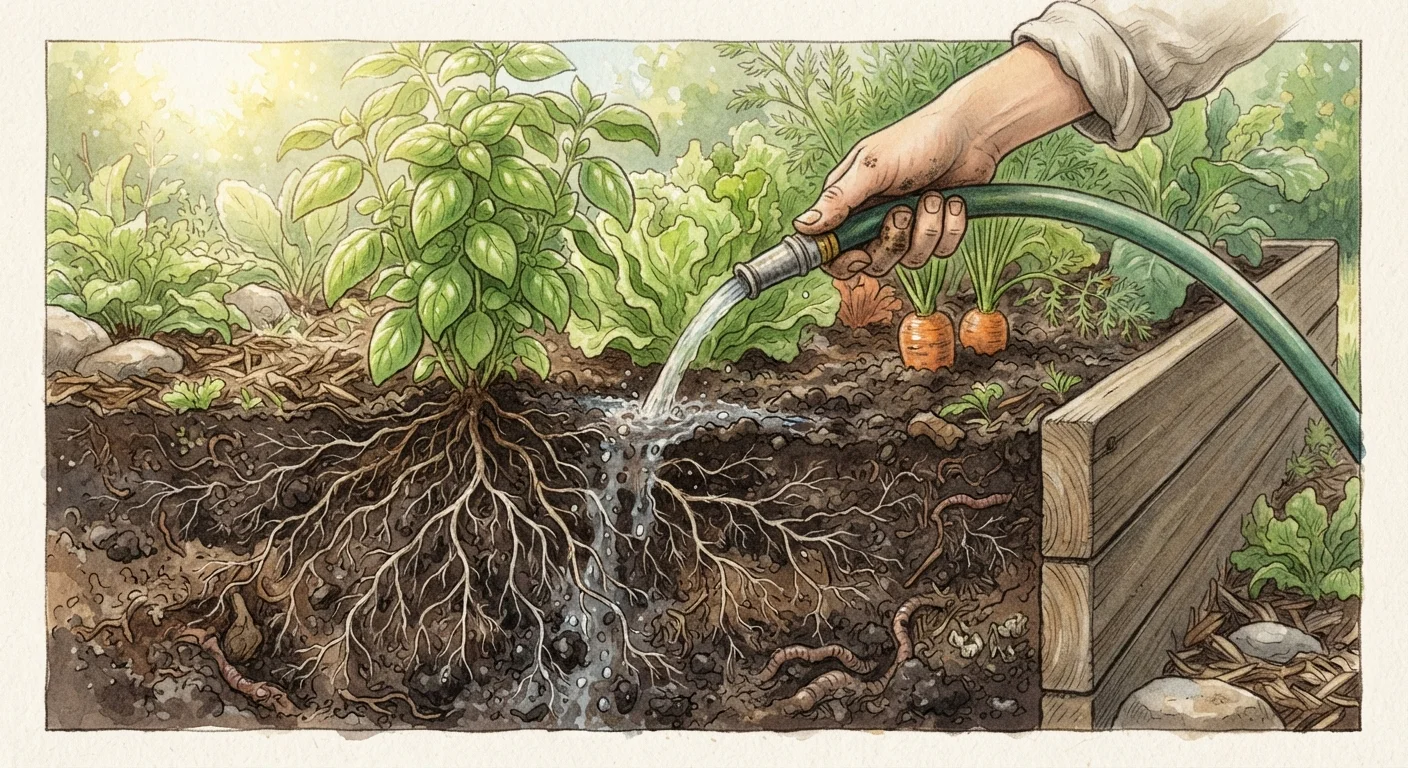
Photo credit: readerspanel.com
In this article
Frequent shallow watering can weaken plants over time. Here is why deep, infrequent watering builds stronger root systems in most gardens.
Key Takeaways
- Deep watering pushes moisture several inches into the soil, prompting roots to follow it downward.
- Frequent shallow watering keeps moisture near the surface, training roots to stay shallow and vulnerable.
- Shallow-rooted plants dry out faster in heat and are more susceptible to drought stress.
- Most established garden plants, lawns, and trees perform better with fewer, longer watering sessions.
- Seedlings and newly seeded lawns are valid exceptions that require frequent light watering until established.
- Soil type affects how quickly water penetrates, so clay and sandy soils need different approaches.
Why watering frequency shapes root architecture
Roots grow toward water. That is not a metaphor; it is a well-documented process called hydrotropism. When water sits only at the surface after a light daily sprinkle, roots have no reason to push downward. They cluster in the top inch or two of soil where moisture is reliable. The problem is that the top layer of soil also dries out the fastest, especially during warm afternoons.
A plant with a shallow root system is essentially dependent on the gardener for every drink. One missed day in July can trigger visible wilting. A plant whose roots reach six to twelve inches down, by contrast, has access to soil moisture that evaporates far more slowly. It can manage short dry spells on its own.
Deep watering is simply the practice of applying water slowly and long enough that it soaks well below the surface layer. For most garden soils in good condition, that means getting moisture down to at least six inches. For trees and large shrubs, twelve inches or deeper is often the target. A soil probe, a long screwdriver, or even a wooden dowel pushed into the ground can confirm whether water has actually reached those depths after a session.
| Criterion | Deep, infrequent watering | Shallow, frequent watering |
|---|---|---|
| Root depth encouraged | Six to twelve inches or more | One to two inches |
| Drought tolerance over time | High, once roots establish | Low, plants depend on daily input |
| Water lost to evaporation | Lower, especially morning sessions | Higher, surface dries quickly |
| Risk of crown and leaf fungal issues | Lower, surface dries between sessions | Higher, surface stays consistently damp |
| Best for established plants | Yes | No |
| Best for seedlings and new transplants | No, roots too limited initially | Yes, during establishment phase |
| Gardener time per week | Less frequent sessions needed | Daily attention often required |
What frequent shallow watering does over time
Watering a little every day feels attentive, but it creates a pattern that works against most established plants. Surface soil stays perpetually damp, which can encourage fungal issues at the crown and soil level. Meanwhile, roots never receive a signal to grow downward.
Over a season or two, a garden maintained this way produces plants that look fine until conditions shift. A heat wave, a vacation, or a sprinkler malfunction exposes the fragility. Because the root zone is so shallow, the plant exhausts available moisture within hours rather than days.
There is also a water-use angle. Frequent light sessions lose a significant portion of water to evaporation before it reaches the root zone, particularly in full sun during summer. Longer, less frequent sessions applied in the early morning lose less to evaporation and deliver more usable water per gallon applied. For gardeners watching their water bills or working under municipal use restrictions, this difference adds up across a growing season. The drip irrigation vs. soaker hoses comparison explores delivery methods that apply water slowly at root level, which pairs well with a deep-watering schedule.
How soil type changes the approach
Not all soils absorb water at the same rate, and that affects how to apply a deep-watering strategy without causing runoff or pooling.
Sandy soils drain quickly. Water moves through fast, which means it can reach deeper layers without much effort, but it also means the soil dries out faster. In sandy conditions, deep watering still applies, but gardeners may need to water more often than they would in loam to compensate for the lower water-holding capacity.
Clay soils are the opposite. Water penetrates slowly, so applying it too fast causes runoff before it has a chance to soak in. In clay, a pulsed approach works better: water for a period, pause to let the soil absorb what it received, then water again. This cycle can be repeated within one session to get moisture to a useful depth without losing it across the surface.
Loam, which blends sand, silt, and organic matter, generally absorbs water at a moderate rate and holds it well. Most gardening guidance on deep watering assumes loam as a baseline. If your soil leans toward either extreme, adjust timing accordingly.
Exceptions: when frequent watering is the right call
The case for deep, infrequent watering applies to established plants. There are genuine situations where frequent watering is correct, and treating them the same way would cause harm.
Germinating seeds need consistent moisture in the top quarter-inch of soil. Let that layer dry out and germination stalls or fails. During the germination window, light daily or even twice-daily watering is appropriate. Once seedlings have developed a second or third set of true leaves, the transition toward less frequent, deeper sessions can begin gradually.
Transplants, whether vegetables, perennials, or shrubs, are in a similar position. The root ball is small and contained immediately after planting. Frequent watering keeps that limited root zone moist while the plant extends new roots into surrounding soil. Once roots have spread, the watering schedule can pull back.
Container gardens also operate differently. Pots limit how deep roots can go and dry out much faster than in-ground soil. Containers often need more frequent watering than garden beds, though the same principle applies: water until it drains from the bottom, rather than just wetting the surface. Lawn health is tied to watering strategy too; pairing good watering habits with proper timing pays off, as the lawn fertilization timing guide explains for feeding decisions.

Author
Home & Garden Editorial Team
Home & Garden Editorial Team is the collective byline for our editorial team and contributor network. Articles published under this byline or an editorial pen name are researched, written, and reviewed according to our editorial standards for clarity, consistency, and independence before publication.
View all articles →