
Layering Rugs: The Technique That Interior Designers Use to Add Depth to Any Floor
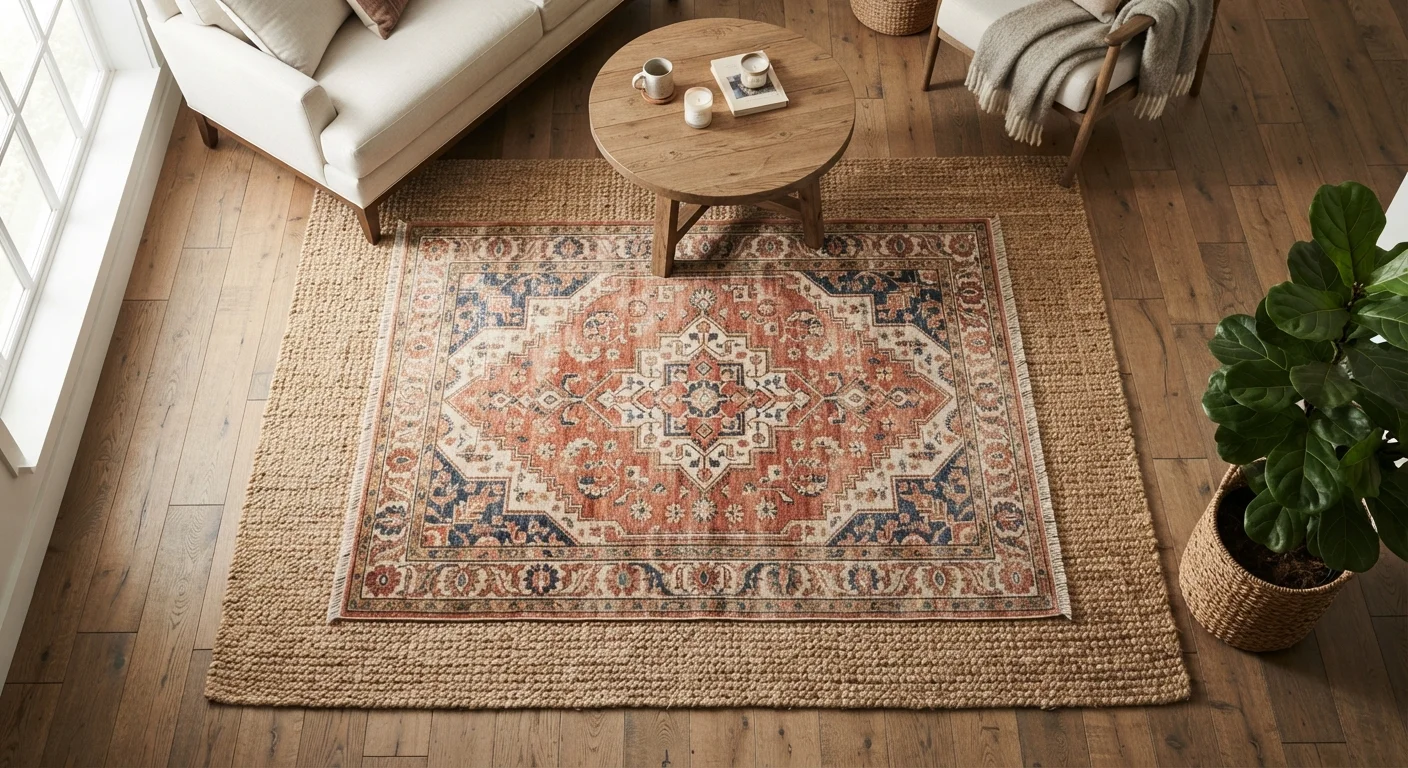
Photo credit: readerspanel.com
In this article
Layering rugs adds texture, warmth, and definition to a room. Learn the sizing, pattern, and material rules that make it look intentional.
Key Takeaways
- A large, low-profile base rug anchors the layer and keeps the floor from looking crowded.
- Combining one solid and one patterned rug is the most reliable way to avoid visual noise.
- The top rug should be at least 18 inches smaller on every side than the base rug.
- Rug pads under both layers prevent slipping and protect flooring beneath.
- Natural fiber rugs like jute or sisal work well as base layers due to their flat, neutral texture.
Why layering rugs works in a real room
Rugs do two jobs: they define a zone and add texture underfoot. When you layer them, each job gets stronger without adding furniture or repainting a wall. A base rug expands the visual footprint of a seating area, while a smaller top rug brings in color, pattern, or material contrast that a single rug rarely achieves on its own.
The technique also solves a common problem in open-plan rooms, where one large rug often looks sparse and one small rug looks lost. Two layers together read as intentional. The same logic applies to mixing decorative elements elsewhere in a room. Just as mixing wood tones requires a clear organizing principle to avoid looking accidental, layered rugs need a size and texture relationship that makes the pairing feel deliberate rather than random.
Layering works on hardwood, tile, and even wall-to-wall carpet, though carpet requires flatter base layers to stay stable.
What you need before you start
Gather your materials and take measurements before shopping or rearranging. Knowing your floor dimensions and furniture footprint will determine what rug sizes to target.
What you will need
Measuring tape
Measures room dimensions and furniture placement to determine correct rug sizes.
Non-slip rug pad (x2)
Prevents the base rug from sliding on the floor and the top rug from shifting on the base.
Double-sided rug tape
Anchors the corners of the top rug to the base rug on low-pile surfaces.
Painter's tape
Marks proposed rug dimensions on the floor to check proportions before purchasing.
Scissors or utility knife
Trims rug pad material to match rug dimensions.
How to layer rugs step by step
Measure your space and anchor furniture placement
Measure the length and width of your seating or dining area, including the furniture you want the rug to anchor. In a living room, front legs of the sofa and chairs should sit on the base rug. In a dining room, all chair legs should remain on the rug even when pulled out. Write down the minimum dimensions that would cover this zone.
Choose your base rug
Select a rug that is 2 to 3 feet larger than your minimum zone measurement on each axis. Natural fiber materials such as jute, sisal, and seagrass are common base choices because they lie flat, resist slipping, and carry a neutral texture that does not compete with the top layer. A flatweave or low-pile synthetic also works. Avoid high-pile or shag as a base because the top rug will shift on it constantly.
Keep the color neutral or tone it to your floor. The base rug is a backdrop, not the focal point.
Place a rug pad under the base rug
Cut a non-slip rug pad to match the base rug dimensions, or use one slightly smaller so it does not show at the edges. Place it flat on the clean floor, then lay the base rug on top. Smooth out any corners or bumps before continuing.
Select and position your top rug
The top rug should be at least 18 inches shorter and narrower than the base on all sides, leaving a clear border of the base rug visible. Common top rug placements include centered over the base, angled at roughly 45 degrees for a casual look, or offset toward the sofa to create visual movement.
Choose a material that contrasts with the base in texture: a wool flatweave or a hand-knotted pile rug over a jute base, for example. For pattern, pair one solid with one printed or woven design. If your base has texture, your top can carry the pattern, and vice versa.
Secure the top rug with a second pad or rug tape
Place a thin non-slip pad between the base rug and the top rug. This prevents the top rug from creeping or bunching under foot traffic. Alternatively, double-sided rug tape applied to the underside corners of the top rug holds it in place on low-pile base rugs. Check the adhesive compatibility of the tape with your base rug material before applying.
Step back and check the proportions
Stand at the main entry point of the room and look at the full floor. The base rug border should be visible and roughly even on all sides of the top rug. Furniture legs should sit where you intended. If the top rug looks too small, shift it toward the largest piece of furniture to give it more visual connection. If it looks too large, reassess whether the base rug needs to go up a size.
Common mistakes and how to avoid them
The most frequent problem is choosing a top rug that is too close in size to the base. When the gap between edges is smaller than about 18 inches, the layers blend into one another and the effect disappears. A clear border of base rug visible on all sides is what creates the layered look.
Mixing two bold patterns is another common misstep. Each pattern competes for attention, and the floor starts to feel restless. One solid, one pattern is the rule most rooms can rely on. If you want two patterns, keep one geometric and one organic, such as a stripe paired with a botanical, and limit them to a shared color so they share a common thread.
Skipping the rug pad under the base layer is a safety risk. Without grip between the base rug and the floor, the whole stack moves underfoot. Two thin pads, one under each rug, offer the most stability.
Use color to connect the layers
Pull one color from the top rug's pattern and repeat it somewhere else in the room, such as a throw pillow or a curtain edge. This ties the layered floor into the broader room palette and makes the combination look planned rather than arbitrary. Even a single shared hue is enough to create that connection.

Author
Home & Garden Editorial Team
Home & Garden Editorial Team is the collective byline for our editorial team and contributor network. Articles published under this byline or an editorial pen name are researched, written, and reviewed according to our editorial standards for clarity, consistency, and independence before publication.
View all articles →