
Rainy Day Activities That Keep Your Dog Mentally Sharp Indoors
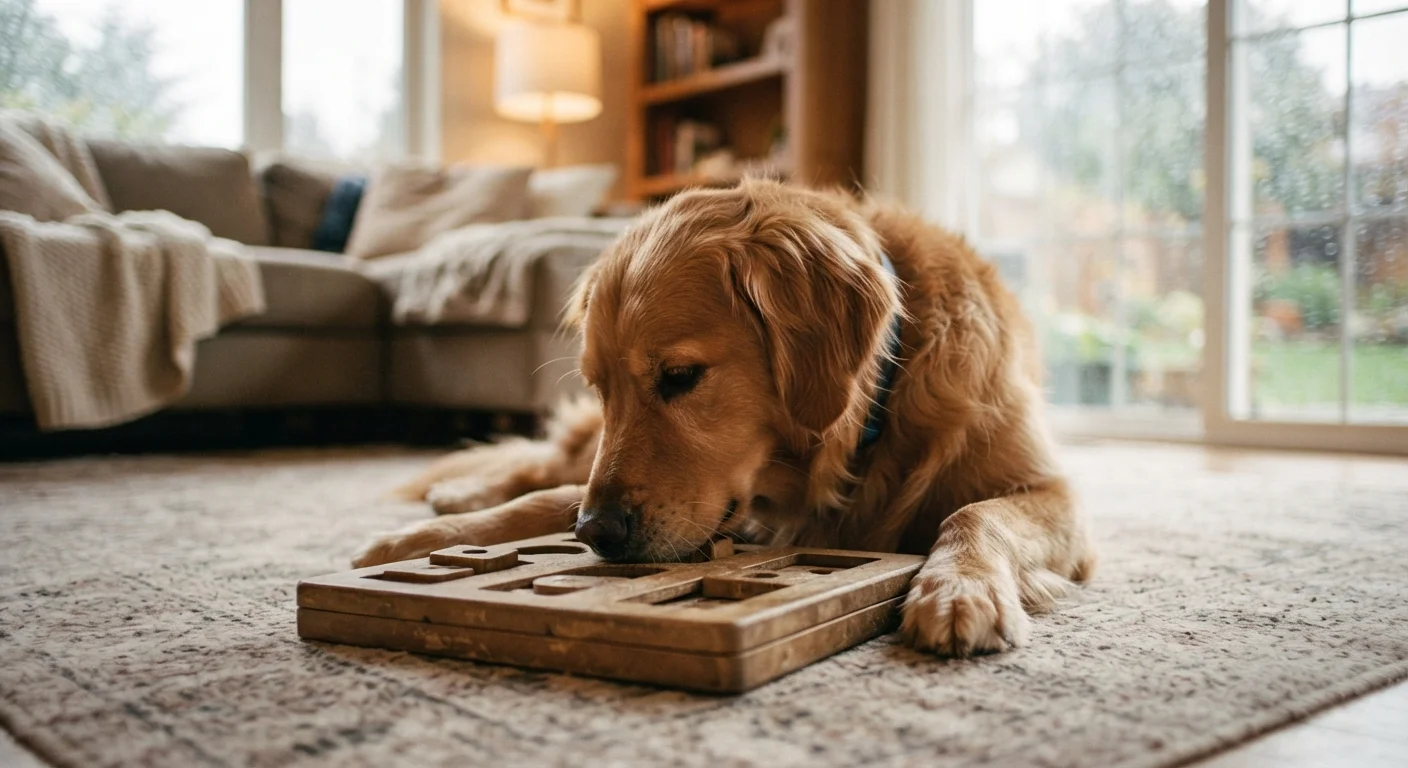
Photo credit: readerspanel.com
In this article
When the weather keeps you inside, these low-cost indoor games and puzzles help your dog burn energy and stay engaged.
Key Takeaways
- Mental stimulation tires dogs differently than physical exercise, and both matter for well-being.
- Many effective indoor activities require no special equipment beyond household items.
- Short, varied sessions work better than one long activity for most dogs.
- Scent work and training games engage a dog's brain more than passive play.
- Adjusting activity intensity for age or health keeps indoor enrichment safe and appropriate.
Why indoor enrichment matters on rainy days
A dog that misses its usual walk does not simply store that energy for later. Without an outlet, restlessness can surface as pacing, destructive chewing, or persistent attention-seeking. Physical exercise matters, but mental effort tires a dog in a distinct way: a 15-minute scent game can leave many dogs calmer than a 30-minute walk. That distinction is worth understanding, and our article on the difference between a tired dog and a mentally fulfilled one explains the underlying reasons.
The activities below work across most dog sizes and energy levels. None requires expensive equipment. The goal is not to replicate outdoor exercise indoors but to engage your dog's brain in ways that outdoor time does not always provide.
Age and health affect activity choice
Puppies have shorter attention spans and more fragile joints than adult dogs, so high-impact indoor games like fetch on hard floors should be brief and supervised. Senior dogs may tire more quickly during training and may need puzzle feeders with larger openings that are easier on their muzzle. When in doubt about an activity's suitability for a dog with a known health condition, check with your veterinarian before introducing it.
Six indoor activities to try
Hide-and-seek with kibble or treats
Scatter your dog's meal portion or a handful of treats across several rooms, tucking pieces under the edge of a folded towel, behind a chair leg, or inside a cardboard box. Ask your dog to sit and wait, then release them to search. Dogs use their nose to find food far more efficiently than their eyes, and that scent-tracking work demands genuine concentration.
Start with easy hides so your dog understands the game, then gradually increase difficulty. Most dogs stay engaged for 10 to 15 minutes per session before losing focus. This activity pairs well with the concepts in our article on the difference between a tired dog and a mentally fulfilled one.
Scent-tracking work demands genuine concentration, tiring a dog's brain without a single step outside.
Teach a new trick or cue
Pick one behavior your dog does not yet know: "go to your mat," "spin," "touch" (nose to hand), or a named object retrieve. Break the behavior into the smallest possible steps and reward each tiny piece. Five-minute training sessions repeated two or three times across a rainy day produce faster learning than a single 20-minute block.
Training also builds the kind of self-regulation that impulse control exercises are designed to develop. Dogs that practice checking in with their owner before acting become noticeably calmer in daily life.
Five-minute training sessions repeated across a day produce faster learning than one long block.
Puzzle feeders and food-stuffed toys
A rubber chew toy stuffed with wet food or a lick mat spread with a thin layer of plain yogurt or mashed sweet potato occupies a dog for far longer than a bowl of kibble. Sliding puzzle boards, where a dog nudges tiles to uncover hidden food, add a problem-solving layer on top of the food reward.
Match the difficulty level to your dog's experience. A dog new to puzzle feeders can become frustrated if the challenge is too steep, which works against the calming goal. Boredom-related frustration is also behind many destructive behaviors, as our piece on mental stimulation and problem behaviors covers in depth.
Match puzzle difficulty to your dog's experience: frustration works against the calming goal.
Indoor nose work
Nose work is a structured scent activity where a dog learns to find a specific odor, typically birch, anise, or clove oil, hidden inside one of several containers or locations. At the introductory level you do not need any special oil: simply hide a favorite toy or a small treat inside one of four identical cardboard boxes and ask your dog to indicate which box holds the item.
This activity scales well for older or less mobile dogs because it requires little physical exertion. If your dog has joint stiffness, our guidance on keeping an elderly dog comfortable as mobility declines offers context for adapting activities to their physical condition.
Nose work scales well for older dogs because it demands mental effort with minimal physical strain.
Tug, fetch, and movement games in a clear hallway
A long hallway or cleared living room gives enough space for short fetch bursts with a soft toy, or a structured game of tug. Tug is physically tiring and mentally engaging when it includes rules: your dog learns to release on a verbal cue and wait for permission to grab again. That combination of physical effort and behavioral control makes it one of the more complete indoor games available.
Keep sessions brief to avoid overheating or rough play on slippery floors. Place a non-slip rug or yoga mat on hardwood surfaces if your dog tends to skid when turning. Rainy-day indoor routines are one piece of the broader picture covered in seasonal pet care adjustments.
Tug with a release-and-wait rule gives a dog both physical exertion and behavioral practice at once.
Socialization and calm handling practice
Rainy days are a low-pressure window to practice handling exercises: gently touching paws, ears, and gums while rewarding with treats. This desensitizes your dog to the kind of contact a veterinary exam involves and builds trust between you. For dogs that are still building confidence, bonding activities for shy or reserved pets offers a slower approach suited to more cautious animals.
Combine handling practice with a grooming session if your dog tolerates it. Brushing provides tactile stimulation, and many dogs settle into a calmer state afterward.
Handling practice during calm indoor time builds the trust that makes vet visits less stressful.
Rotate activities to keep things fresh
Dogs habituate to the same puzzle or game over time, and novelty is part of what makes an activity mentally demanding. Rotating through two or three different activities across a single rainy day, rather than repeating the same one, sustains your dog's interest and gives a broader workout to different cognitive skills.
Putting it into practice
A single rainy day is enough time to try two or three of these activities and observe which one your dog responds to most eagerly. That preference is useful information: a dog that lights up during nose work is telling you something about what kind of stimulation it finds rewarding. Build future indoor sessions around that response.
Indoor enrichment also fits naturally into the broader topic of pet health and care, since a mentally engaged dog tends to sleep better, eat more calmly, and show fewer stress-related behaviors. If boredom is already driving problem behavior in your home, the connection is explored more fully in our piece on mental stimulation and preventing problem behaviors.

Author
Pets & Animals Editorial Team
Pets & Animals Editorial Team is the collective byline for our editorial team and contributor network. Articles published under this byline or an editorial pen name are researched, written, and reviewed according to our editorial standards for clarity, consistency, and independence before publication.
View all articles →