
The Role of Mental Stimulation in Preventing Problem Behaviors
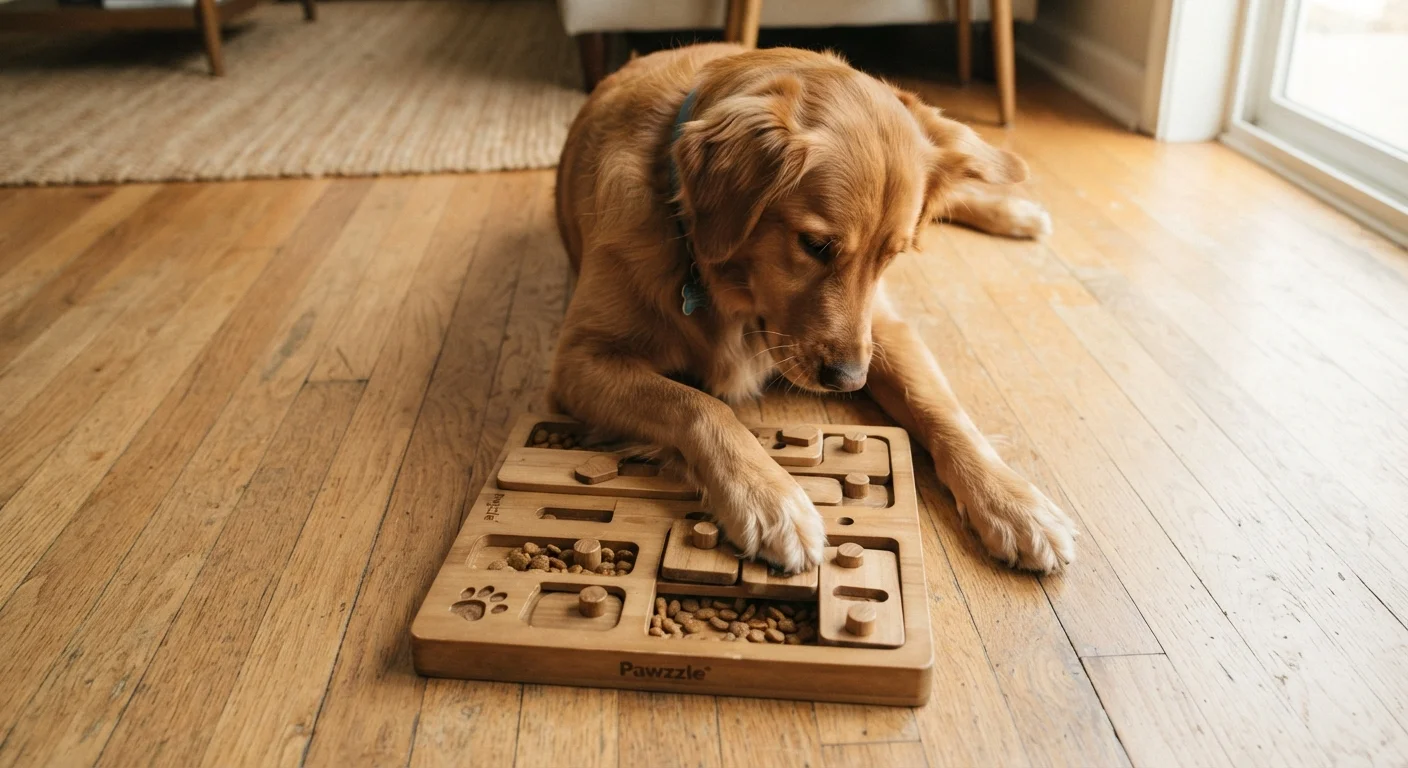
Photo credit: readerspanel.com
In this article
Boredom is behind more destructive pet behaviors than most owners suspect. Explore how puzzle feeders, scent work, and structured play address the root cause.
Key Takeaways
- Boredom is a root cause of many common destructive behaviors in dogs and cats.
- Mental stimulation works by giving pets an appropriate outlet for drives they would otherwise express destructively.
- Puzzle feeders, scent work, and short training sessions are low-cost ways to add cognitive load to a pet's day.
- Enrichment does not need to be elaborate or expensive to be effective.
- Consistent, daily mental engagement tends to produce more lasting behavioral improvements than sporadic high-intensity activity.
Why boredom produces problem behaviors
Animals are built to work for what they need. In the wild, a dog's ancestors spent most of their waking hours foraging, tracking, and problem-solving. A domestic dog living in a quiet house with full food bowls still carries that same neurological wiring. When there is nothing to engage those drives, the brain does not simply go quiet. It finds something.
That something is often a shoe, a baseboard, or an hour of non-stop barking at the window. These behaviors are not defiance or spite. They are the predictable output of an animal whose cognitive and behavioral needs have no sanctioned outlet. Understanding that shift changes how owners approach the problem: instead of correcting the symptom, they can address the cause.
This matters practically because punishment applied to a boredom-driven behavior rarely works long term. The drive that produced the behavior is still present. The animal simply needs to redirect it somewhere, and it will. Understanding different training approaches can help owners decide how to respond once they have identified the root cause.
What counts as mental stimulation
Mental stimulation is any activity that requires a pet to think, choose, or solve. It does not require expensive equipment or elaborate setups.
Puzzle feeders and food-dispensing toys are among the most accessible options. Instead of eating from a bowl in 30 seconds, a pet works for several minutes to extract the same meal. This mimics foraging behavior and gives the brain something to do during a time that would otherwise be passive.
Scent work is particularly powerful for dogs, whose olfactory system is far more complex than a human's. Hiding a small amount of food or a scented object and letting the dog locate it by smell engages a completely different cognitive system than physical play. Even a short session can produce noticeable calm afterward.
Training sessions serve double duty: they build communication between owner and pet while also requiring the animal to pay attention, make decisions, and earn reinforcement. Sessions of five to ten minutes are often more effective than longer ones because fatigue reduces the quality of engagement. Food rewards work well in these sessions because they tap directly into the same motivational systems that drive foraging.
Impulse control exercises are a specific category worth adding. Asking a dog to wait before eating, sit before greeting, or pause at a doorway builds the cognitive habit of checking in before acting. Foundational impulse control exercises can make daily life noticeably calmer within a few weeks of consistent practice.
Start with what you already have
You do not need to buy anything to begin adding mental stimulation. Scatter a portion of your dog's kibble in the grass and let it sniff out each piece. Hide a cat's meal in three small portions around a room. Use a towel folded around treats as a simple snuffle mat. These low-effort changes cost nothing and can be introduced today. See indoor dog activity ideas for more options that work with everyday household items.
Common mistakes that reduce effectiveness
One of the most frequent errors is offering stimulation in a single long burst rather than distributing it across the day. A 90-minute dog park visit on Saturday does not carry over to Tuesday. Behavioral needs are daily, and enrichment works best when it matches that rhythm.
Another mistake is assuming novelty is what matters. Rotating a few familiar puzzle types is usually enough. Constantly buying new items often reflects the owner's desire for variety more than the pet's actual need. Other common enrichment missteps are worth reviewing before investing in more gear.
Owners also sometimes confuse stimulation with chaos, believing that more activity, more noise, and more options are always better. Overstimulation can increase arousal and anxiety in some animals, particularly those who are already reactive. The goal is cognitive engagement, not sensory overload. Watching how a pet behaves after an enrichment session (calm and settled versus more restless) gives useful feedback on whether the type and amount are a good fit.
For cats specifically, enrichment that mirrors predatory sequences (stalk, pounce, catch, consume) tends to be more satisfying than passive options. A feeding puzzle after an interactive wand toy session works with that sequence rather than against it. The indoor cat enrichment overview covers this in more detail.
This article is for general informational purposes only and does not constitute veterinary or behavioral advice. If your pet's behavior is severe, sudden, or accompanied by other changes, consult a licensed veterinarian or a certified applied animal behaviorist.
Frequently Asked Questions

Author
Pets & Animals Editorial Team
Pets & Animals Editorial Team is the collective byline for our editorial team and contributor network. Articles published under this byline or an editorial pen name are researched, written, and reviewed according to our editorial standards for clarity, consistency, and independence before publication.
View all articles →