
Indoor Cat Enrichment: Preventing Boredom-Related Health Problems
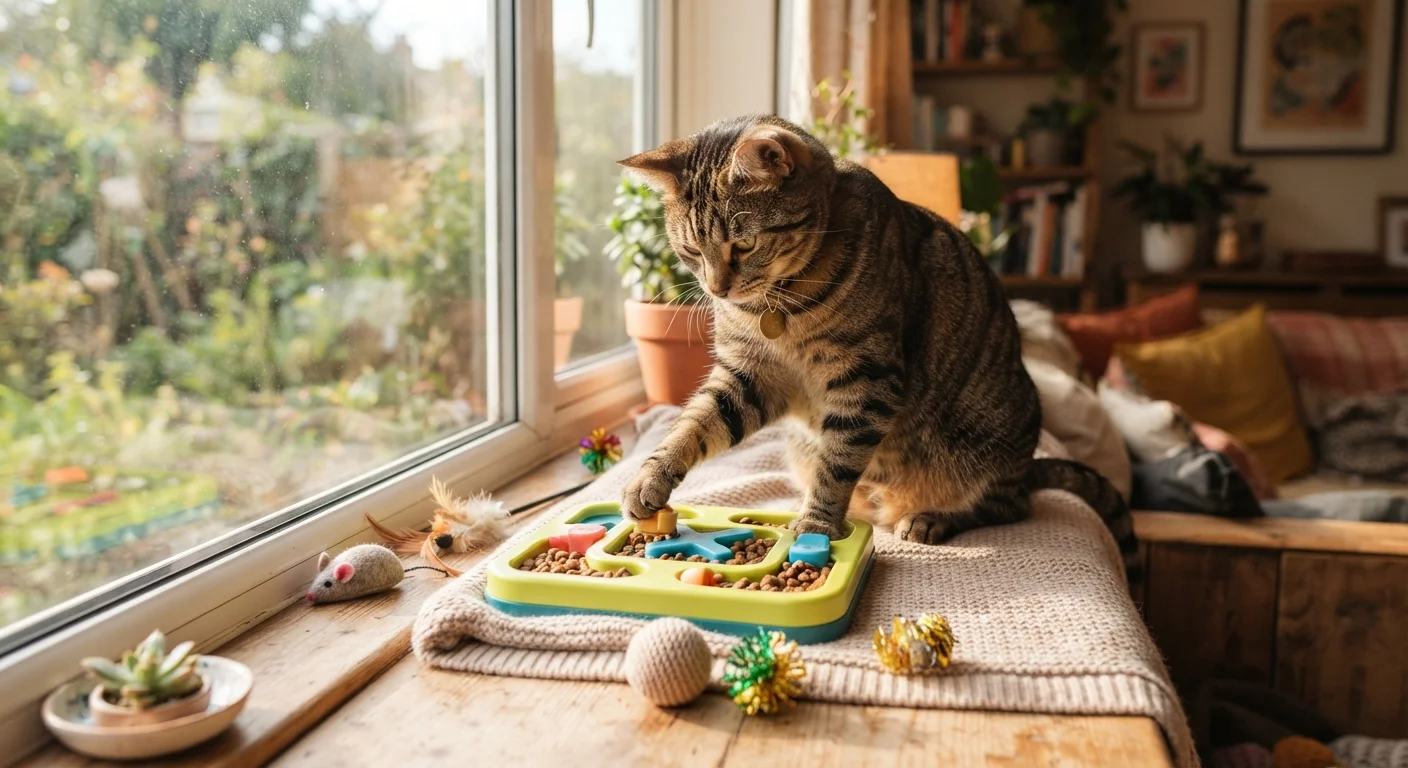
Photo credit: readerspanel.com
In this article
Boredom in indoor cats can lead to obesity, anxiety, and destructive behavior. These evidence-informed enrichment ideas address the root causes.
Key Takeaways
- Chronic boredom in indoor cats can contribute to obesity, anxiety, and stress-related illness.
- Enrichment does not require expensive equipment; many effective options cost little or nothing.
- Cats benefit most when enrichment addresses hunting instincts, social needs, and sensory variety.
- A predictable daily structure combined with varied stimulation reduces anxiety-driven problem behaviors.
- Any sudden change in a cat's behavior warrants a veterinary check before assuming boredom is the cause.
Why indoor boredom is a health issue, not just a behavior one
Indoor cats live longer on average than outdoor cats, but the trade-off is a much smaller world. Without access to the sensory variety, physical demands, and decision-making that outdoor life provides, many cats spend the bulk of their day doing nothing. Over time, that idleness compounds.
Veterinary behaviorists have linked chronic understimulation in cats to a cluster of problems: weight gain from inactivity, compulsive behaviors such as over-grooming, stress-induced cystitis (bladder inflammation triggered by psychological stress), and redirected aggression toward people or other pets. These are not personality flaws. They are the predictable outcomes of an environment that does not meet a cat's needs.
The seven strategies below address different dimensions of enrichment, from sensory input to social interaction. No single approach works for every cat, and the goal is to build a mix that fits your specific animal. See the common enrichment mistakes article for pitfalls worth avoiding before you start.
This article provides general information for educational purposes and is not a substitute for veterinary advice. If your cat is showing behavioral changes or signs of illness, consult your veterinarian.
Watch for behavioral change first
Before adjusting enrichment, rule out a medical cause. Increased vocalization, changes in litter box use, sudden aggression, or shifts in grooming patterns can all indicate illness or pain. A veterinary check is the right first step when something changes. The litter box behavior article covers one of the most common behavioral signals in more detail.
Seven enrichment strategies for indoor cats
Puzzle feeders instead of bowls
Replacing a standard food bowl with a puzzle feeder is one of the most evidence-supported changes an owner can make. Cats are built to work for food: hunting in the wild involves stalking, pouncing, and repeated attempts. A bowl that delivers food instantly removes all of that.
Puzzle feeders slow eating, reduce caloric overconsumption, and occupy the brain. Start with a simple level and increase difficulty as the cat gains confidence. Even a muffin tin covered loosely with a towel functions as a basic puzzle. The mental stimulation guide explains the behavioral science behind food-based enrichment in more detail.
Puzzle feeders engage a cat's hunting instincts and reduce overeating at the same time.
Vertical space and window access
Cats use height to feel safe and to survey their environment. A home that offers only floor-level space is functionally impoverished for most cats. Cat trees, wall-mounted shelves, or cleared bookshelf space give cats the elevation they seek.
Pairing vertical space with window access multiplies the benefit. A perch near a bird feeder or a busy street gives a cat hours of passive visual stimulation each day. Window bird feeders mounted to the glass are inexpensive and effective. If outdoor access is possible in a controlled form, a fully enclosed catio (a screened outdoor enclosure) offers fresh air and scent variety without the risks of free roaming.
Vertical space lets cats feel secure; window views give them ongoing sensory input throughout the day.
Interactive wand play that mimics prey
Battery-operated toys have their place, but nothing replaces play driven by a human. Wand toys with feathers or fabric attachments allow an owner to mimic the irregular, unpredictable movement of real prey: slow crawling, sudden bursts, hiding behind furniture. That unpredictability is what triggers genuine predatory engagement.
A critical part of interactive play is allowing the cat to catch the toy periodically. A cat that never catches its 'prey' can become frustrated rather than satisfied. End each session by letting the cat catch and hold the toy, then offer a small food reward to complete the hunt-catch-eat sequence.
Letting a cat catch the toy at the end of play satisfies the hunt sequence and prevents frustration.
Scent enrichment and novelty
Cats gather enormous amounts of information through smell. Introducing novel scents into the environment stimulates the brain in a way that visual toys alone cannot. A few options that are generally regarded as safe for cats include silver vine (an alternative to catnip that many cats respond to more strongly), dried herbs such as valerian, and items brought in from outside, such as a pinecone or a paper bag that has been in a garden.
Rotate scent items rather than leaving them out permanently; the response fades quickly with continuous exposure. Always confirm with your veterinarian that any plant-based item is non-toxic before introducing it, since many common plants are harmful to cats.
Scent variety engages a cat's brain in ways that visual and tactile enrichment alone cannot replicate.
Scratching surfaces in multiple locations
Scratching is not destructive behavior. It is a physical need: cats scratch to shed claw sheaths, stretch the muscles of their forelimbs and spine, and deposit scent from glands in their paws. A cat without adequate scratching surfaces will find its own.
The two variables that matter most are texture and orientation. Some cats prefer vertical posts; others prefer horizontal pads. Sisal, cardboard, and wood each attract different cats. Place scratching surfaces near sleeping areas and near any furniture the cat has already targeted. The cat scratching guide covers redirection strategies in full.
Offering multiple scratching textures and orientations covers what one post alone cannot.
Structured solo enrichment between play sessions
Interactive play cannot fill a cat's entire day. Cats also need enrichment they can access independently, on their own schedule. This includes foraging toys that dispense kibble as the cat bats them, paper bags and cardboard boxes to explore, and rotating toy selections kept in a container and swapped weekly.
The enrichment mistakes article addresses a common misstep here: owners who leave every toy out at once find that cats habituate to all of them quickly. Scarcity and novelty drive engagement far more reliably than abundance.
Rotating which toys are available prevents habituation and keeps independent play sessions active.
Social and cognitive interaction with people
Cats vary widely in how much social contact they want, but most indoor cats benefit from regular low-pressure interaction with their owners beyond feeding. This can mean training sessions using clicker-based positive reinforcement, which gives the cat mental work and strengthens the bond, or simply sitting quietly in the same room while the cat chooses its own level of engagement.
Clicker training is often underused with cats. Teaching a cat to target a hand, come when called, or sit on cue provides cognitive exercise and gives the animal agency. Short sessions of two to three minutes are enough to provide benefit without tipping into frustration. For more on how behavioral enrichment fits into a fuller pet lifestyle approach, the hub offers additional context.
Clicker training gives cats cognitive work and agency, both of which reduce anxiety-driven behavior.
Putting it into practice
Rotate enrichment elements rather than offering everything at once. Novelty matters to cats; a toy ignored for two weeks often becomes interesting again when reintroduced. Aim for at least two dedicated interactive play sessions daily, each around ten to fifteen minutes, and supplement with independent enrichment the cat can access on its own schedule.
Structure helps too. Cats fed on a consistent schedule, given predictable play windows, and allowed to rest without disturbance show fewer stress indicators than cats in unpredictable households. The daily routine guide covers how to build that framework without it becoming rigid.
If a cat continues to show signs of anxiety, compulsive behavior, or physical symptoms after enrichment improvements, a veterinary visit is the right next step. Some conditions that look like boredom, such as hyperthyroidism or pain, need medical attention, not more toys. The mental stimulation and problem behavior article explores the behavioral side in more depth.

Author
Pets & Animals Editorial Team
Pets & Animals Editorial Team is the collective byline for our editorial team and contributor network. Articles published under this byline or an editorial pen name are researched, written, and reviewed according to our editorial standards for clarity, consistency, and independence before publication.
View all articles →