
Safari in East Africa vs. Southern Africa: Choosing the Right Experience for Your Goals
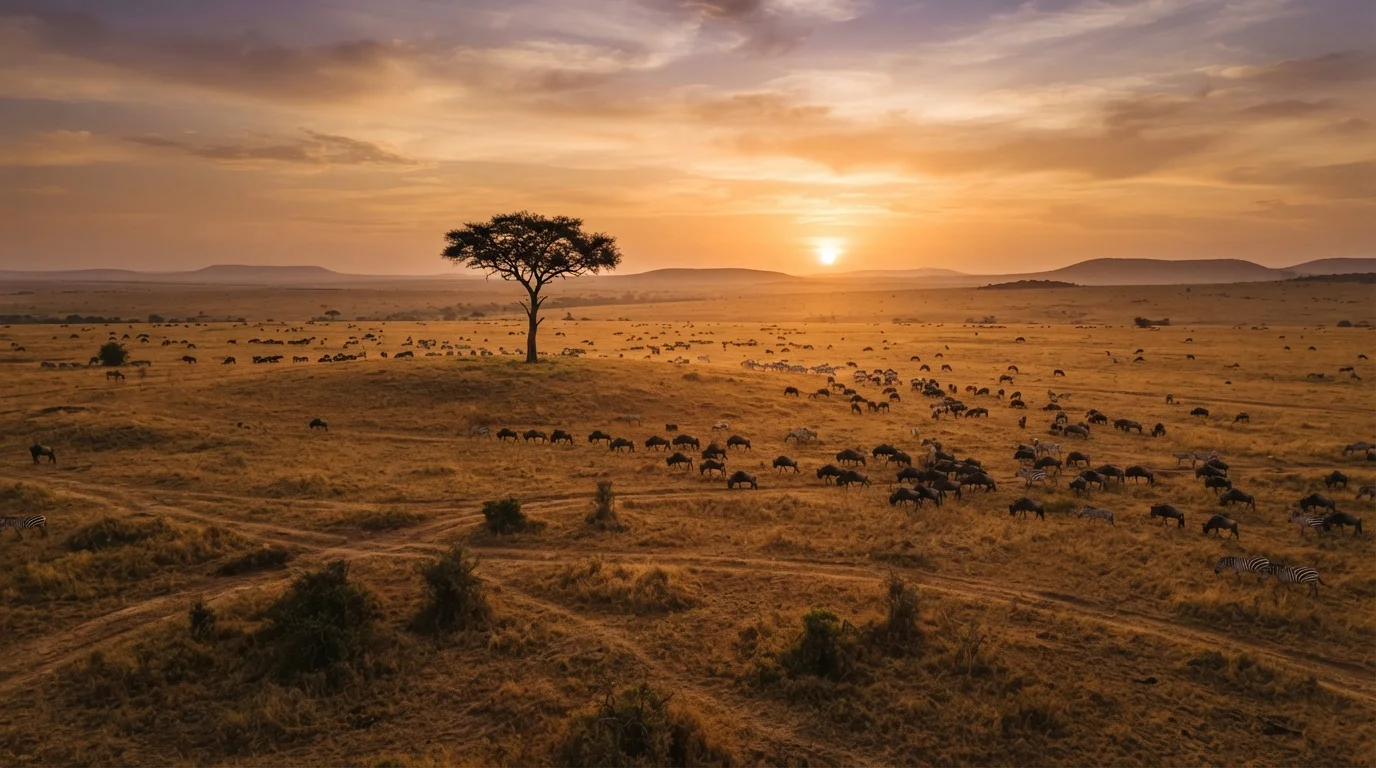
Photo credit: readerspanel.com
In this article
Compare ecosystems, wildlife patterns, accessibility, and travel logistics between East and Southern Africa to find the safari style that fits you.
Key Takeaways
- East Africa is the go-to region for the Great Wildebeest Migration, concentrated in Kenya and Tanzania between July and October.
- Southern Africa covers more diverse terrain, from Botswana's wetlands to Zimbabwe's forests and South Africa's malaria-free reserves.
- East African parks typically require fly-in or guided vehicle access; Southern Africa offers broader self-drive possibilities.
- Budget ranges vary significantly by country and lodge type in both regions; neither is uniformly cheaper.
- Walking safaris and mokoro (dugout canoe) excursions are more widely available in Southern Africa.
- Visa requirements, vaccination recommendations, and entry rules differ by country; always verify with official government sources before booking.
Ecosystems and wildlife: what each region actually offers
East Africa is defined by open savanna. Kenya's Masai Mara and Tanzania's Serengeti are large, relatively flat grasslands where game is visible at distance. That openness is why these parks produce such consistent large-mammal sightings: lion, elephant, buffalo, leopard, cheetah, and during migration season, wildebeest and zebra by the hundreds of thousands. Uganda and Rwanda add mountain gorilla trekking to the mix, a wildlife encounter with no Southern African equivalent.
Southern Africa is harder to summarize in a single landscape. Botswana's Okavango Delta floods seasonally, drawing wildlife to water in ways that produce extraordinary density during the dry months. Zimbabwe's Hwange National Park holds one of Africa's largest elephant populations. Zambia's Luangwa Valley is considered one of the best walking safari destinations on the continent. South Africa's Kruger National Park sits alongside dozens of private reserves spanning ecosystems from thornveld to subtropical forest. The Namib Desert and Etosha Pan in Namibia offer entirely different visual registers.
| Criterion | East Africa Safari | Southern Africa Safari |
|---|---|---|
| Signature event | Great Wildebeest Migration | Okavango Delta flooding season |
| Terrain variety | Primarily open savanna and highland | Desert, wetland, forest, savanna |
| Self-drive accessibility | Limited; guided tours standard | Good in South Africa and Namibia |
| Walking safaris | Available but less central | Widely available; a regional specialty |
| Malaria-free options | Very limited | Yes, in parts of South Africa |
| Gorilla trekking | Yes (Uganda, Rwanda) | Not available |
| Crowd levels at peak | High in Masai Mara, Serengeti | Varies widely by country |
| Average cost range | Mid to high; wide variation | Mid to very high; Botswana is premium |
Neither region has a monopoly on the Big Five (lion, leopard, elephant, buffalo, rhinoceros), though rhino sightings can be more reliable at certain Southern African reserves where conservation programs are well established. Wild dog sightings, by contrast, are more consistent in Botswana and Zimbabwe than in East Africa.
Timing, seasons, and the Migration question
The Great Wildebeest Migration involves roughly 1.5 million wildebeest and several hundred thousand zebra moving in a loop between Tanzania's Serengeti and Kenya's Masai Mara. The river crossings at the Mara River, typically concentrated between July and October, draw travelers specifically for this event. If the Migration is your reason for going, East Africa is the answer.
Southern Africa's dry season runs roughly May through October across most countries, which is generally the best time for game viewing as vegetation thins and animals gather around water sources. Botswana's Okavango Delta peaks in flood between June and August, which is paradoxically when wildlife viewing is most concentrated on the islands. South Africa's malaria-free zones operate year-round, giving families and health-conscious travelers more scheduling flexibility.
Timing a safari always involves trade-offs between crowd levels, prices, and wildlife activity. This is a decision worth mapping carefully, and weighing a flexible versus fully booked itinerary can make a real difference when seasonal windows are narrow.
Logistics, access, and trip planning
East Africa's major parks are served by Nairobi (Kenya) and Kilimanjaro or Dar es Salaam (Tanzania). Fly-in access to camps is standard in the Masai Mara and Serengeti, and ground transport between parks is possible but slow. Most first-time visitors book through a tour operator, which handles accommodation, game drives, and transfers.
Southern Africa offers more variety in how trips are structured. South Africa has good road infrastructure and many travelers self-drive Kruger. Botswana, by contrast, is deliberately low-volume and high-cost, with remote camps accessible only by light aircraft. Zimbabwe and Zambia fall somewhere between: guided packages are common, but costs are generally lower than Botswana.
The question of how structured your trip should be matters more on safari than on most travel formats. Choosing between a road trip format and fly-in access affects pace, cost, and the level of independence you will have on the ground.
1.5M+
Wildebeest in the annual Migration
The Serengeti-Mara ecosystem supports one of the largest overland wildlife movements on earth, according to the Serengeti National Park.
~190,000
Square kilometers in Botswana protected as national parks and reserves
Botswana dedicates roughly 38% of its land area to wildlife conservation, according to the Botswana Tourism Organization.
~2M
Annual visitors to Kruger National Park
South Africa National Parks reports Kruger as one of Africa's most visited wildlife destinations, receiving visitors year-round.
Visa and entry requirements differ meaningfully by country. Some nationalities enter Kenya, Tanzania, or South Africa without a visa; others require advance applications or e-visas. Health documentation, including proof of yellow fever vaccination when arriving from certain countries, may be required. Verify current entry rules through official government and embassy sources well before travel.
Cost, crowd levels, and the kind of experience you want
Neither region is uniformly affordable or expensive. Within East Africa, budget tented camps in Tanzania can cost a fraction of what a private conservancy lodge in Kenya charges. Within Southern Africa, a South African private reserve can be priced similarly to a Botswana fly-in camp, even though Botswana has a reputation as the pricier destination.
Crowd levels depend heavily on which specific park you visit and when. The Masai Mara during peak Migration season draws significant vehicle numbers at river crossing points. Botswana's land use policy limits tourism density by design. Zambia and Zimbabwe are generally less crowded than Kenya or South Africa's Kruger, which receives millions of visitors annually.
Travelers who want total solitude in wilderness tend to find it more reliably in Botswana or Zambia. Those who want well-developed facilities, shorter international flights, and a range of add-on experiences (coastal beaches, city stays, vineyard regions) find Southern Africa's mix compelling. Safari travel pairs differently with urban add-ons too: for travelers wondering how to balance wildlife immersion with city time, exploring the trade-offs between urban and nature-focused travel can help clarify priorities before booking.

Author
Travel & Adventure Editorial Team
Travel & Adventure Editorial Team is the collective byline for our editorial team and contributor network. Articles published under this byline or an editorial pen name are researched, written, and reviewed according to our editorial standards for clarity, consistency, and independence before publication.
View all articles →