
Timing Belt vs. Timing Chain: Which One Your Car Has and Why It Matters
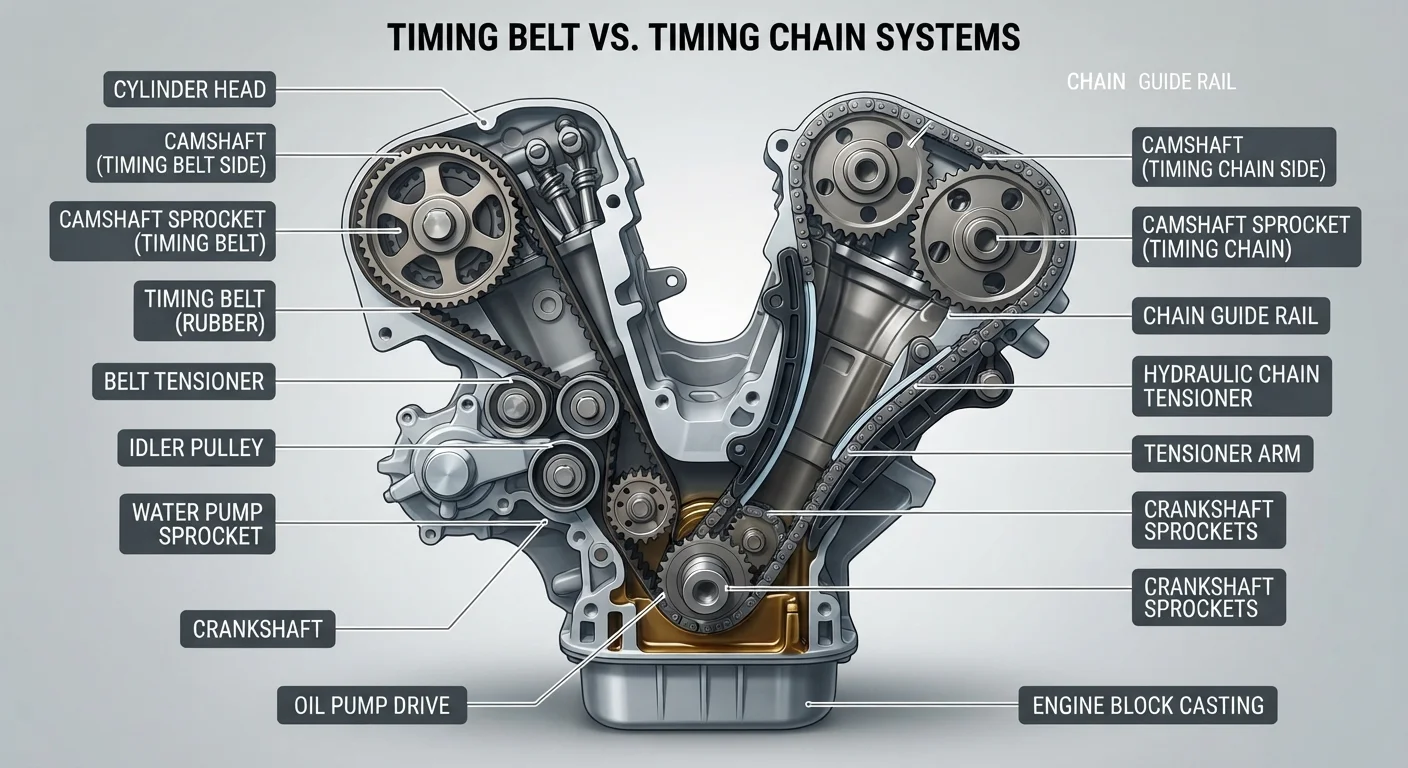
Photo credit: readerspanel.com
In this article
Timing belt failure can destroy an engine. Timing chains usually last longer but aren't indestructible. Understand what's inside your car.
Key Takeaways
- A timing belt must be replaced on a fixed schedule, typically every 60,000 to 100,000 miles, or it can snap and destroy the engine.
- A timing chain is metal and generally lasts the life of the engine, but it can stretch or wear if oil changes are neglected.
- Check your owner's manual to confirm which system your engine uses, since the two components look entirely different under the hood.
- Interference engines suffer catastrophic valve damage when a timing belt breaks; non-interference engines typically do not.
- Timing chain replacement is far more labor-intensive than belt replacement, so catching wear early matters.
What each system actually does
Both a timing belt and a timing chain do the same job: they synchronize the rotation of the crankshaft and camshaft so that intake and exhaust valves open at precisely the right moment during each combustion cycle. Get that timing wrong by even a fraction of a rotation and the engine runs poorly. Let the component fail entirely and the results can be catastrophic.
A timing belt is a rubber belt reinforced with nylon cords or fiberglass. It runs on the outside of the engine and is typically enclosed behind a plastic cover. A timing chain is a metal roller chain, similar in concept to a bicycle chain, and it runs inside the engine bathed in oil. Some engines use two chains in a duplex arrangement for additional strength.
Neither system is visible during a casual inspection. You generally need to remove a cover or consult your owner's manual to know which one your engine has. The manual will specify the system and, if a belt is fitted, will list the required replacement interval.
Why a timing belt failure is uniquely destructive
Most engine components that wear out cause a performance problem before they cause terminal damage. A timing belt breaks without warning. In an interference engine, that break causes the pistons and valves to occupy the same space at the same time. The result is bent or broken valves, damaged pistons, and a repair bill that can exceed the value of an older vehicle.
The majority of modern passenger car engines are interference designs, so the stakes are high. A non-interference engine (also called a free-wheeling engine) will stall when the belt breaks, but the pistons and valves do not collide. Repair is still necessary, but the internal damage is far less severe.
Your owner's manual or a reputable service database will confirm whether your engine is an interference design. If it is, treating the timing belt replacement interval as a firm deadline rather than a suggestion is the most cost-effective maintenance decision you can make. This is one of the hidden ownership costs that blindside drivers who are not tracking scheduled services.
| Criterion | Timing Belt | Timing Chain |
|---|---|---|
| Material | Rubber and fiber composite | Metal roller chain |
| Location in engine | Outside, behind plastic cover | Inside engine, oil-lubricated |
| Replacement interval | 60,000 to 100,000 miles (varies by make) | No fixed interval; lasts engine life with proper care |
| Failure warning | Usually none before breaking | Rattle on cold start, camshaft codes |
| Replacement labor cost | Moderate (accessible location) | High (requires significant disassembly) |
| Engine damage on failure | Severe in interference engines | Severe if chain snaps in interference engines |
| Main maintenance risk | Missing the replacement interval | Neglecting oil changes |
Timing chain wear: slower, but not impossible
Because a timing chain runs inside the engine in an oil bath, it does not have a manufacturer-specified replacement interval the way a belt does. That does not mean it is immune to wear. Chains stretch incrementally over time, and the tensioners and guides that keep them taut can degrade.
The primary cause of premature timing chain wear is infrequent oil changes. When oil becomes thick with contaminants, it loses its ability to lubricate the chain and guides properly. Sludge buildup can block oil passages that feed the chain tensioner, accelerating wear further.
Warning signs of a worn timing chain include a rattling noise from the front of the engine on cold starts (before the oil pressure builds), the check engine light triggered by camshaft position codes, and rough idle. If a technician identifies chain wear early, replacement is expensive but manageable. A chain that snaps causes damage similar to a belt failure in an interference engine.
Unlike a timing belt swap, timing chain replacement is a labor-intensive job that typically requires significant engine disassembly. Labor costs alone often run several hundred dollars or more depending on the engine design. Unlike the serpentine belt (see serpentine belt wear and what to watch for), a timing chain failure rarely gives you the gradual warning signs that allow you to plan a repair on your schedule.
How to find out which system your engine has
The fastest method is the owner's manual. If your engine has a timing belt, the maintenance section will list a replacement interval in miles and sometimes in years. If no timing belt service is listed anywhere in the scheduled maintenance tables, your engine almost certainly uses a chain.
A qualified mechanic can also confirm this during any routine service visit. Some manufacturers publish this information in free online databases searchable by vehicle identification number (VIN). Once you know your engine has a belt, note the current mileage and find out whether the belt has already been replaced. If you cannot verify that history on a used vehicle, factor the cost of replacement into your ownership budget immediately.
This article is for general informational purposes only. Always consult a qualified mechanic for diagnosis, repair decisions, and service intervals specific to your vehicle.

Author
Automotive Life Editorial Team
Automotive Life Editorial Team is the collective byline for our editorial team and contributor network. Articles published under this byline or an editorial pen name are researched, written, and reviewed according to our editorial standards for clarity, consistency, and independence before publication.
View all articles →