
The Hidden Ownership Costs That Show Up Years After Purchase
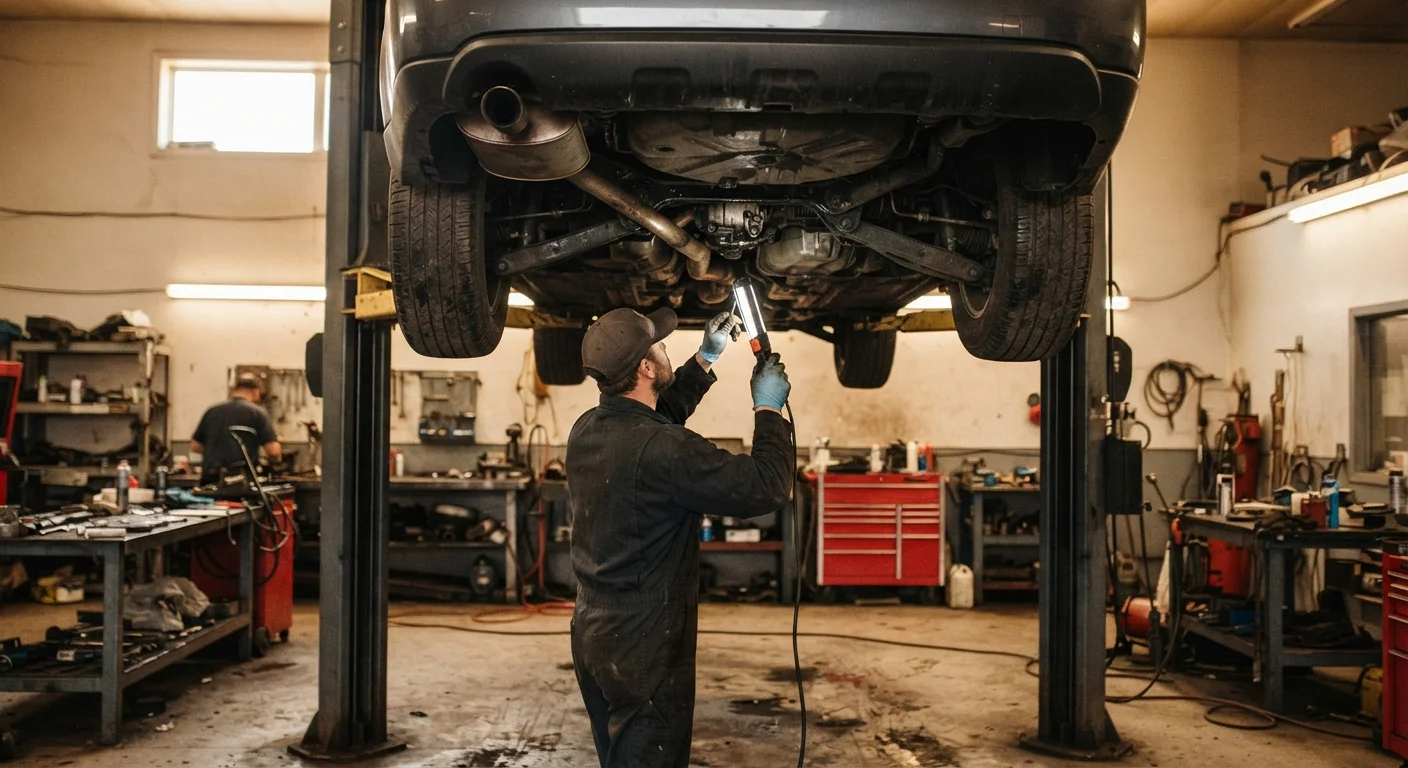
Photo credit: readerspanel.com
Timing belts, transmission service, brake replacements: these major expenses arrive on a schedule most new owners never see coming.
Key Takeaways
- Timing belt replacement is one of the most expensive scheduled services and often surprises owners around 60,000 to 100,000 miles.
- Transmission fluid service is frequently skipped, but neglecting it can lead to repair bills in the thousands.
- Brake rotors, coolant flushes, and battery replacements follow predictable schedules that most buyers never factor into their budget.
- Planning for these costs before they arrive keeps them from becoming financial emergencies.
- A vehicle's total cost of ownership extends well beyond the loan payoff date.
Why the big bills come later
The purchase price and monthly payment get most of the attention when someone buys a car. What rarely gets discussed is the maintenance schedule that starts running quietly from day one. Components like the timing belt, transmission, and brake system have finite service lives measured in miles or years, not in loan payments. By the time those intervals arrive, the original sticker price is a distant memory and the budget may not be ready.
These are not surprise failures. They are scheduled events. The difference between treating them as emergencies and treating them as planned expenses comes down to knowing the schedule in advance. The car ownership cost audit is one way to map those intervals against your actual mileage and vehicle age before the bills land.
The seven costs below follow predictable patterns. They are listed roughly in order of how far into ownership they typically appear.
Timing belt replacement
On engines that use a rubber timing belt (rather than a metal chain), the belt must be replaced on a schedule, typically somewhere between 60,000 and 100,000 miles depending on the manufacturer's specification. The belt synchronizes the engine's internal components, and when it fails, the damage can be severe. Labor costs are high because accessing the belt requires significant disassembly. The part itself is inexpensive; the surrounding work is not. Budget ranges vary widely by vehicle, but the total service commonly runs several hundred dollars and can exceed that on certain engines. Check your owner's manual or a qualified mechanic to confirm whether your engine uses a belt or a chain.
A timing belt failure can cause catastrophic engine damage, making the replacement cost look modest by comparison.
Transmission service
Automatic transmissions require periodic fluid changes, and some manufacturers also recommend filter replacement at the same interval. Service intervals vary but commonly fall between 30,000 and 60,000 miles for vehicles under regular use, with some extended intervals for specific fluid types. Many owners skip this service because the transmission appears to be working fine. The fluid degrades over time, losing its ability to lubricate and cool internal components properly. A transmission rebuild or replacement is one of the most expensive repairs a vehicle can need, often ranging from $1,500 to well over $3,000 depending on the vehicle. Staying current on fluid changes is far less costly.
Transmission fluid quietly degrades, and skipping the service interval can turn a modest maintenance bill into a major repair.
Brake rotors and pads
Brake pads wear predictably and are usually replaced every 25,000 to 65,000 miles depending on driving habits, pad material, and the vehicle. Rotors last longer but do not last forever. Many drivers replace pads alone until the rotors become too thin or warped to resurface safely, at which point both components need replacing at the same time. Doing both together at that point costs noticeably more than replacing pads on schedule might have cost if rotor wear had been monitored. Annual brake inspections by a qualified mechanic help you stay ahead of that compounding cost.
Waiting until rotors are damaged before acting turns a pad replacement into a full brake service.
Coolant system flush
Engine coolant (antifreeze) does not last indefinitely. It breaks down chemically over time, losing its corrosion inhibitors and its ability to regulate temperature reliably. Most manufacturers recommend a coolant flush every two to five years or at specific mileage intervals. Neglecting this allows acidic coolant to corrode internal hoses, the water pump, and the radiator. Water pump replacement alone, if it fails prematurely from corrosion, can cost several hundred dollars in labor on many vehicles. A coolant flush is comparatively inexpensive and straightforward for a qualified mechanic to perform.
Degraded coolant corrodes the components it is supposed to protect, turning a cheap flush into an expensive repair.
Battery replacement
Car batteries typically last three to five years, though climate plays a large role. Extreme heat accelerates internal degradation; repeated cold starts put heavy demands on a weakening battery. The failure mode is abrupt: the car starts fine one morning and does not start the next. Replacing a battery proactively once it reaches the three-to-four-year mark in a hot climate, or after a mechanic's load test shows reduced capacity, avoids the inconvenience and potential towing cost of a roadside failure. Battery prices vary by vehicle, with some requiring specific absorbed glass mat (AGM) types that cost more than conventional lead-acid units.
Battery failure is almost always a matter of when, not if, and the timeline is predictable enough to plan around.
Suspension and steering components
Struts, shocks, control arm bushings, and tie rod ends all wear gradually over tens of thousands of miles. Unlike a flat tire or a dead battery, suspension wear is gradual and easy to ignore until the handling feels noticeably off or a mechanic flags it during another service. Worn struts affect braking distance and tire wear in addition to ride quality. Replacing a full set of struts on a typical sedan can cost anywhere from $500 to over $1,000 in parts and labor combined. Roads with heavy potholes or salt exposure accelerate wear on rubber bushings and joints.
Suspension wear is slow and gradual, which is exactly why it catches many owners off guard when the repair estimate arrives.
Accessory drive belts and hoses
The serpentine belt, which drives accessories like the alternator and power steering pump, is a rubber component with a finite service life. Most manufacturers recommend inspection every 50,000 miles and replacement somewhere between 60,000 and 100,000 miles. Radiator and heater hoses harden or soften over time and can develop cracks or leaks well into a vehicle's second decade. A burst hose on the road can cause rapid coolant loss and engine overheating. Replacing belts and hoses on schedule during other services, when the engine is already partially disassembled, is far less expensive than an emergency repair after a failure.
Belts and hoses are inexpensive to replace on a schedule and expensive to deal with after they fail on the road.
Building a buffer before the bills arrive
None of these costs are avoidable indefinitely. The practical move is to treat them as known future liabilities rather than surprises. Pulling up your vehicle's owner's manual, noting the recommended service intervals, and cross-referencing your current mileage gives you a reasonable timeline for what is coming next.
Deferred maintenance on high-cost items rarely saves money. Skipping a transmission service to avoid a modest fluid-change bill can result in a rebuild cost that is ten times higher. The connection between routine upkeep and avoiding major repairs is well documented by repair shops that see the same pattern repeatedly.
If you are weighing whether to keep your current vehicle or replace it, the upcoming service schedule should factor into that math alongside the loan payment. The financial trade-offs between keeping a car longer and trading it in depend heavily on what deferred maintenance is sitting on the horizon. Car ownership costs do not stop at the dealership lot, and a realistic budget accounts for the full timeline.
Keep a simple maintenance log
Recording the date and mileage for every service you have done makes it easy to spot which interval is coming up next. A basic spreadsheet or a notes app works fine. When a mechanic recommends an upcoming service, you can check it against your log rather than guessing. This habit also helps when selling the vehicle, since documented service history carries value.

Author
Automotive Life Editorial Team
Automotive Life Editorial Team is the collective byline for our editorial team and contributor network. Articles published under this byline or an editorial pen name are researched, written, and reviewed according to our editorial standards for clarity, consistency, and independence before publication.
View all articles →