
Electric vs. Gas: Comparing the Long-Term Ownership Costs
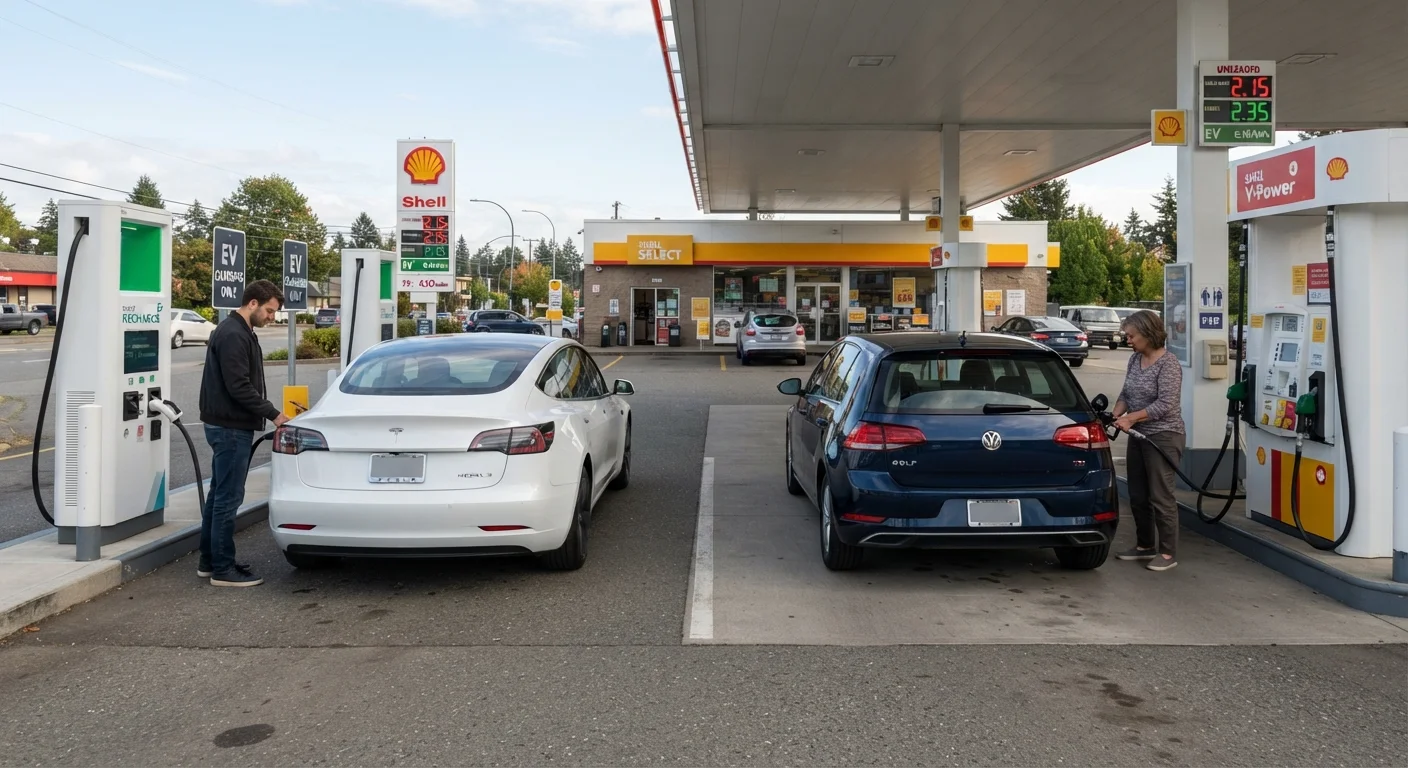
Photo credit: readerspanel.com
In this article
Electric vehicles carry different cost structures than gas-powered cars. See how fuel, maintenance, and depreciation stack up over time.
Key Takeaways
- EVs typically cost less per mile to fuel than gas vehicles, though actual savings depend on local electricity and gas prices.
- EV maintenance costs tend to be lower because they have fewer moving parts and no oil changes.
- Gas vehicles generally carry a lower sticker price, which affects loan size and early-year ownership costs.
- Depreciation patterns for EVs vary more than for gas vehicles and depend heavily on model and market conditions.
- State incentives, utility rates, and registration fees can shift the cost comparison significantly depending on where you live.
- Neither powertrain is cheaper in every situation; the math depends on your mileage, financing, and ownership length.
Purchase price and financing
Gas-powered vehicles still carry a lower average transaction price than comparable EVs, though the gap has narrowed as more affordable EV models reach the market. A lower sticker price means a smaller loan balance, which reduces monthly payments and total interest paid over the loan term.
Federal tax credits for new EVs (up to $7,500 under current U.S. law) can offset a portion of the purchase price for eligible buyers, but income caps and vehicle price limits apply. Some states add their own incentives on top. Because tax credit eligibility depends on your income, filing status, and the specific vehicle, consult a tax professional before factoring any credit into your purchase budget.
For a fuller picture of costs that follow a vehicle purchase, see how total cost of ownership adds up.
Fuel and energy costs
| Criterion | Electric vehicle | Gas-powered vehicle |
|---|---|---|
| Average purchase price | Generally higher | Generally lower |
| Federal tax incentive (new) | Up to $7,500 (eligibility varies) | None |
| Per-mile fuel cost | Lower (home charging) | Higher (varies with gas prices) |
| Oil changes | None | Every 5,000-10,000 miles |
| Scheduled maintenance | Lower overall | Moderate; more frequent service |
| Battery replacement risk | High cost if out of warranty | Not applicable |
| Insurance premiums | Often higher on average | Often lower on average |
| State registration surcharge | Some states add EV fee | No EV-specific surcharge |
| Depreciation predictability | Less consistent | More predictable |
Electricity is generally cheaper per mile than gasoline, but the actual difference depends on your local utility rates, gas prices, and how you charge. Drivers who charge primarily at home during off-peak hours get the lowest per-mile energy cost. Public fast-charging, by contrast, can approach or exceed the cost of gas on a per-mile basis depending on the network pricing model.
Gas prices fluctuate with crude oil markets, refinery capacity, and regional taxes. Electricity rates are more stable month to month but vary widely by state. Your driving habits shape how much either variable matters. How driving habits affect fuel costs breaks down the variables that quietly inflate what you pay over time.
Maintenance and repair
EVs have no engine oil to change, no timing belt, no transmission fluid, and fewer cooling system components. The U.S. Department of Energy has noted that EV drivetrains involve fewer moving parts than internal combustion engines, which generally translates to lower scheduled maintenance costs over time.
Gas vehicles require regular oil and filter changes, spark plug replacements, and periodic transmission service. These costs are predictable, and independent shops can handle most of them at competitive prices.
Both powertrains share costs for tires, brakes (though EVs use them less due to regenerative braking), and body repairs. Battery replacement is the major wildcard for EVs. Most manufacturers warrant EV batteries for eight years or 100,000 miles, but out-of-warranty replacement can be expensive. Battery technology and pricing continue to change, so long-term cost projections carry real uncertainty.
Battery warranty coverage
Federal law requires EV manufacturers to warrant the battery pack for at least eight years or 100,000 miles. Some automakers offer longer coverage. Review the specific warranty terms for any EV you consider, and check whether the warranty covers capacity loss, not just complete failure.
Insurance and registration
EV insurance premiums have run higher on average than those for comparable gas vehicles, partly because repair costs for EV-specific components (battery packs, high-voltage systems) are higher and require specialized technicians. That gap varies by insurer, model, and driver history.
Registration fees add another variable. Several states charge EV owners an annual flat fee to offset lost gas-tax revenue, since EVs do not contribute to road funding through fuel purchases. These fees range from under $50 to over $200 annually depending on the state. State-by-state differences in car ownership costs covers how registration, taxes, and other fees shift by location.
Depreciation
Depreciation is typically the largest single ownership cost for any vehicle. Gas vehicles follow relatively predictable depreciation curves, with most losing 15 to 25 percent of value in the first year and continuing to decline steadily.
EV depreciation has been less consistent. Some models hold value well; others have depreciated faster than average gas vehicles, in part because rapid technology changes make older EV models feel outdated sooner. Resale value depends on battery health perception, local demand, and whether newer models have significantly better range or features.
Ownership length interacts directly with depreciation math. Keeping a car longer vs. trading it in walks through how that decision affects what you ultimately pay per year of use. A yearly cost audit can help you track whether your current vehicle still makes financial sense to keep.

Author
Automotive Life Editorial Team
Automotive Life Editorial Team is the collective byline for our editorial team and contributor network. Articles published under this byline or an editorial pen name are researched, written, and reviewed according to our editorial standards for clarity, consistency, and independence before publication.
View all articles →