
Tailgating: Why Drivers Do It, Why It's Dangerous, and How to Respond
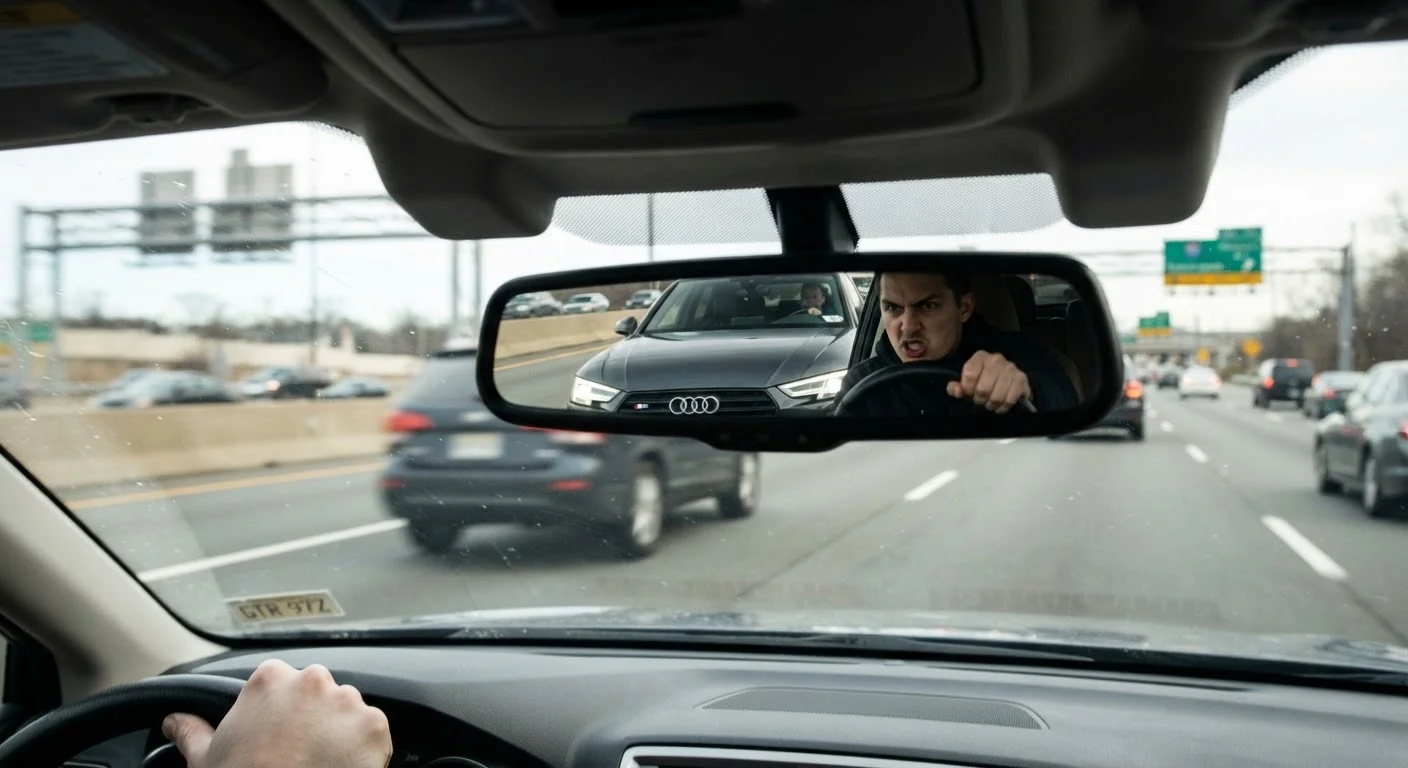
Photo credit: readerspanel.com
In this article
Being tailgated is stressful and genuinely risky. This breakdown covers the causes, the real danger mechanics, and the safest responses available to you.
Key Takeaways
- Rear-end collisions account for roughly 29% of all U.S. traffic crashes, according to NHTSA data.
- Tailgating cuts the tailgater's reaction window to less than a second at highway speeds.
- The safest response to being tailgated is to increase your own following distance and, when safe, change lanes.
- Tailgating is a form of aggressive driving and can escalate into road rage if either driver reacts emotionally.
- The three-second rule for following distance is a widely recognized minimum under normal conditions.
Perceived pressure to make slower drivers move
Some drivers use close following as a signal to prompt a lane change. The logic is that flashing lights is illegal in some jurisdictions, so proximity becomes the nudge.
Belief it saves travel time
Drivers who tailgate on highways often believe they are maintaining momentum or forcing the traffic ahead to flow faster. Actual time savings over a typical commute are negligible.
Habit formed in heavy traffic
In stop-and-go conditions, small gaps fill quickly. Some drivers develop a close-following habit in city traffic and carry it onto open roads without adjusting.
Reduced awareness of actual gap size
Many drivers genuinely misjudge distance at speed. What feels like a reasonable gap at 70 mph is often well below the three-second minimum most driving guidance recommends.
Reaction time is effectively zero
At highway speeds, a driver following one car length behind has under half a second between seeing brake lights and impact. Human reaction time alone is 1.5 seconds or more.
Rear-end crashes cause serious injuries
Whiplash, spinal injuries, and traumatic brain injuries are all documented outcomes of rear-end collisions, even at moderate speeds. Rear-end crashes make up roughly 29% of all U.S. traffic crashes, per NHTSA figures.
Risk multiplies in wet or low-visibility conditions
Wet pavement extends stopping distances significantly. A driver tailgating in rain has almost no margin at all. The stopping and visibility challenges of heavy rain make this combination particularly hazardous.
Tailgating can escalate into road rage
A driver who feels pressured may respond with brake-checking, speeding up, or confrontational behavior. What begins as impatience can become a mutual escalation with serious consequences for both parties and bystanders.
The tailgater bears most legal liability in a crash
In virtually all U.S. jurisdictions, the following driver is presumed liable in a rear-end collision unless exceptional circumstances apply. Insurance consequences and potential citations follow.
New and young drivers are at elevated risk
Drivers with limited experience have less practiced hazard perception and slower real-world pattern recognition. Being tailgated is especially disorienting for them. The safety gaps in new driver training are relevant here.
What tailgating is and why it matters
Tailgating means following another vehicle closer than stopping distance allows. At 60 mph, a car travels 88 feet per second. The average driver reaction time is roughly 1.5 seconds before braking even begins, which means a vehicle needs well over 200 feet to stop from highway speed. A tailgating driver collapses that margin to near zero.
The behavior shows up in two broad forms: intentional pressure (the driver wants the car ahead to move) and habitual crowding (the driver simply never learned to leave space). Both carry the same physical risk, regardless of intent.
For context on how widespread the problem is, see the overview of aggressive driving patterns, which covers how behaviors like tailgating fit into a broader spectrum of dangerous conduct on U.S. roads.
Why drivers tailgate: the perceived logic
Understanding the motivation behind tailgating does not excuse it, but it explains why the behavior persists despite obvious risk.
Perceived pressure to make slower drivers move
Some drivers use close following as a signal to prompt a lane change. The logic is that flashing lights is illegal in some jurisdictions, so proximity becomes the nudge.
Belief it saves travel time
Drivers who tailgate on highways often believe they are maintaining momentum or forcing the traffic ahead to flow faster. Actual time savings over a typical commute are negligible.
Habit formed in heavy traffic
In stop-and-go conditions, small gaps fill quickly. Some drivers develop a close-following habit in city traffic and carry it onto open roads without adjusting.
Reduced awareness of actual gap size
Many drivers genuinely misjudge distance at speed. What feels like a reasonable gap at 70 mph is often well below the three-second minimum most driving guidance recommends.
None of these perceived benefits hold up under scrutiny. Traveling one car length closer at 65 mph saves, at most, a few seconds over a typical trip. The tradeoff is a dramatically higher chance of a rear-end collision.
The real dangers: what the physics and data show
Reaction time is effectively zero
At highway speeds, a driver following one car length behind has under half a second between seeing brake lights and impact. Human reaction time alone is 1.5 seconds or more.
Rear-end crashes cause serious injuries
Whiplash, spinal injuries, and traumatic brain injuries are all documented outcomes of rear-end collisions, even at moderate speeds. Rear-end crashes make up roughly 29% of all U.S. traffic crashes, per NHTSA figures.
Risk multiplies in wet or low-visibility conditions
Wet pavement extends stopping distances significantly. A driver tailgating in rain has almost no margin at all. The stopping and visibility challenges of heavy rain make this combination particularly hazardous.
Tailgating can escalate into road rage
A driver who feels pressured may respond with brake-checking, speeding up, or confrontational behavior. What begins as impatience can become a mutual escalation with serious consequences for both parties and bystanders.
The tailgater bears most legal liability in a crash
In virtually all U.S. jurisdictions, the following driver is presumed liable in a rear-end collision unless exceptional circumstances apply. Insurance consequences and potential citations follow.
New and young drivers are at elevated risk
Drivers with limited experience have less practiced hazard perception and slower real-world pattern recognition. Being tailgated is especially disorienting for them. The safety gaps in new driver training are relevant here.
When tailgating becomes a legal matter
Every U.S. state has laws prohibiting following too closely, though the specific language varies. In many states, law enforcement can issue citations for the behavior even without a collision occurring. If you are involved in a crash caused by a tailgating driver, documenting the incident for your insurer as soon as it is safe to do so is the practical first step. General legal questions about liability are best directed to a licensed attorney familiar with your state's traffic law.
Impaired or fatigued drivers compound the problem further. A driver who is already slow to process hazards has even less margin when following distance is gone. The effects of driving fatigue on reaction time are worth reviewing alongside this topic.
How to respond when you are being tailgated
The goal is to reduce your exposure without escalating the situation.
- Increase your own following distance from the car ahead. This gives you a longer deceleration zone and reduces the chance of a sudden brake application that the tailgater cannot match.
- Move to the right lane when it is safe. If a driver behind you wants to move faster, the straightforward resolution is to let them pass. This is not yielding to bad behavior; it is removing yourself from a hazard.
- Avoid brake-checking. Tapping your brakes to startle a tailgater is illegal in many states and can trigger the exact collision you want to prevent.
- Stay calm. Matching aggression with aggression turns a traffic nuisance into a road rage incident. The de-escalation choices that work are well-documented and they start with the decision not to respond emotionally.
- If the behavior feels threatening rather than oblivious, drive to a public, well-lit location before stopping. Do not stop on a highway shoulder to confront another driver.
Distracted driving compounds tailgating risk because a driver who is not fully watching the road ahead cannot manage the reduced margin. The full picture of distracted driving risks covers why divided attention is more dangerous than most drivers assume.

Author
Automotive Life Editorial Team
Automotive Life Editorial Team is the collective byline for our editorial team and contributor network. Articles published under this byline or an editorial pen name are researched, written, and reviewed according to our editorial standards for clarity, consistency, and independence before publication.
View all articles →