
Reading Your Plants: What Leaf Color and Shape Changes Are Telling You
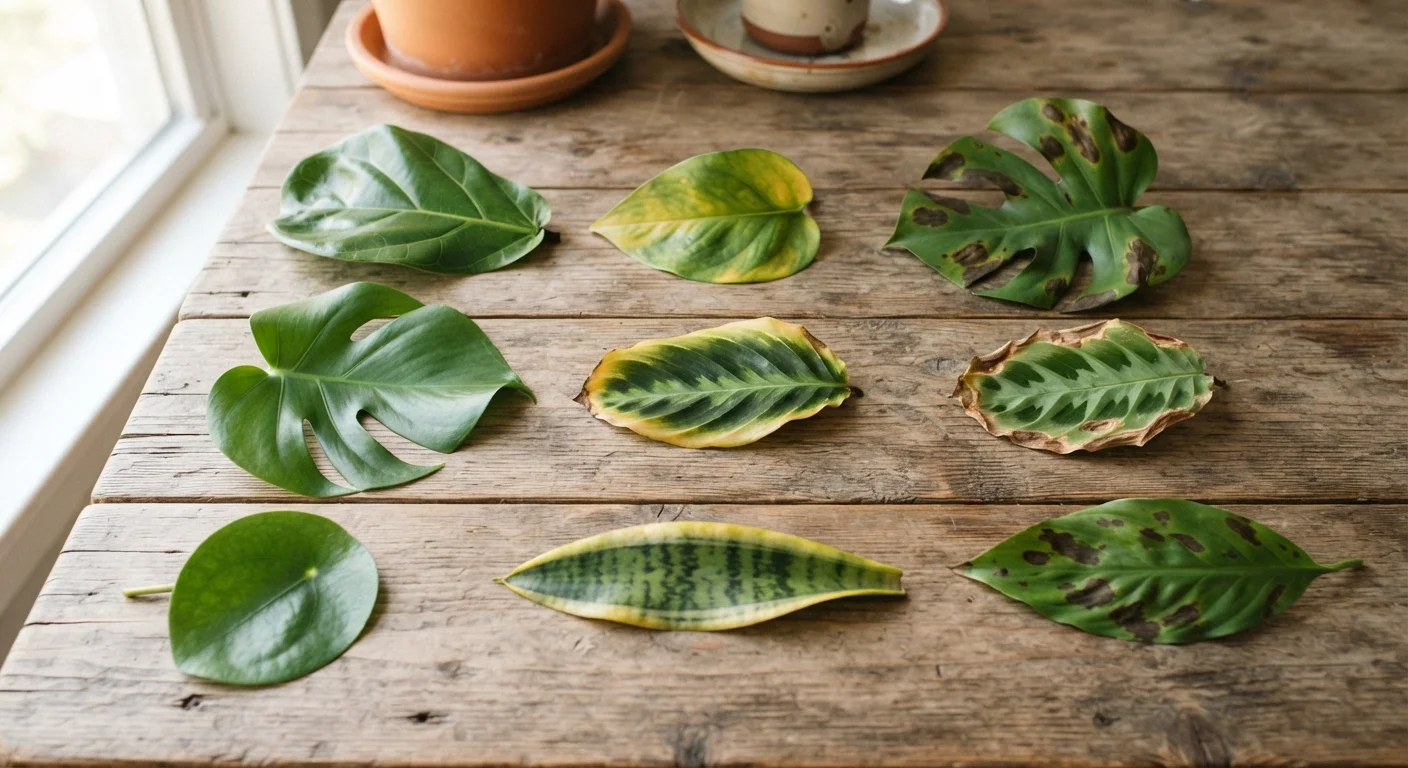
Photo credit: readerspanel.com
In this article
Yellowing, curling, spotting: learn what common leaf changes signal about water, nutrients, and plant health before problems spread.
Key Takeaways
- Yellowing that starts with older, lower leaves often signals a nitrogen deficiency.
- Leaf curling direction matters: inward usually means heat or drought stress, outward can indicate overwatering.
- Brown leaf tips are frequently caused by low humidity or salt buildup from fertilizer, not disease.
- Interveinal chlorosis, where leaf veins stay green while the tissue between them yellows, points to iron or manganese deficiency.
- Most pest infestations show up first as stippling, sticky residue, or distorted new growth rather than large holes.
- Correcting one variable at a time makes it easier to identify which change actually solved the problem.
Why leaves are the plant's early warning system
A plant cannot speak, but its leaves change in predictable ways when something is wrong. Because leaves are where photosynthesis happens, they respond quickly to disruptions in water supply, nutrient availability, light exposure, and pest activity. Reading those changes accurately means you can act early, before root rot sets in, before a nutrient deficiency stunts a whole season's growth, or before a pest colony spreads to neighboring plants.
The key is learning to be specific. 'My plant looks bad' is much harder to work with than 'the lower leaves are yellowing while the top growth looks fine.' Where on the plant the symptom appears, which part of the leaf is affected, and how quickly the change progressed all carry diagnostic information. This article walks through the most common leaf changes home gardeners encounter and what each one tends to indicate.
Color changes and what they reveal
Yellowing is the most frequent concern, and its location on the plant is the most useful clue. Yellow leaves starting at the bottom of the plant and moving upward suggest nitrogen deficiency. Nitrogen is mobile within plant tissue, so a plant under stress pulls it from older leaves to support younger growth. If yellowing appears across the plant without a clear pattern, light deficiency or overwatering is more likely.
Interveinal chlorosis, where the tissue between veins turns yellow while the veins themselves stay green, points to iron or manganese deficiency. Both nutrients become less available when soil pH drifts too high. A soil test can confirm whether pH is the root cause before you add any amendments.
Purple or reddish tones on leaves that are normally green often indicate phosphorus deficiency, particularly in cooler temperatures when phosphorus uptake slows. However, some plants naturally produce anthocyanin pigments in response to high light, so consider whether the coloration is new or has appeared before under similar conditions.
Dark green leaves can also signal a problem
Very dark green leaves paired with slow growth can indicate excess nitrogen rather than too little. Over-fertilized plants sometimes push dense, dark foliage while fruit, flower, and root development lag behind. If you have been fertilizing heavily and growth still seems off, scaling back the fertilizer frequency is worth trying before adding more.
Very dark green leaves paired with slow growth can indicate excess nitrogen rather than too little. Over-fertilized plants sometimes push dense, dark foliage while fruit, flower, and root development lag behind.
Leaf shape and texture as diagnostic tools
Curling leaves tell you about environmental stress. Leaves curling inward along their length are usually trying to conserve moisture, a response to drought, high heat, or low humidity. Leaves curling downward at the edges, sometimes described as cupping, more often accompany overwatering or root problems that prevent normal water uptake even when the soil appears wet.
Distorted, puckered, or stunted new growth is a sign worth taking seriously. Aphids, thrips, and mites all feed on developing leaf tissue before it hardens, and their feeding causes the cell structure to form unevenly. The result is twisted, cupped, or narrow leaves at the growing tips. If you see this, check the undersides of leaves and the growing point for insects or fine webbing.
Brown leaf tips and margins with a crispy texture almost always point to a humidity or water-quality issue rather than disease. Many houseplants, particularly those native to tropical environments, suffer when indoor air drops below 40 percent relative humidity. Excess fertilizer salts accumulating in potting mix draw moisture away from root cells at the tip zone of leaves, producing the same symptom. Flushing the pot thoroughly with plain water every few months helps prevent salt buildup.
Spots, lesions, and surface changes
Spots with defined edges, concentric rings, or a yellow halo around a darker center are characteristic of fungal infections like early blight or leaf spot diseases. These spread in humid conditions and poor air circulation. Removing affected leaves and improving spacing between plants reduces the spread without the need for immediate chemical intervention.
Bacterial lesions tend to look water-soaked at first, then turn brown or black as tissue dies. They often appear angular because they are bounded by leaf veins. Bacterial problems worsen when water sits on foliage, so watering at the base of the plant and avoiding overhead irrigation helps.
Pale stippling across a leaf surface, as though the color has been lightly sandblasted away, is the hallmark of spider mite damage. Each tiny dot is where a mite has punctured a cell. Heavy infestations also produce fine webbing on the undersides of leaves. Sticky, shiny residue on leaves without visible insects often indicates scale or whitefly, both of which excrete a substance called honeydew as they feed.
For indoor plants, matching the right species to your environment reduces many of these problems before they start. The guide to choosing indoor plants by light and space covers which species are least prone to stress-related symptoms in typical home conditions.
Working through a diagnosis systematically
When a leaf problem appears, check watering habits first. Most houseplant problems trace back to moisture, either too much or too little, and correcting that before adding fertilizer or treatments avoids compounding the issue. After confirming watering is appropriate, consider light. A plant receiving less light than it needs will show general pallor and slow growth; one receiving too much direct sun may show bleached or scorched patches on the side facing the light source.
If water and light check out, examine the soil. Compact, hydrophobic potting mix that pulls away from the pot edges does not absorb water evenly, creating wet and dry pockets that mimic both overwatering and underwatering symptoms simultaneously. Repotting into fresh mix or aerating compacted soil with a thin skewer can resolve this. For persistent nutrient symptoms, a proper soil test gives you actual numbers rather than guesses.
Change one variable at a time and allow a week or two before assessing the result. Leaf damage already present will not reverse, but new growth should reflect improved conditions if the cause has been addressed.
Frequently Asked Questions

Author
Home & Garden Editorial Team
Home & Garden Editorial Team is the collective byline for our editorial team and contributor network. Articles published under this byline or an editorial pen name are researched, written, and reviewed according to our editorial standards for clarity, consistency, and independence before publication.
View all articles →