
What a Soil Test Tells You and How to Read the Results
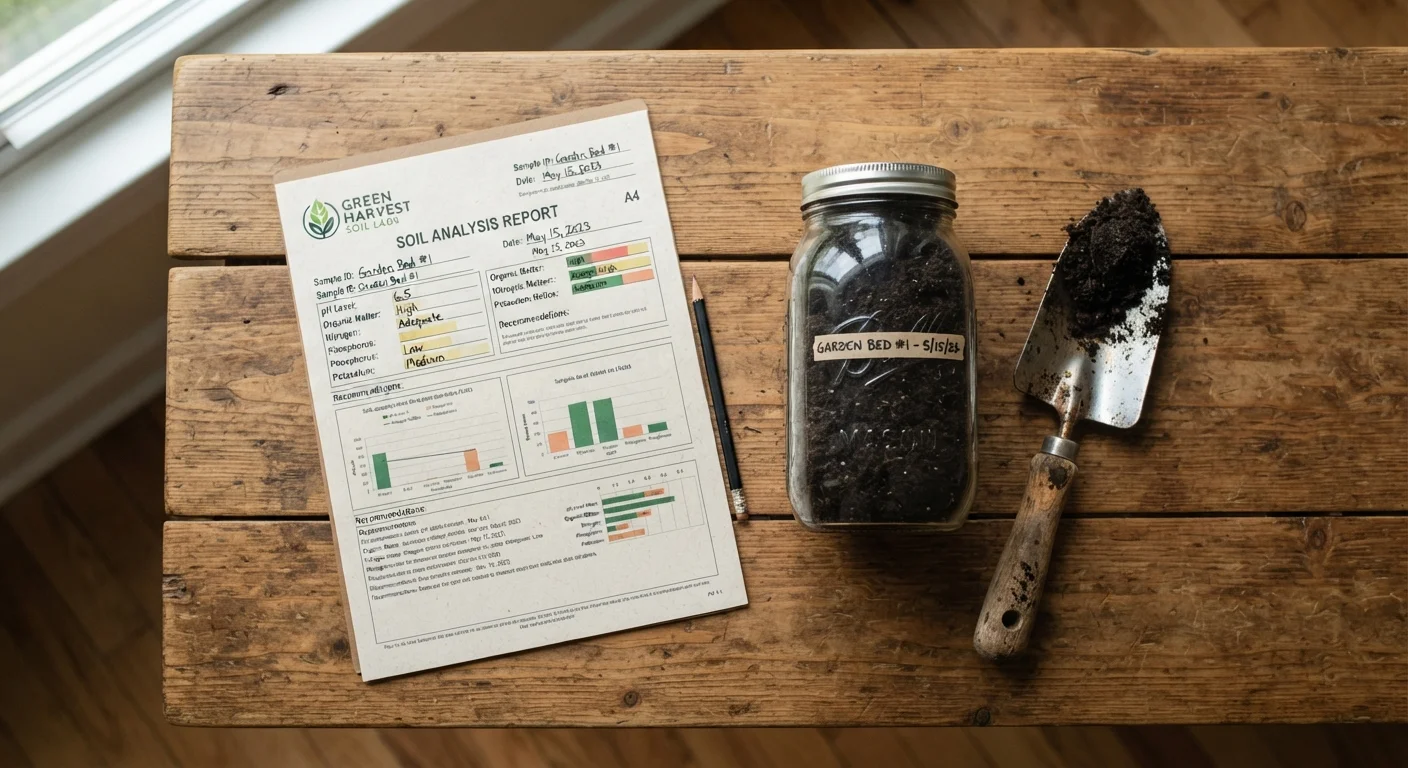
Photo credit: readerspanel.com
In this article
A soil test report can feel overwhelming at first. This reference guide walks through the key numbers, what they mean, and what to do about them.
What a soil test actually measures
A standard soil test from a cooperative extension lab or private testing service measures three broad categories: pH, macronutrient levels, and sometimes secondary nutrients or heavy metals. The report translates those measurements into numbers and ratings you can act on.
| Ideal garden soil pH | 6.0 to 7.0 (USDA cooperative extension general guidance) |
| Organic matter target | 3% to 5% (University extension soil health benchmarks) |
| Recommended retest interval | Every 2 to 3 years (Standard cooperative extension advice) |
| Sample depth for vegetable beds | 6 to 8 inches (Standard lab collection protocol) |
| Cores per sample area | 10 to 15 random cores (Standard lab collection protocol) |
pH is the scale that shows how acidic or alkaline your soil is. Most vegetables and ornamentals grow well between 6.0 and 7.0. Below 6.0, nutrients like phosphorus and calcium become harder for roots to absorb. Above 7.5, iron and manganese can become unavailable, which often shows up as yellowing between leaf veins. If you notice those patterns, the leaf color and shape guide can help you connect visible symptoms to the underlying chemistry.
Macronutrient readings cover nitrogen (N), phosphorus (P), and potassium (K). These are the same three numbers printed on fertilizer bags. The test result tells you how much of each is already present in your soil, so you know what to add and what to skip.
How to read the numbers on your report
Most reports express nutrient levels in parts per million (ppm) or pounds per acre, then convert them to a rating such as Low, Medium, Sufficient, or High. Work from the ratings column first, not the raw numbers, because the thresholds differ by soil type and crop.
pH: If your result is below 6.0, the report will typically recommend ground limestone to raise pH. If it is above 7.5, elemental sulfur is the common amendment. Follow the lb-per-1,000-sq-ft recommendation on the report rather than guessing, because over-liming is a real and common mistake.
Phosphorus: A High rating means adding more phosphorus will not help plants and may contribute to runoff. Skip phosphorus fertilizer entirely until the level drops through plant uptake over several seasons.
Potassium: Low potassium weakens cell walls and reduces drought tolerance. The report will give a pounds-per-1,000-sq-ft application rate for potassium sulfate or greensand depending on your soil texture.
Nitrogen: Many labs do not include nitrogen in a standard panel because it moves through soil so quickly that a single snapshot is unreliable. Your report may note this and suggest a general rate based on your crop type instead.
pH
A scale from 0 to 14 that measures soil acidity or alkalinity. A value of 7.0 is neutral; below 7.0 is acidic, above 7.0 is alkaline.
Buffer pH
A lab measurement that indicates how much lime a soil needs to reach a target pH. It accounts for the soil's natural resistance to pH change and is used to calculate amendment rates.
Cation exchange capacity (CEC)
A measure of how many nutrients soil particles can hold and release to plant roots. Higher CEC generally means the soil holds nutrients longer and resists leaching.
Organic matter
Decomposed plant, animal, and microbial material in soil. It improves water retention, aeration, and the availability of nutrients to plants.
Macronutrients
The three primary nutrients plants need in the largest amounts: nitrogen (N), phosphorus (P), and potassium (K). These appear on fertilizer labels in N-P-K order.
Organic matter and buffer pH
Two numbers that confuse many gardeners appear near the top of most reports: organic matter percentage and buffer pH.
Organic matter is the decomposed plant and animal material in your soil. A reading below 2 percent means the soil has low water retention and microbial activity. Adding compost is the standard recommendation, and most reports will specify how many cubic yards per 1,000 square feet to incorporate. Raising organic matter by even one percentage point takes two or more seasons of consistent amendment.
Buffer pH (sometimes called lime buffer pH) is not the same as your actual pH. It tells the lab how much limestone your soil needs to reach the target pH, accounting for the soil's resistance to change. A soil with more clay and organic matter resists pH shifts more than sandy soil does. The amendment rate printed on your report is already calculated from the buffer pH, so you do not need to do anything extra with that number.
What to do after reading the results
Work through the report in order of priority. pH correction comes first because it affects how well all other nutrients function. Apply lime or sulfur at the rate given, then till or rake it into the top six inches if possible. Retest after one full growing season to confirm the shift.
Next, address any nutrients rated Low or Deficient. Use the amendment type the report recommends. Generic multi-nutrient fertilizers often add phosphorus or potassium the soil does not need, so targeted amendments based on the actual deficiencies are more precise.
For nutrients rated High or Excessive, the only practical correction is time. Plant uptake will gradually draw down the excess. Avoid adding more of those nutrients through compost, manure, or fertilizer in the meantime. Compost labels do not always break down N-P-K content clearly, so reading ingredient disclosures carefully matters. The guide to reading product labels covers how to interpret those claims accurately.
Plan to retest every two to three years under normal conditions, or annually if you are amending aggressively or growing heavy-feeding crops like corn or tomatoes in the same beds each season.

Author
Home & Garden Editorial Team
Home & Garden Editorial Team is the collective byline for our editorial team and contributor network. Articles published under this byline or an editorial pen name are researched, written, and reviewed according to our editorial standards for clarity, consistency, and independence before publication.
View all articles →