
Plants That Naturally Discourage Garden Pests
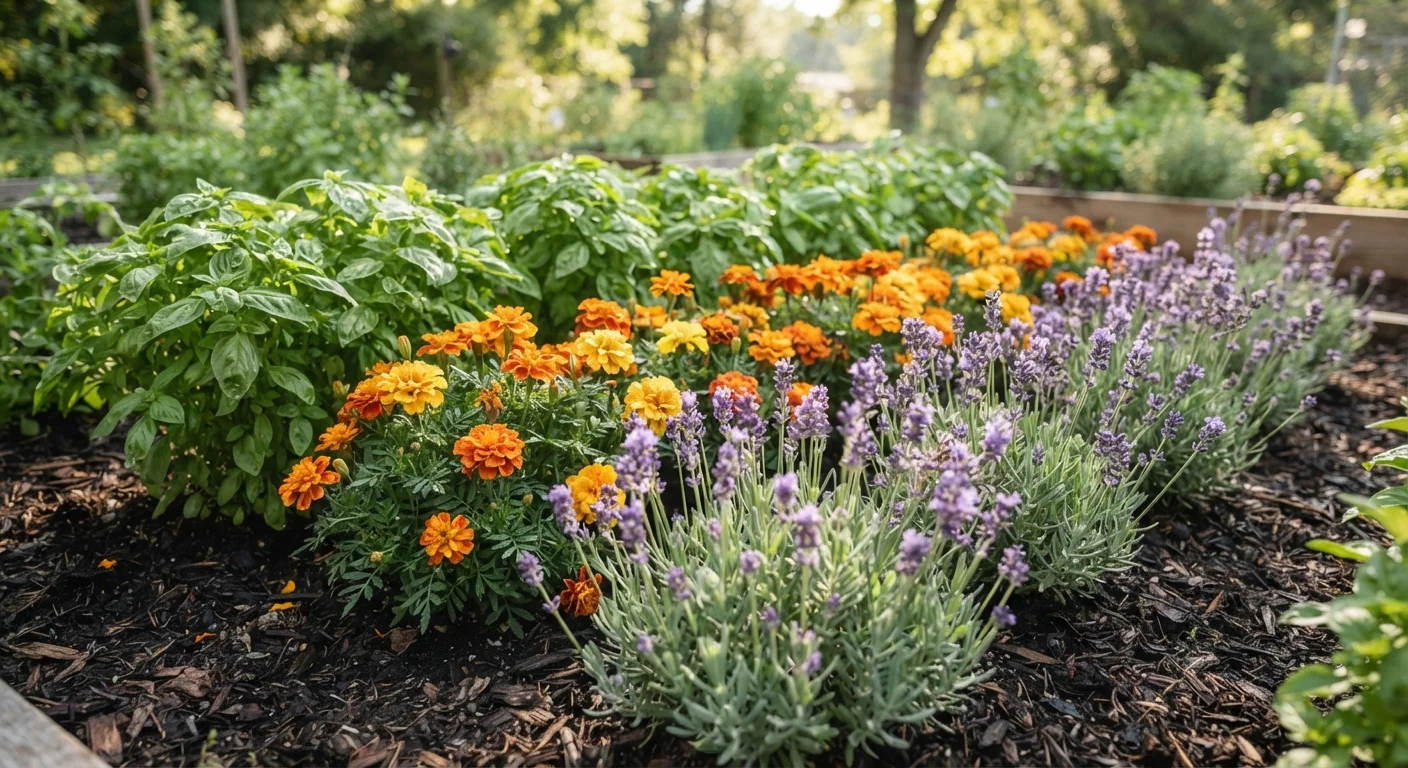
Photo credit: readerspanel.com
Certain plants emit compounds or attract predators that help keep common garden pests in check. Learn which ones earn their spot in your beds.
Key Takeaways
- Several common garden plants emit volatile compounds that confuse or repel specific insect pests.
- Some plants attract beneficial predatory insects that feed on aphids, whiteflies, and caterpillars.
- Pest-deterring plants work best when integrated throughout beds rather than planted in a single block.
- No plant eliminates all pests; these are management tools, not guarantees.
- Companion planting with pest-deterring species can reduce reliance on chemical interventions.
How plants discourage pests
Plants do not sit passively in the garden. Many produce chemical compounds, strong scents, or physical structures that make them unappealing to insects, and some attract the predators that eat common pests. Gardeners have used this biology for centuries, and while folklore has inflated a few claims, a solid core of evidence supports planting certain species near vulnerable crops.
The mechanism matters. Some plants release volatile oils that interfere with how insects locate food. Others produce nectar that draws parasitic wasps or hoverflies, whose larvae consume aphids and caterpillars. A few create a physical barrier or simply dilute pest populations by breaking up large patches of a host plant.
For best results, spread these plants through your beds rather than grouping them all in one corner. Variety in plant structure and bloom time gives beneficial insects continuous food and shelter across the season. For more on which pairings have real horticultural backing, see the companion planting guide that covers evidence-based combinations.
Marigolds (Tagetes species)
Marigolds are among the most studied plants for pest management in the home garden. Their roots release a compound called alpha-terthienyl, which has shown nematocidal activity in research settings, meaning it can suppress certain soil-dwelling nematodes that damage root vegetables and tomatoes. The strong scent of the foliage also appears to confuse aphids and whiteflies when marigolds are planted close to host crops.
French marigolds (Tagetes patula) are the variety most commonly cited for nematode suppression, and they work best when grown as a dense planting for a full season before a susceptible crop goes in the same bed. As a companion, plant them along the edges of vegetable rows rather than in a single cluster away from what you want to protect.
Marigold roots release compounds that can suppress root-damaging nematodes over a full growing season.
Lavender (Lavandula angustifolia)
Lavender produces linalool and other terpenes that many pest insects find off-putting, including fleas, moths, and some aphid species. The scent that humans find pleasant is believed to disrupt the olfactory cues insects use to locate hosts. Planted near a vegetable border or along a garden path, lavender can reduce aphid pressure on nearby plants.
Lavender also attracts pollinators and some beneficial predatory insects during its bloom period. It prefers well-drained soil and full sun, so it fits naturally along sunny bed edges where it can dry out between waterings. In humid climates, good air circulation helps prevent the crown rot that lavender is prone to.
Lavender's terpenes disrupt the scent cues insects use to find host plants nearby.
Basil (Ocimum basilicum)
Basil emits a mix of volatile compounds including eugenol and linalool. Growers have long planted it near tomatoes, and while the evidence for direct pest repellency is mixed, several studies have found that basil volatiles reduce thrips and aphid activity on adjacent plants when basil is planted in sufficient density.
A practical approach is to let some basil plants go to flower. The small white blooms attract hoverflies, whose larvae are voracious aphid predators. Allowing flowering also brings parasitic wasps that parasitize caterpillars and whitefly nymphs. You lose some harvestable leaf production, but you gain biological pest control throughout the bed.
Flowering basil draws hoverflies whose larvae consume large numbers of aphids.
Nasturtiums (Tropaeolum majus)
Nasturtiums work differently from the other plants on this list. Rather than repelling pests, they attract aphids, particularly black bean aphids, and act as a trap crop. Aphids congregate on nasturtiums instead of migrating to beans, brassicas, or other vegetables nearby. Once the nasturtium is heavily colonized, you can remove and dispose of the whole plant, aphid population included.
This strategy requires some tolerance for seeing a plant covered in insects, but it is effective when nasturtiums are positioned at the perimeter of a bed and monitored regularly. The flowers are also edible and attract pollinators, so the plants earn their space in multiple ways.
Nasturtiums act as a trap crop, drawing aphids away from vegetables and onto a sacrificial plant.
Dill (Anethum graveolens)
Dill is a powerhouse for attracting beneficial insects. Its flat-topped flower clusters (umbels) are accessible to small parasitic wasps, hoverflies, and lacewings that struggle to feed at more complex flower structures. These insects either consume pest insects directly or lay eggs on or near them, with the larvae doing the pest-control work.
Dill does self-seed aggressively, so decide early whether you want to let it naturalize or deadhead before seed sets. Leaving a few plants to go to seed keeps a rotating population of beneficial insect habitat in the garden. It grows well among brassicas and lettuces, where caterpillar pressure from cabbage moths is common.
Dill's open flower clusters feed parasitic wasps that target the caterpillars affecting brassicas.
Rosemary (Salvia rosmarinus)
Rosemary produces camphor and borneol alongside other volatile oils. These compounds have shown repellent activity against several insects in laboratory conditions, including cabbage moths and bean beetles. In the garden, rosemary planted near brassicas or legumes may reduce pest colonization, though field evidence is less controlled than lab results.
Its woody structure also gives ground beetles and spiders shelter at the base. Both are generalist predators that consume soil-level pests including slugs and cutworm larvae. Rosemary is drought-tolerant once established, making it an easy permanent addition to sunny borders in most US growing zones.
Rosemary's woody base shelters ground beetles and spiders that prey on soil-level pests.
Getting the most from pest-deterring plants
Placement and timing shape how effective these plants will be. Plant flowering species early enough that they bloom when pest pressure typically peaks in your region. Letting herbs like basil and cilantro go to flower rather than cutting them back constantly gives beneficial insects access to nectar and pollen.
Let some herbs bolt on purpose
Cutting herbs back constantly keeps them tidy but removes the flowers that feed beneficial insects. Allow a portion of your basil, dill, and cilantro to flower each season. The increase in hoverflies, lacewings, and parasitic wasps that follow is worth the reduction in harvestable leaf material.
Container growers can still benefit. Pots of marigolds near a patio vegetable garden, or a rosemary planter beside a window box of tomatoes, bring the same deterrent chemistry to smaller spaces. The container gardening principles article covers how to keep potted plants healthy enough to do this job well.
These plants are tools in a broader strategy, not a complete solution. Monitor your garden regularly, remove heavily infested material promptly, and think of pest-deterring plants as one layer of a thoughtful growing approach rather than a single fix.

Author
Home & Garden Editorial Team
Home & Garden Editorial Team is the collective byline for our editorial team and contributor network. Articles published under this byline or an editorial pen name are researched, written, and reviewed according to our editorial standards for clarity, consistency, and independence before publication.
View all articles →