
Container Gardening on a Patio or Balcony: Core Principles That Make It Work
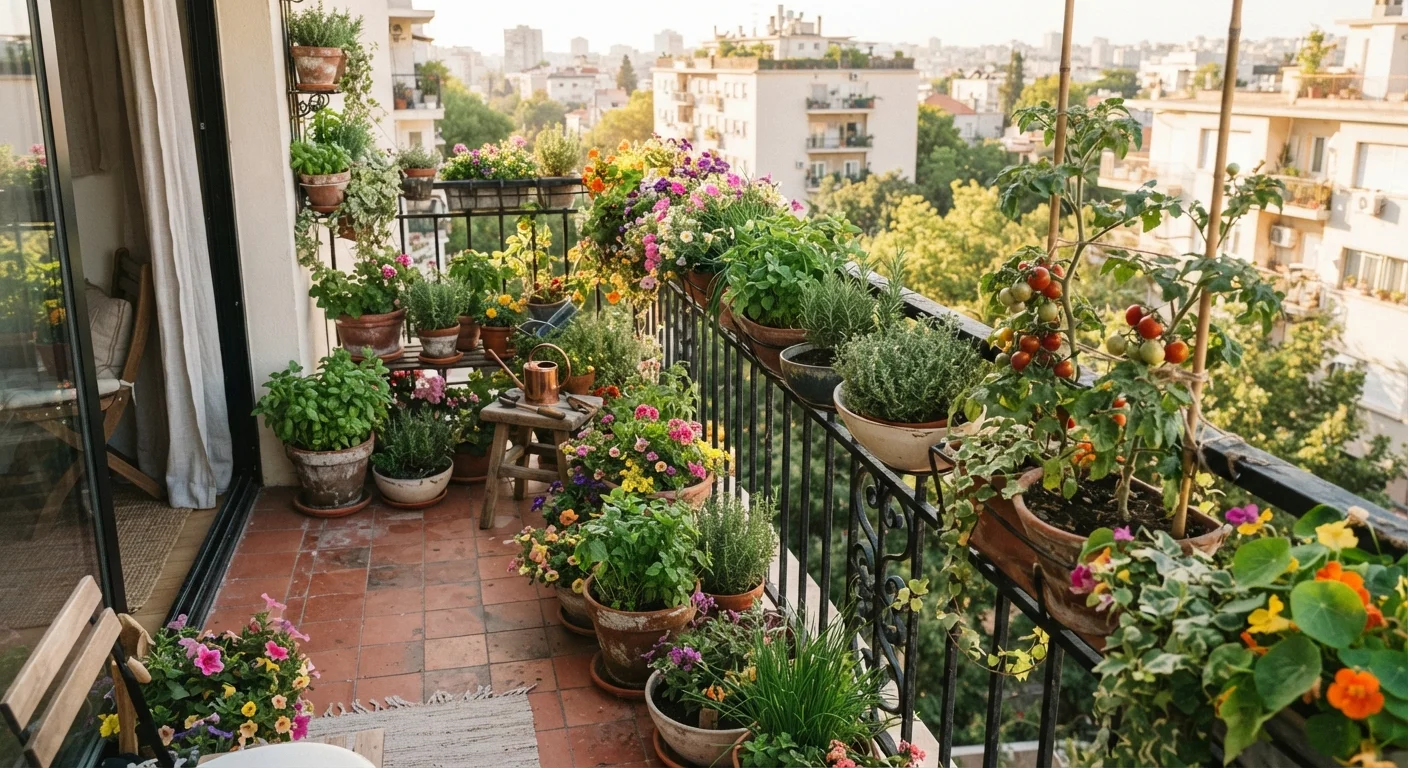
Photo credit: readerspanel.com
In this article
Limited outdoor space does not mean limited growing. Understand drainage, soil mix, and plant selection to keep container gardens healthy.
Key Takeaways
- Drainage is the single most critical factor in container gardening; waterlogged roots kill plants faster than drought.
- Standard garden soil compacts in pots and should never be used alone; a purpose-made potting mix is necessary.
- Container size directly controls how much water and nutrient reserves a plant has between your attention.
- Most edible crops and flowering annuals need at least six hours of direct sun daily to perform well.
- Containers dry out faster than garden beds, so consistent watering habits matter more in pots than in the ground.
Why containers succeed or fail
Container gardening compresses every variable of plant health into a small, isolated volume of soil. There is no surrounding earth to buffer moisture swings, no deep subsoil for roots to explore, and no natural microbial ecosystem to recycle nutrients. That compression is also what makes containers so manageable: you control the soil, drainage, and placement entirely.
The most common reason container gardens fail is excess moisture with nowhere to go. A pot without drainage holes, or with holes blocked by a saucer full of standing water, keeps roots in saturated conditions that suffocate them within days. Before anything else, confirm that every container has at least one drainage hole and that water can exit freely after each watering.
Weight is a real constraint on balconies. A large container filled with wet soil can weigh well over 100 pounds. If you garden on an upper-floor balcony, check your building's load limits and favor lightweight containers and mixes. When in doubt, consult a structural professional before placing heavy planters near railings or in concentrated groupings.
Soil mix, container size, and drainage
Garden soil, even good garden soil, compacts inside pots. Compacted soil pulls away from container walls, channels water around the root zone rather than through it, and starves roots of oxygen. A quality potting mix uses materials like perlite, vermiculite, or coarse bark to keep structure open over time.
For vegetables and fruiting plants, a mix formulated for edibles or a general-purpose potting mix amended with compost gives a better nutrient base. For succulents and Mediterranean herbs like rosemary or thyme, a mix with added coarse sand or grit suits their preference for fast drainage. If you make your own compost, finished compost can be blended in at roughly 20 to 25 percent of total volume without compromising drainage.
Container size affects watering frequency and root development directly. A tomato plant in a five-gallon pot needs watering far more often than one in a fifteen-gallon container, because the smaller soil volume heats up faster and holds less water. A general guideline: most vegetables and large herbs do best in containers holding at least ten to fifteen gallons. Compact cultivars bred for containers can manage with less.
Always use containers with drainage holes, and never let saucers hold standing water for more than an hour after watering.
Root rot from waterlogged soil is the leading cause of container plant death. Even moisture-loving plants need oxygen at their roots, which standing water displaces.
Use a purpose-made potting mix rather than garden soil, and refresh or replace it each growing season.
Potting mixes maintain the open structure roots need to access water and air. Garden soil compacts after one season in a container, reducing drainage and root penetration.
Match container size to plant root volume, erring toward larger rather than smaller.
Undersized containers restrict root development, increase watering frequency, and limit the nutrients available between feedings. Root-bound plants stall or decline.
Verify actual sun hours before planting, and group sun-needing plants in the brightest spot available.
Plant labels list sun requirements based on ideal conditions. Overestimating available light leads to leggy growth, poor fruiting, and susceptibility to disease.
Water deeply and less frequently rather than shallowly every day.
Shallow watering wets only the top inch of soil, encouraging surface roots and leaving the lower root zone dry. Deep watering reaches the full root zone and builds drought tolerance.
Light and plant selection
Balconies and patios vary widely in sun exposure. A south-facing patio with no overhead obstruction may receive eight or more hours of direct sun; a north-facing balcony with an overhang may receive two. Measure your actual light before selecting plants, not just the orientation. Overcast days, nearby buildings, and seasonal sun angles all change what a space can support.
Most fruiting crops (tomatoes, peppers, squash) and sun-loving herbs (basil, oregano) need six or more hours of direct sun. Leafy greens like lettuce, spinach, and kale tolerate partial shade and actually benefit from afternoon shade in hot summers. For genuinely low-light spaces, shade-tolerant plants offer better results than forcing sun-lovers into dim conditions.
Wind exposure on upper balconies can dry containers faster than sun alone and physically damage tall or brittle plants. Compact, bushy growth habits hold up better than tall single-stemmed plants in exposed positions. Grouping containers together reduces wind exposure to individual pots and slows moisture loss from the soil surface.
Pest pressure in containers is generally lower than in ground beds, but it still exists. Certain companion plants can be grown in adjacent pots to reduce common pest populations without chemical intervention.
Watering, feeding, and seasonal care
Containers dry out faster than garden beds because the soil volume is small and exposed on all sides to heat. In summer, small pots may need watering daily; large ones every two to three days. The most reliable check is to insert a finger two inches into the soil. If it feels dry at that depth, water thoroughly until it drains from the bottom holes.
Because nutrients leach out with each watering, container plants need more frequent feeding than those in the ground. A slow-release granular fertilizer worked into the mix at planting, supplemented with a diluted liquid feed every two to four weeks during active growth, keeps most plants adequately supplied. Follow label directions for application rates; more fertilizer is not better and can burn roots.
At the end of the growing season, empty and clean containers before storing them. Soil left in pots over winter can harbor disease spores and break down the pot material in freeze-thaw cycles. If you plan to overwinter tender perennials in containers, move them to a sheltered location before hard frost and reduce watering significantly. For a full seasonal preparation checklist, fall garden prep covers the key steps.

Author
Home & Garden Editorial Team
Home & Garden Editorial Team is the collective byline for our editorial team and contributor network. Articles published under this byline or an editorial pen name are researched, written, and reviewed according to our editorial standards for clarity, consistency, and independence before publication.
View all articles →