
Shade Gardening: Working With Low-Light Spots Instead of Against Them
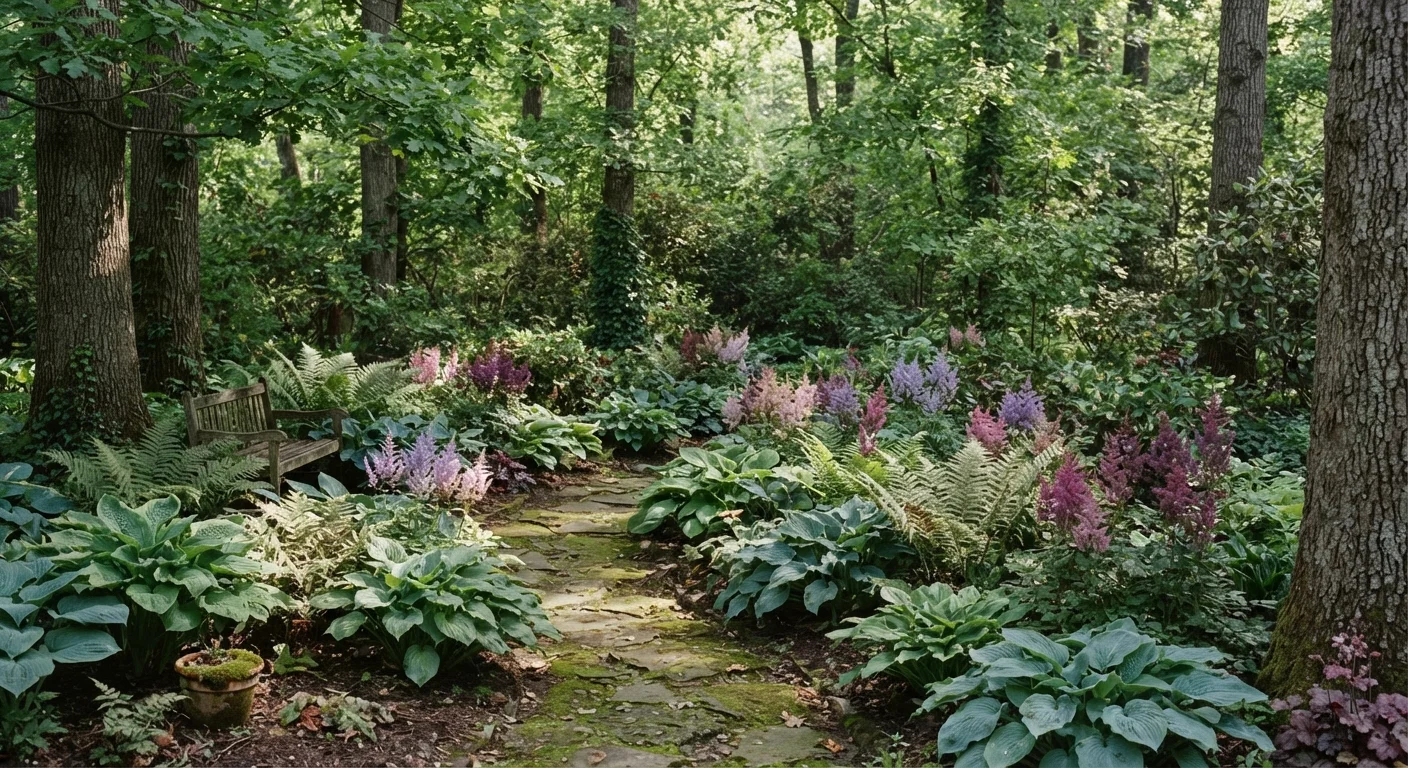
Photo credit: readerspanel.com
In this article
Shady corners do not have to stay bare. Learn which plants thrive with limited sun and how to design a shade garden that looks intentional.
Key Takeaways
- Shade comes in degrees: deep, part, and dappled shade each support different plant choices.
- Soil improvement is the most important prep step before planting a shade garden.
- Many native woodland plants are well-suited to low-light conditions in US yards.
- Leaf texture and color variation, not just flowers, carry a shade garden's visual interest.
- Consistent moisture matters more in shade because tree roots compete for water.
Why shade gardens fail (and how to avoid those mistakes)
Most failed shade gardens come down to two mistakes: choosing plants labeled 'shade tolerant' without checking actual light levels, and ignoring the soil conditions that shade-producing trees create. Tree roots draw moisture and nutrients aggressively, leaving the soil around them dry and depleted. A plant that thrives in the moist, organic-rich shade of a woodland will struggle in the dry shade beneath a Norway maple.
Understanding your specific type of shade before buying a single plant changes the outcome significantly. The steps below walk through how to assess conditions, improve the soil, and select plants that will genuinely perform.
What you will need
If you are working with containers rather than open beds, many shade-tolerant species adapt well to pots. Container gardening principles for patios and balconies covers the drainage and soil mix considerations that apply when growing in shade with limited root space.
Building and maintaining your shade garden
Measure and classify your light
Spend a day observing how much direct sun reaches the area. Count the hours of direct sunlight across the full day.
- Full shade: fewer than 2 hours of direct sun daily
- Part shade: 2 to 4 hours, often morning sun with afternoon cover
- Dappled shade: filtered light through a tree canopy throughout the day
This classification directly determines which plants will work. A plant labeled 'shade' at a nursery may mean part shade, so knowing your actual reading prevents mismatches.
Test and amend the soil
Shaded areas under trees often have dry, root-dense, nutrient-depleted soil. Dig down 6 inches and check texture. If the soil is compacted or sandy, work in 2 to 3 inches of compost or leaf mold before planting. Avoid piling amendments directly against tree trunks.
A basic soil pH test (available at most garden centers) can confirm whether your soil falls in the 6.0 to 7.0 range that most shade perennials prefer. If pH is off, amend accordingly before adding plants.
Choose plants matched to your light level
Select plants based on your measured light classification, not general preference. Some reliable options by category:
- Full shade perennials: hostas, astilbes, bleeding heart (Dicentra), and lungwort (Pulmonaria)
- Part shade perennials: coral bells (Heuchera), Japanese anemone, Solomon's seal, and cardinal flower
- Groundcovers: sweet woodruff, wild ginger, and creeping Jenny for dappled or part shade
- Ferns: ostrich fern and autumn fern handle moderate to full shade and add strong textural contrast
Native woodland plants are worth prioritizing. Species like trillium, jack-in-the-pulpit, and Virginia bluebells are adapted to the seasonal light patterns of eastern US yards and tend to establish without much intervention. Check what is native to your region before purchasing.
Plant at the right depth and spacing
Follow the spacing on each plant's label. Shade plants generally spread slowly, so crowding early to fill gaps tends to cause problems later. Dig each hole twice as wide as the root ball and at the same depth. Set the crown (where roots meet stems) at soil level, not buried below it.
Water each plant in thoroughly after planting, even if the soil already feels moist. This settles air pockets around the roots.
Mulch and establish a watering routine
Apply 2 to 3 inches of mulch across the bed, keeping it a few inches away from plant stems and tree trunks. Mulch slows moisture loss and suppresses weeds, both of which matter more in shaded beds where tree roots compete for water.
Shaded soil can feel cool and slightly damp on the surface while being dry several inches down, particularly under dense canopies. Check soil moisture 3 to 4 inches below the surface before watering. For guidance on building strong root systems through watering technique, see how deep watering differs from frequent shallow watering.
Monitor plant health and adjust over time
Watch for signs that a plant is not getting enough light: elongated, floppy stems reaching toward brighter areas, pale or yellowing foliage without other cause, and failure to flower in species that normally bloom. These are signals to either relocate the plant or prune overhead branches selectively to allow more light in.
If foliage shows unusual spotting, curling, or color changes, reading what leaf changes indicate can help you identify whether the issue is light, water, or nutrients. Shade beds are generally lower-maintenance than sunny borders once established, but the first season requires more attention.
Light changes as trees mature
A bed that receives part shade today may shift to full shade in five years as a young tree fills out its canopy. When designing a shade garden, consider how the light will change over time and choose plants that can tolerate slightly deeper shade than your current measurement if the canopy is still developing.
Once your shade bed is established, it tends to be forgiving. The plant palette available for low-light conditions is broader than most gardeners expect, and a well-designed shade garden can hold visual interest from early spring ephemerals through late-season fern color. The time investment front-loads to soil preparation and the first growing season; after that, most shade perennials need little beyond mulching and occasional division.
For gardeners curious about broader plant-care claims they may have heard, sorting gardening fact from folklore is worth a read before adjusting any care routines based on unverified advice.

Author
Home & Garden Editorial Team
Home & Garden Editorial Team is the collective byline for our editorial team and contributor network. Articles published under this byline or an editorial pen name are researched, written, and reviewed according to our editorial standards for clarity, consistency, and independence before publication.
View all articles →