
Companion Planting Pairs That Actually Have Evidence Behind Them
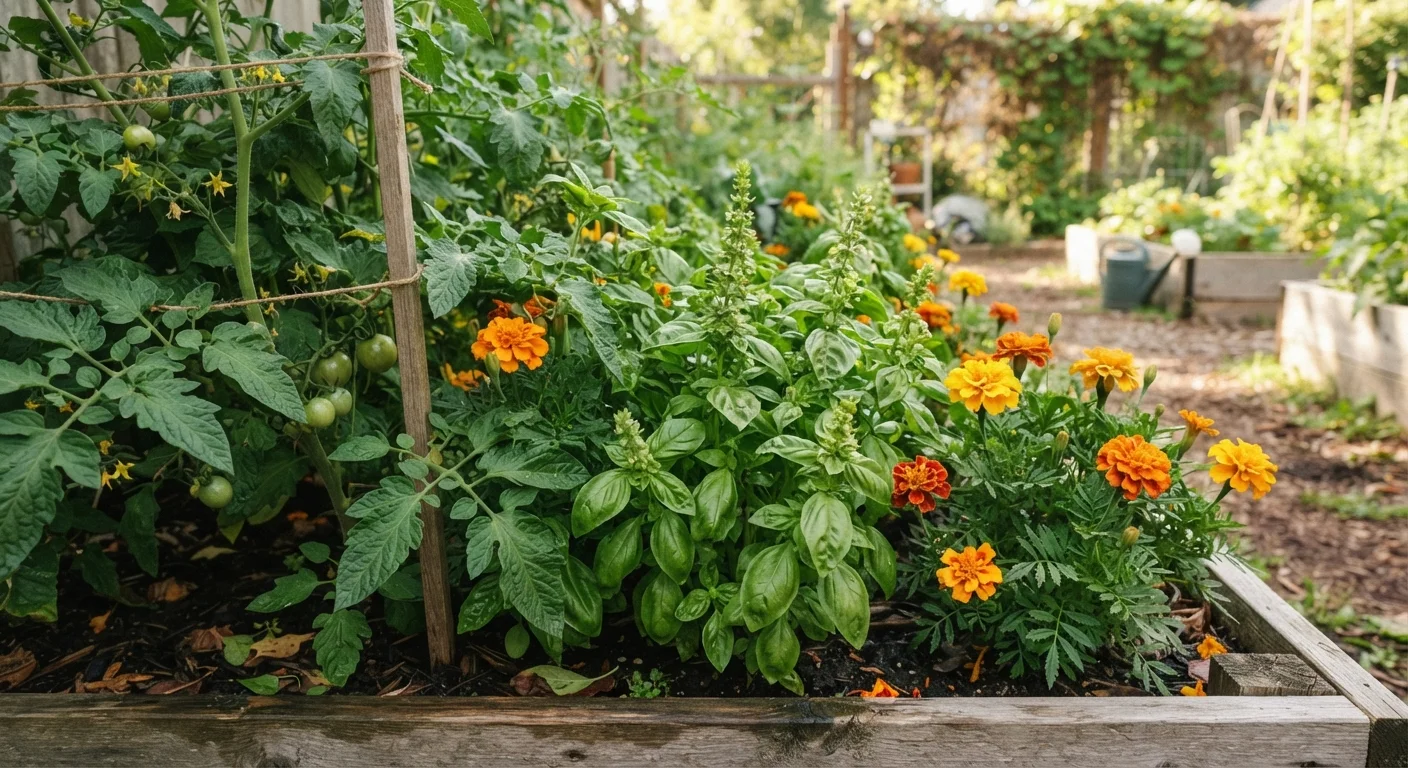
Photo credit: readerspanel.com
In this article
Some companion planting combinations have real horticultural support. Here's what the research and practice actually show about which pairings work.
Key Takeaways
- Some companion planting pairs have genuine horticultural support, while many are folklore.
- Nitrogen fixation by legumes is one of the best-documented mechanisms behind beneficial pairings.
- Physical relationships like shade, trellising, and ground cover explain several combinations better than chemistry.
- Pest-deterrent companions work in specific conditions; results vary by garden and season.
- Starting with a few proven pairs is more useful than overhauling an entire planting scheme at once.
Why some companion pairs hold up and others do not
Companion planting is a broad category. It covers everything from ancient intercropping practices to claims passed down in gardening books with little verification. Not all pairings are equal. Some rest on well-understood mechanisms, like one plant altering soil chemistry or physical structure in ways that measurably benefit a neighbor. Others are anecdotal, repeated widely without a clear explanation of how or why they would work.
The pairs worth focusing on are those where there is a plausible mechanism and some corroborating field or research observation. That does not always mean a formal peer-reviewed study, because horticultural practice moves at a different pace than laboratory science. But it does mean more than a single gardener's seasonal observation. This article covers the combinations that have genuine support, along with an honest note about where certainty ends.
If you are curious about claims that do not survive closer scrutiny, the garden myth check article covers how to separate gardening folklore from what evidence actually shows.
The Three Sisters: corn, beans, and squash
This combination, historically practiced by Indigenous peoples of North America, is one of the best-documented examples of intercropping that delivers multiple benefits simultaneously. Each plant contributes something concrete.
Beans are legumes, and like other legumes they host nitrogen-fixing bacteria in their root nodules. These bacteria convert atmospheric nitrogen into a form that plants can use. When bean roots decompose, nearby plants benefit from that nitrogen. Corn is a heavy nitrogen feeder, so the pairing addresses a real nutritional demand. Squash produces large leaves that shade the ground between plants, reducing soil moisture loss and limiting weed germination.
The physical structure also matters. Corn stalks give climbing bean varieties something to grow on, which removes the need for separate support structures. The combination is not magic; it requires adequate spacing and planting sequence to work as intended. Squash should go in slightly after corn establishes, so it does not shade the corn seedlings early on. But the mechanism behind each benefit is straightforward and observable.
Tomatoes and basil: real effect or kitchen habit?
Tomatoes and basil are so often planted together that it is easy to assume the pairing is well-proven. The evidence is more mixed than popular garden writing suggests.
Some greenhouse and field trials have looked at whether basil volatiles (aromatic compounds released by the leaves) reduce pest pressure on nearby tomatoes. Results have been inconsistent. A few studies found reduced aphid and thrip populations near basil, while others found no significant difference. The effect, where it appears, seems related to the density of basil plants and environmental conditions rather than simple proximity.
What basil does reliably is grow well in similar conditions to tomatoes: warm temperatures, full sun, regular water. Planting them together is convenient and does no harm. The claim that basil improves tomato flavor through root or volatile interaction has not been demonstrated rigorously, so treat that specific claim as unverified.
For more context on plants with documented pest-deterrent properties, see the plants that naturally discourage garden pests article.
Legumes and most vegetables: nitrogen as the mechanism
Beyond the Three Sisters, the legume-vegetable pairing principle applies broadly. Planting beans or peas alongside or before heavy feeders like brassicas, cucumbers, or leafy greens can improve soil nitrogen availability, particularly in beds that have not been recently amended.
The timing matters more than proximity. Legumes contribute the most nitrogen after their roots die and decompose, so succession planting (peas followed by brassicas in the same bed) often works better than side-by-side planting. Some gardeners till spent pea plants into the soil as a green manure before transplanting a nitrogen-hungry crop into the same space.
This is the most mechanistically sound category of companion planting, because the biology of nitrogen fixation is well established. The practical question is how much nitrogen a backyard planting contributes compared to other sources, and the honest answer is that it supplements rather than replaces other soil management.
Marigolds and root-knot nematodes
The claim that marigolds deter nematodes has more research behind it than most companion planting assertions. French marigolds (Tagetes patula) produce thiophenes, sulfur-containing compounds that are toxic to certain soil nematodes. Multiple studies have found that planting marigolds as a dense cover crop for a full growing season, then tilling them in, can reduce root-knot nematode populations in that bed.
The important caveat is that a few marigold plants scattered among vegetables probably do not produce enough root exudate to have a significant effect. The research points to high-density plantings over an extended period. Using marigolds as a rotation crop before planting susceptible vegetables like tomatoes, peppers, or melons is the approach with the most support.
Container gardeners may find the nematode benefit less relevant, since container soil is replaced regularly and nematode pressure is lower in those environments.
Tall plants and shade-tolerant neighbors
Some of the most reliable companion pairings work through simple physics rather than chemistry. Tall plants create shade. If a shade-tolerant crop occupies that space, both plants use the available ground more efficiently.
Planting lettuce or spinach on the north side of tomato or pepper plants (in the northern hemisphere) extends the productive season of cool-season greens by protecting them from afternoon heat. The tomatoes do not benefit directly, but the system as a whole produces more food from the same area. Corn and climbing beans share this logic from a structural standpoint.
Similarly, sprawling plants like pumpkins or cucumbers can serve as living mulch under taller crops, reducing evaporation and suppressing weeds without any need for a chemical or biological explanation. These physical relationships are predictable and easy to plan around.

Author
Home & Garden Editorial Team
Home & Garden Editorial Team is the collective byline for our editorial team and contributor network. Articles published under this byline or an editorial pen name are researched, written, and reviewed according to our editorial standards for clarity, consistency, and independence before publication.
View all articles →