
Curtain Height, Width, and Fabric Weight: The Details That Make or Break a Window Treatment
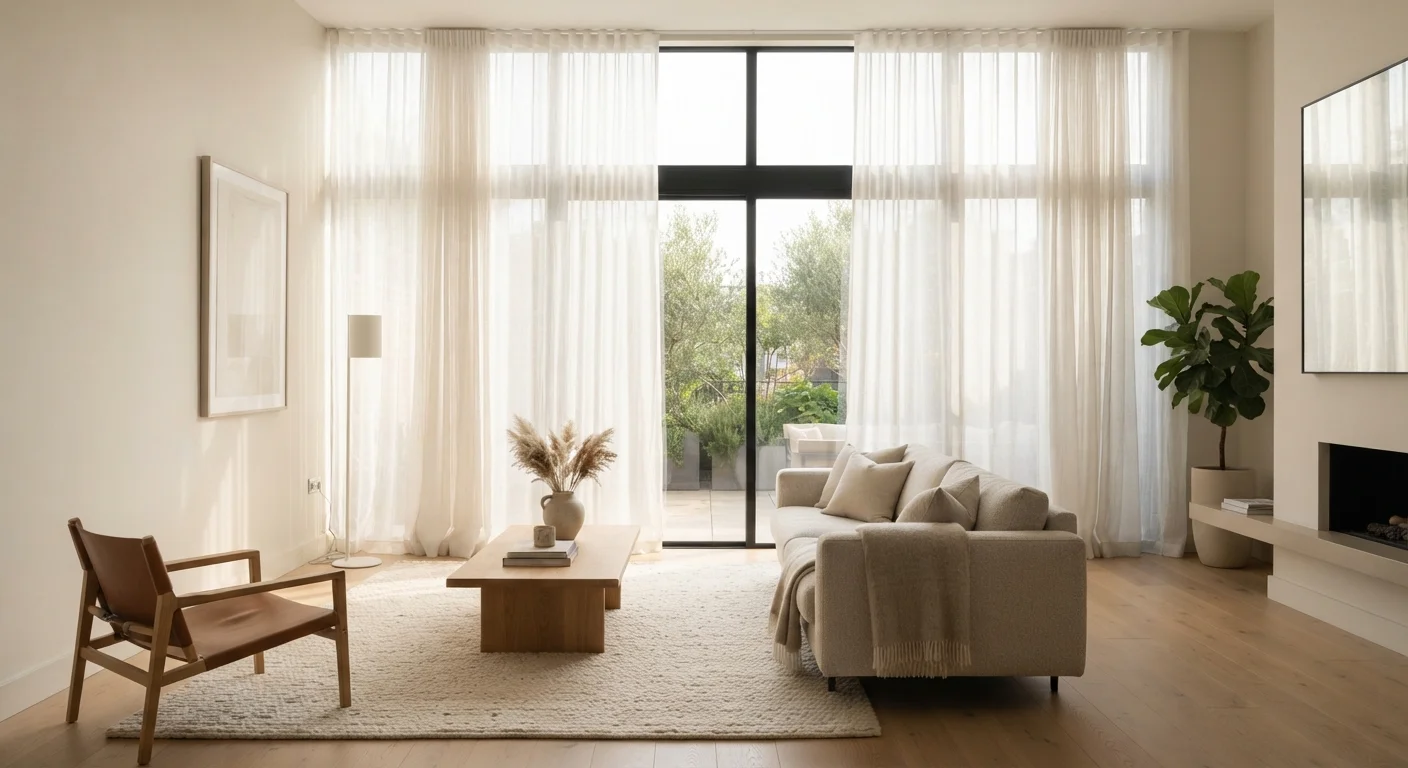
Photo credit: readerspanel.com
In this article
Hanging curtains too low or too narrow is one of the most common decorating missteps. Here is a reference for getting the proportions right in any room.
How height changes a room more than almost anything else
Curtains hung directly above a window frame make a ceiling feel lower. The gap of bare wall between the rod and the ceiling draws the eye down, and a room reads as compressed. Mounting the rod 4 to 6 inches below the ceiling or crown molding solves this without any structural change.
On standard 8-foot ceilings, that means a rod at roughly 84 inches from the floor. Panels should then run from the rod ring or hook to the floor, with a half-inch clearance or a slight break depending on the look you want. Puddled fabric (3 or more inches on the floor) reads as formal and shows dust quickly. Most everyday rooms do better with the floor-clearance or slight-break approach.
For rooms with ceilings higher than 9 feet, the same principle applies: mount the rod close to the ceiling, then choose a panel length that reaches the floor. Hanging a short panel in a tall room leaves empty space that feels unresolved. Scale in interior design explains why mismatched proportions affect a whole room, not just the window.
| Standard ceiling height (US homes) | 8 to 9 feet |
| Recommended rod mounting height | 4 to 6 inches below ceiling or crown molding |
| Minimum fullness ratio | 1.5:1 (decorative); 2:1 to 2.5:1 (formal) |
| Typical panel width sold in stores | 42 or 54 inches |
| Recommended rod extension past window frame | 6 to 12 inches on each side |
| Floor clearance (no break) | 0.5 inch above finished floor |
Width: why the rod must extend past the frame
A common mistake is centering the rod over the window frame with little overhang. When the curtains are open, the fabric covers part of the glass, blocks light, and makes the window look narrow.
Extending the rod 6 to 12 inches beyond the frame on each side lets the panels stack entirely off the glass when open. A 36-inch window becomes visually wider, and the room gets more natural light. The tradeoff is wall space: in tight rooms with windows close to corners, 6 inches per side may be the practical limit.
Panel width is a separate question from rod width. To achieve a 2:1 fullness ratio on a 72-inch rod (a 36-inch window with 18 inches of extension per side), you need 144 inches of total fabric. That means three 54-inch panels or four 42-inch panels. Buying a single pair of 54-inch panels for the same rod produces a flat, skimpy look when closed, with almost no fold or texture. The glossary entry for fullness ratio below clarifies this math.
Stack-back
The width of fabric that bunches to the side of a window when curtains are fully open. Panels with generous stack-back clear more of the glass, letting in more light.
Fullness ratio
The ratio of total fabric width to the rod or track width. A ratio of 2:1 means the fabric is twice the span of the rod, creating visible folds when closed.
Break
The small amount of extra fabric length that touches or folds lightly on the floor. A slight break (1 to 2 inches) looks intentional; an excessive pool can collect dust and present a tripping hazard.
Header
The top section of a curtain panel, which determines how it attaches to the rod. Common header styles include rod pocket, grommet, pinch pleat, and tab top.
Hand (fabric)
The way a fabric feels and drapes when handled. A fabric with good hand falls smoothly; one with poor hand for curtains bunches unevenly or holds creases.
Fabric weight and what it actually controls
Fabric weight determines how a curtain falls, how much light it blocks, and how it behaves over time. Lightweight fabrics (voile, sheer linen, cotton muslin) drift in air movement, diffuse light softly, and work well in casual bedrooms and sunrooms. They need less support from the rod hardware and work on narrower rods.
Mid-weight fabrics (linen-cotton blends, woven polyester, light velvet) hold folds well and provide moderate privacy without blackout performance. These are the most forgiving choice for living rooms and dining rooms.
Heavy fabrics (thick velvet, lined wool, interlined drapes) block more light and sound, and they require sturdier hardware: a rod rated for the load, brackets anchored into wall studs or with appropriate drywall anchors, and rings or hooks designed for the panel weight. Grommet headers in heavy fabric can stress and deform the grommets over time; pinch-pleat or eyelet tape headers distribute weight more evenly.
Lining affects behavior as much as the face fabric does. An unlined linen panel is lightweight and relaxed. The same linen with a cotton lining gains body and opacity. Adding an interlining (a layer of bump or domette between face and lining) produces a padded, formal drape used in traditional interiors. For bedrooms where light control matters, bedroom decor for sleep covers how fabric and light interact in that room specifically.
Rented homes and hardware restrictions
If you cannot install wall anchors or drill into window frames, tension rods and adhesive hooks have weight limits and work best with lightweight sheers or cotton panels. Always check the product's stated weight capacity before hanging heavier fabrics, and verify your lease terms before making any wall modifications.
Putting the measurements together before you buy
Measure the window frame width, decide on the rod extension (6 to 12 inches per side), and multiply the total rod span by your target fullness ratio (1.5 for casual, 2.0 to 2.5 for tailored or formal). Divide by the panel width sold to get the number of panels needed. Round up, not down.
For height, measure from the rod bracket position to the floor, then subtract based on the finish you want: half an inch for a clean no-break, 1 to 2 inches for a slight break. If stock lengths (84 inch, 96 inch, 108 inch) do not match your measurement, hemming or custom ordering are both reasonable options. A hem taken up at the bottom is simpler than adding length, so starting with a longer panel and hemming is less risky than buying short.
Rod and bracket selection follows fabric weight, not window size. A heavy lined panel on an undersized rod will bow at the center. Check the rod's rated weight capacity against the combined weight of all panels before purchasing hardware.

Author
Home & Garden Editorial Team
Home & Garden Editorial Team is the collective byline for our editorial team and contributor network. Articles published under this byline or an editorial pen name are researched, written, and reviewed according to our editorial standards for clarity, consistency, and independence before publication.
View all articles →