
Decorating a Bedroom for Better Sleep: What the Space Itself Can and Cannot Do
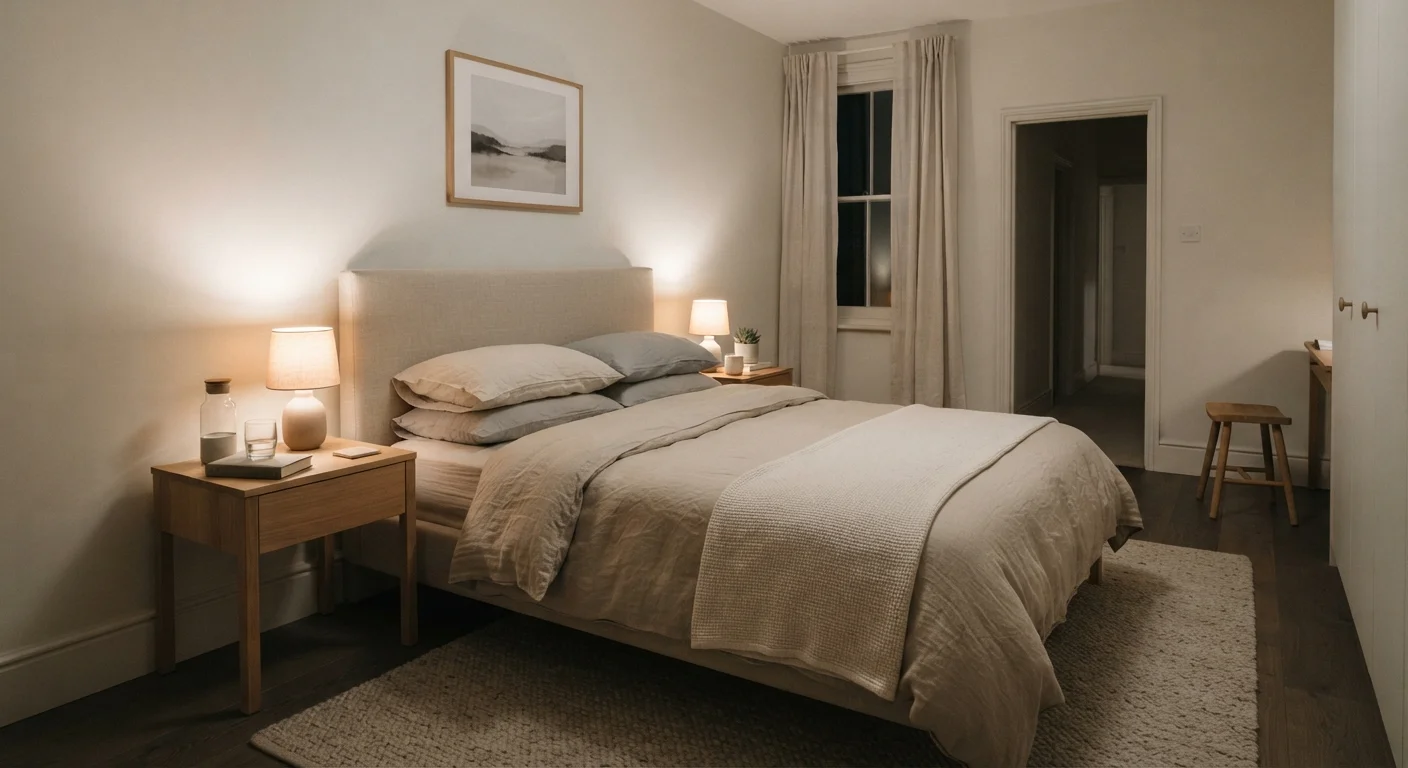
Photo credit: readerspanel.com
In this article
Color, lighting, clutter, and furniture arrangement all influence how restful a bedroom feels. A grounded look at what environmental changes can reasonably support.
Key Takeaways
- Light color and low-contrast palettes tend to reduce visual stimulation before bed.
- Lighting temperature matters more than most people expect: warm, dim light supports the body's evening wind-down.
- Clutter in a bedroom raises perceived stress for many people, which can delay sleep onset.
- Furniture arrangement affects how easily you move through the room and whether the space feels calm.
- Bedroom decor supports sleep conditions; it does not treat sleep disorders or replace consistent sleep habits.
What the bedroom environment can actually influence
A bedroom is a room before it is a sleep aid. What it looks like and how it is arranged can either support or work against the conditions that make rest easier, but it cannot override poor habits, stress, or underlying health issues. Understanding that boundary matters before spending time or money on changes.
The environmental factors with the clearest connection to sleep are light, temperature, sound, and perceived order. Decor choices intersect with at least two of these: light (through window treatments, lamp placement, and bulb selection) and perceived order (through how much visual complexity the room presents). Color affects mood and visual stimulation, which is a softer but still real factor.
For a fuller picture of the habit side of the equation, sleep hygiene habits that actually stick covers the daily routines that environmental design alone cannot replace.
Color and visual stimulation
Color choice in a bedroom is less about following a formula and more about managing stimulation. High-saturation colors, sharp contrasts between walls and trim, and busy patterns all give the eye more to process. In a space meant for winding down, that processing works against you.
Low-saturation, cooler-leaning neutrals, soft blues, muted sage, warm greiges, and similar tones tend to read as calm because they do not demand visual attention. That does not mean the bedroom must be beige. A well-placed accent wall in a muted tone can anchor the space without adding visual noise. Accent walls work differently depending on placement and scale, and the same principles apply in a bedroom as anywhere else.
Paint finish also matters. Flat and matte finishes diffuse light more evenly and read as softer than satin or semi-gloss, which can make walls feel a little quieter at night.
Test before you commit to paint
Paint a large swatch of your chosen color, at least 12 by 12 inches, directly on the wall and observe it at different times of day and under your actual evening lighting. Colors shift significantly between daylight and warm lamp light, and a tone that reads well in a showroom can feel different once the bedroom lights dim.
Lighting: the most practical lever you have
Light has a direct biological effect in the hours before sleep. Blue-spectrum light, the kind that most overhead fixtures and screens produce, suppresses melatonin more than warmer light does. Switching evening lighting to warm-toned bulbs (roughly 2700K or lower) and reducing overall brightness is one of the more concrete changes a bedroom can support.
Color temperature in home lighting explains the Kelvin scale and what it means for how a room feels, which is useful context when selecting bulbs or fixtures for a bedroom specifically.
Placement matters alongside temperature. Overhead lighting that floods the whole room at full intensity does not serve a wind-down space. Bedside lamps with lower-wattage warm bulbs, or dimmer switches on existing fixtures, give you a range rather than an on-off binary.
Window treatments are the other half of the light equation. If external light enters the room at night or early morning, lined drapes or blackout panels address a real stimulus without requiring any structural change.
Clutter, furniture arrangement, and the sense of order
A bedroom that doubles as a home office, storage space, or laundry sorting area sends competing signals about what the room is for. Visible work materials in particular associate the space with tasks and obligations, which keeps the brain in a problem-solving mode rather than a resting one.
The practical response is not a perfectly staged room. It is removing the most stimulating or task-associated items from sight before bed. Closed storage, a consistent habit of clearing surfaces, and keeping work equipment in another room when possible all reduce that visual conflict.
Furniture arrangement follows a similar logic. A clear path from the door to the bed, a nightstand within reach, and no furniture positioned so that movement through the room feels awkward all make the space easier to inhabit without friction. Mirrors placed to reflect the bed or a cluttered corner work against calm; mirror placement principles apply as much to bedrooms as to any other room.
This article is for general informational purposes only and does not constitute medical advice. If you experience persistent sleep difficulties, consult a qualified healthcare professional.
Frequently Asked Questions

Author
Home & Garden Editorial Team
Home & Garden Editorial Team is the collective byline for our editorial team and contributor network. Articles published under this byline or an editorial pen name are researched, written, and reviewed according to our editorial standards for clarity, consistency, and independence before publication.
View all articles →