
Decorating With Mirrors: Placement Principles and the Reflections You Actually Want
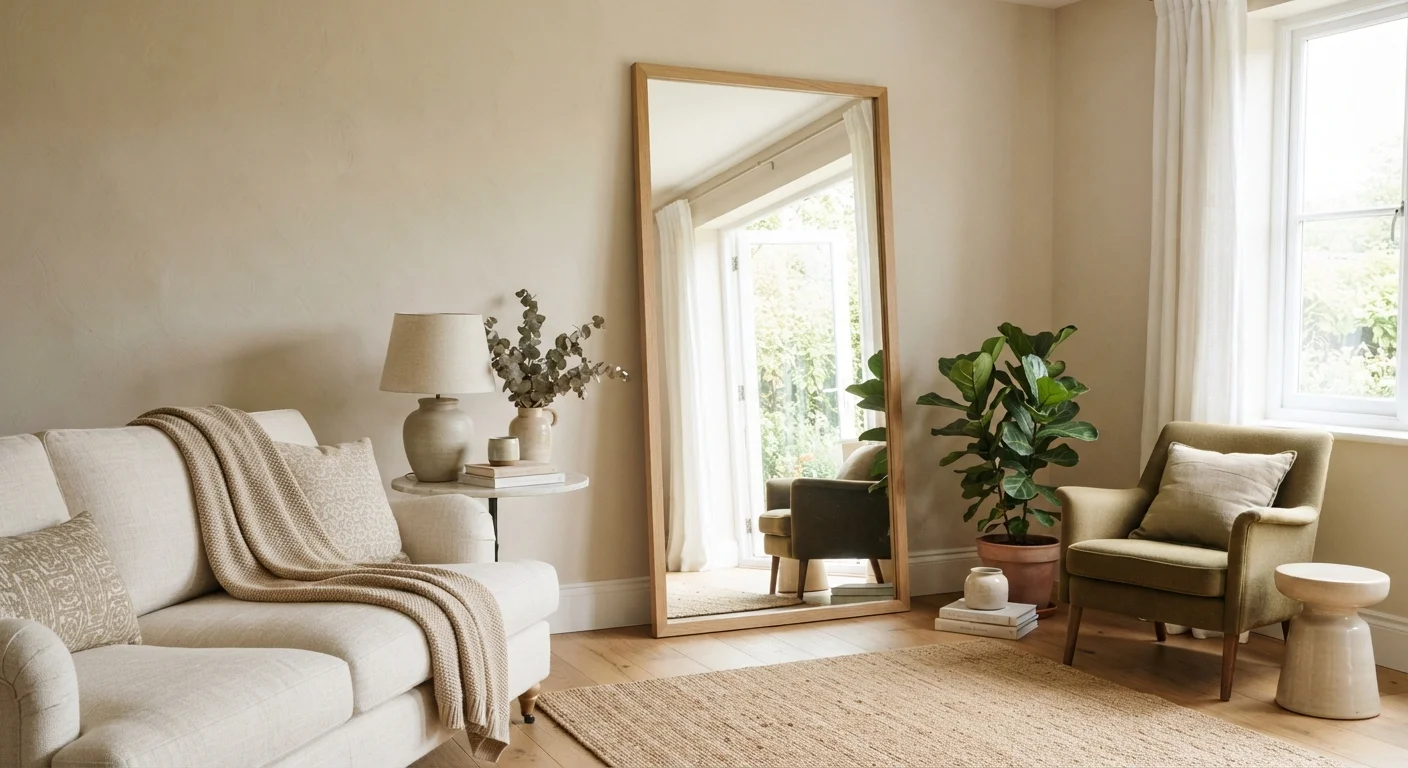
Photo credit: readerspanel.com
In this article
Mirrors can amplify light and space or reflect clutter and chaos. Learn how placement, size, and framing shape what a mirror contributes to a room.
Key Takeaways
- A mirror reflects whatever sits opposite it, so choose that source view before choosing the mirror.
- Size relative to the wall and surrounding furniture matters as much as frame style.
- Leaning a large mirror against a wall reads differently than hanging one at the same height.
- Mirrors placed opposite clutter or harsh light create more visual noise, not more space.
- Bedroom mirrors need careful positioning to avoid disrupting sleep-related calm.
What a mirror actually does to a room
A mirror does two things: it reflects light and it reflects content. Most decorating advice focuses on the first, but the second matters more in practice. A mirror placed on a wall without any thought about what sits opposite it will reflect whatever is there, an unmade bed, a stack of boxes, an awkward corner. The light benefit cannot outweigh a bad reflection.
This is why mirror placement is a two-part decision. First, identify the view. Second, choose the mirror that frames that view at the right scale. Getting both right is what separates a mirror that improves a room from one that just fills a wall.
In a small living room, mirrors are often recommended for the feeling of added space. That effect is real, but conditional. Our guide to making a small living room feel larger covers the broader toolkit; mirrors are one piece of it, not a standalone fix.
Placement principles that hold across room types
Identify what the mirror will reflect before you hang it.
A mirror doubles whatever sits in its line of sight. Placing one opposite a window pulls daylight into the room; placing one opposite a cluttered shelf pulls that chaos in too. The reflection is the decoration, so treat it as intentional content.
Match mirror height to the sightline of people standing or seated in that room.
A mirror hung too high reflects the ceiling rather than the space. One hung at standing eye level in a dining room may cut off the heads of seated guests. The center of the mirror should correspond to the typical eye level of someone using that space.
Choose a mirror size proportional to the wall and the furniture it sits above.
An undersized mirror floating above a wide sideboard looks unanchored. An oversized mirror on a small accent wall can overwhelm the room. As with any wall treatment, scale relative to adjacent pieces determines whether the item looks deliberate. The principles of scale in interior design apply directly here.
Use leaning mirrors deliberately rather than as a default for oversized pieces.
A large mirror leaning against a wall introduces a casual, layered quality that suits some rooms and clashes with others. The angle of a leaning mirror also changes what it reflects compared to a wall-mounted one, typically capturing more of the floor and lower furniture.
Be cautious with mirrors opposite windows in rooms that get harsh direct sun.
While reflecting natural light is one of the most cited reasons to use a mirror, direct midday sun bounced off a mirror can create uncomfortable glare or hot spots in the room. Soft, diffused light reflects well; a south-facing window at noon may not.
Treat bedroom mirror placement with extra attention to rest and comfort.
A mirror positioned so it reflects the bed can feel unsettling during sleep for some people, and in a small room it may make the space feel less restful rather than more spacious. Bedroom decor involves trade-offs between aesthetics and atmosphere, as discussed in our article on creating a bedroom environment for better sleep.
Frame style and finish interact with placement too. A heavily ornate frame on a mirror positioned in a minimalist hallway creates friction. A simple metal or wood frame tends to recede and let the reflection do the work. This is the same logic that applies to window treatments: the architectural decision (height, width, proportion) matters more than the decorative one.
Common placement mistakes and how to avoid them
Mirrors hung too high are the most common placement error. The ceiling reflection that results makes a room feel taller in theory, but in practice it disconnects the mirror from the rest of the space. The mirror becomes a floating object rather than an integrated one.
Mirrors opposite other mirrors create a tunnel effect that works in very specific contexts (a narrow corridor deliberately designed around it) and looks disorienting in most others. If you want to add a second mirror to a room that already has one, place them on walls that do not face each other.
Choosing a mirror before deciding where it goes is similar to the problem described in decorating decisions that are hard to undo: some choices lock you in. A mirror with a distinctive frame that dominates a wall limits what else the wall can do. Test scale and position first.
When a mirror involves wall anchoring
Large or heavy mirrors require secure wall anchoring, ideally into studs or with appropriate wall anchors rated for the weight. If you are unsure about your wall type or the weight of the mirror, consult a professional before installation. Improperly hung mirrors can fall and cause injury or damage.
Getting started: check before you commit
A mirror is not a passive object. It participates actively in whatever view you give it. Treating placement as the primary decision, rather than an afterthought once the mirror is already purchased, produces better results with less effort.

Author
Home & Garden Editorial Team
Home & Garden Editorial Team is the collective byline for our editorial team and contributor network. Articles published under this byline or an editorial pen name are researched, written, and reviewed according to our editorial standards for clarity, consistency, and independence before publication.
View all articles →