
The Decorating Decisions That Are Hardest to Undo (and How to Think Before You Commit)
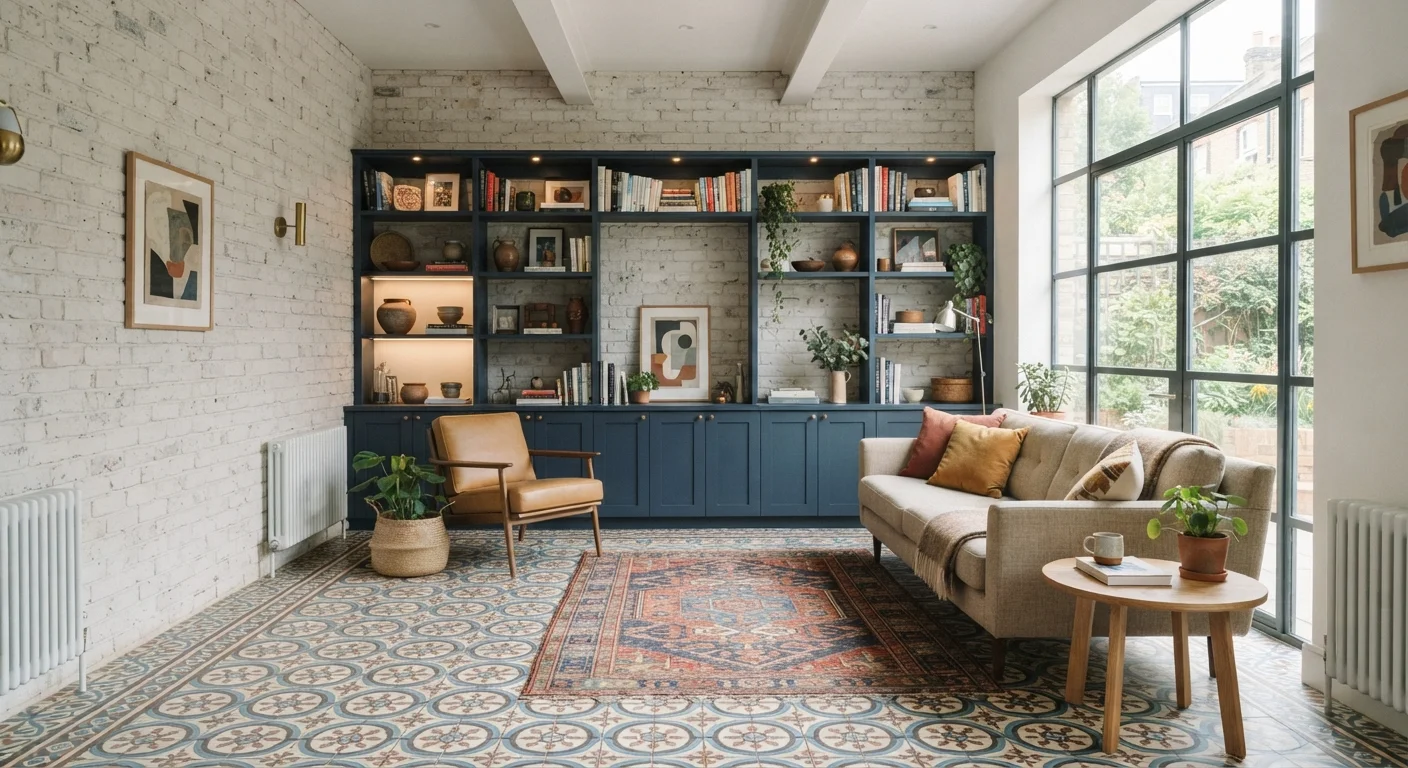
Photo credit: readerspanel.com
In this article
Built-ins, tile, wallpaper, and painted brick are beautiful until they are not. Here is how to evaluate high-commitment decor choices before you are locked in.
Key Takeaways
- Painted brick, tile, built-ins, and wallpaper all carry removal costs that can far exceed installation costs.
- A decision's reversibility should weigh as much as its visual appeal when you are planning a room.
- Testing materials at scale, in your actual lighting, prevents most cases of expensive regret.
- Built-ins and structural changes may require permits; always check local codes before starting work.
Why some decorating choices outlast your taste
Most decorating choices are easy to walk back. Swap a lamp, repaint a wall, reupholster a chair. The ones that are not easy to walk back tend to share a common trait: they bond to the structure of the house itself, or they require such invasive removal that undoing them costs more than doing them did in the first place.
That is not a reason to avoid them. Painted brick, custom built-ins, bold tile, and fabric wallcoverings can all be exactly right for a room. The problem is not the choices themselves; it is committing to them without thinking through what reversal would actually involve. The mistakes below happen across all budgets and all experience levels, and most of them follow a predictable pattern.
Painting brick without accounting for what reversal requires.
Why it happens: Painted brick looks clean and modern in photographs, and the initial application is straightforward. Most homeowners do not realize that paint soaks into porous brick and mortar, making stripping a labor-intensive, often incomplete process.
Installing patterned or large-format tile in a space where the scale has not been tested.
Why it happens: Tile samples are small, and a pattern that looks balanced on a four-inch chip can overwhelm a narrow bathroom or fragment a small kitchen floor. Once tile is set and grouted, replacement means demolition.
Committing to built-ins before confirming the room layout is settled.
Why it happens: Built-ins are appealing because they maximize storage and look intentional. But they fix furniture placement, traffic flow, and sometimes door or window operation in ways that are costly and disruptive to change.
Hanging wallpaper without accounting for the walls behind it.
Why it happens: Wallpaper removal is widely understood to be tedious, but the less-discussed problem is what removal does to drywall. Paper-faced drywall, which is common in homes built after the mid-20th century, often tears when wallpaper is stripped, requiring skim-coating or panel replacement before the room can be repainted.
Choosing flooring based on appearance alone without considering the subfloor and transition requirements.
Why it happens: Flooring showrooms present materials in ideal conditions. At home, existing subfloor height, moisture levels, and transitions to adjacent rooms all constrain what can actually be installed, and layering a new floor over an incompatible subfloor creates problems that compound over time.
How to slow down before a high-commitment decision
The single most useful habit is to separate the visual test from the commitment. Order a full-size wallpaper sample and tape it to the wall for two weeks, moving it through different corners and times of day. Pull a tile sample home and set it on the floor under your actual light at noon and again at night with lamps on. These steps feel slow, but they cost nothing compared to reinstallation.
For built-ins and structural work, sketch the room to scale before anything is ordered or framed. Consider whether a freestanding piece achieves a similar effect; if it does, that option preserves flexibility. The DIY Home Repair hub covers permit requirements for framing and structural work, which matter any time a built-in attaches to load-bearing walls or involves electrical.
Color decisions compound quickly when they involve texture. Painting brick a color that reads well on a swatch can shift dramatically against mortar lines and surface variation. The same principle applies to wood tones: mixing wood tones in a room follows rules that only become visible once furniture and flooring are together at full scale.
When a room plan relies heavily on one fixed element, build everything else around it before you install it, not after. Choose paint after tile is selected, not before. Place mirrors to work with the fixed focal point rather than against it. Mirror placement that conflicts with a wallcovering pattern or a built-in surround is far harder to fix once both are in place.
Finally, consider resale if you plan to sell within five to seven years. Highly personal choices, such as floor-to-ceiling murals or fully tiled accent walls in non-neutral palettes, narrow the pool of buyers who will see them as assets rather than removal projects. That does not mean avoid them, but factor it into how much you invest.

Author
Home & Garden Editorial Team
Home & Garden Editorial Team is the collective byline for our editorial team and contributor network. Articles published under this byline or an editorial pen name are researched, written, and reviewed according to our editorial standards for clarity, consistency, and independence before publication.
View all articles →