
Accent Walls: Where They Work, Where They Backfire, and How to Decide
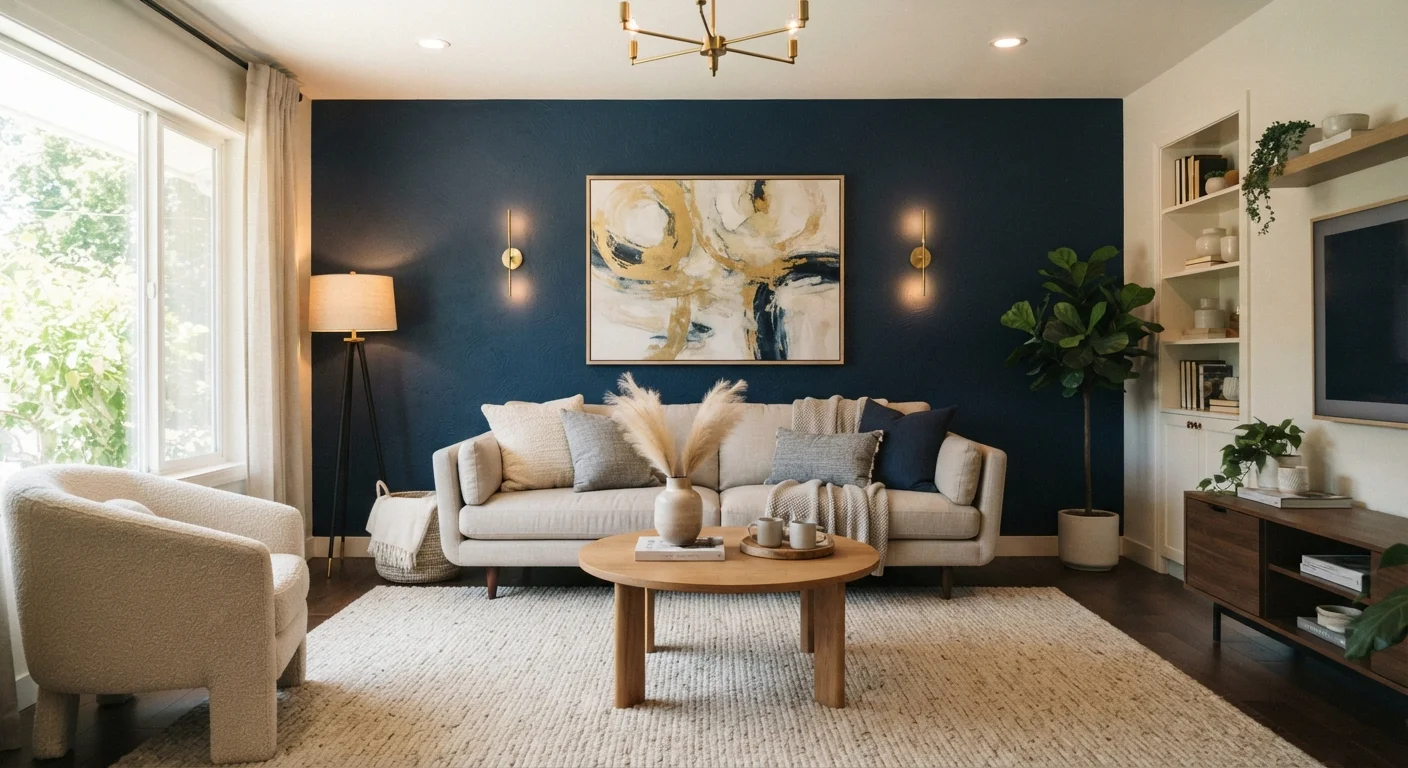
Photo credit: readerspanel.com
In this article
Accent walls can anchor a room or overwhelm it. Here is how to evaluate whether one belongs in your space and how to position it effectively.
Key Takeaways
- An accent wall works best when it falls on a wall the eye naturally lands on first.
- Color contrast, texture, and room proportion all affect whether the result feels intentional.
- Small or oddly shaped rooms are often poor candidates for a strong accent wall.
- Wallpaper and wood paneling are harder to reverse than paint, so weigh commitment carefully.
- The wall you choose should relate to the existing architecture, not fight it.
Creates a focal point using one wall
A single treated wall gives a room a clear visual anchor, which helps furniture arrangement feel intentional and the overall space feel organized.
Lower commitment than repainting the whole room
One accent wall requires less paint, less time, and less effort to change than a full four-wall color scheme, making it a practical way to introduce color.
Can adjust perceived room proportions
A deeper tone on the short wall of a narrow room pulls that wall visually forward, reducing the corridor effect without any structural changes.
Works with many finish types
Paint, wallpaper, wood paneling, and tile all qualify, so the treatment can match the room's existing materials and the homeowner's skill level.
Wrong wall choice reads as arbitrary
Choosing a wall based on preference rather than architecture often produces a result that looks like a mistake rather than a design decision.
Can shrink a small room further
In tight spaces, a dark or saturated accent wall absorbs light and pulls visual weight toward one surface, making the room feel more compressed.
Some treatments are difficult to reverse
Wallpaper removal can damage drywall, and wood paneling requires patching work after removal, raising the cost and effort of changing direction.
Competes with other dominant surfaces
A bold accent wall next to a gallery wall, large window, or ornate fireplace surround creates visual noise rather than the clarity an accent wall is meant to provide.
Color reads differently in low light
A wall that receives little natural light will show saturated color as heavier and darker than the same color on a well-lit surface, which can produce an unintended result.
What an accent wall is actually supposed to do
An accent wall is one wall in a room treated differently from the others, whether through paint color, wallpaper, wood paneling, tile, or another material. The goal is to create a focal point: a surface the eye moves to first that gives the room a sense of order and intention.
The concept is straightforward, but execution varies widely. A well-placed accent wall makes a room feel composed. A poorly placed one pulls visual weight to the wrong spot and makes the space feel unsettled. Before choosing a wall or a finish, it helps to understand which conditions favor the approach and which do not.
For a broader look at decorating decisions that are difficult to walk back, see this guide to high-commitment decor choices.
Where accent walls work
Creates a focal point using one wall
A single treated wall gives a room a clear visual anchor, which helps furniture arrangement feel intentional and the overall space feel organized.
Lower commitment than repainting the whole room
One accent wall requires less paint, less time, and less effort to change than a full four-wall color scheme, making it a practical way to introduce color.
Can adjust perceived room proportions
A deeper tone on the short wall of a narrow room pulls that wall visually forward, reducing the corridor effect without any structural changes.
Works with many finish types
Paint, wallpaper, wood paneling, and tile all qualify, so the treatment can match the room's existing materials and the homeowner's skill level.
The clearest candidate for an accent wall is the wall your eye already goes to when you enter a room. In a bedroom, that is typically the wall behind the headboard. In a living room, it is often the wall a fireplace or media console sits against. These walls already have architectural weight, so adding color or texture reinforces what the room is already doing rather than inventing a focal point where none exists.
Rooms with good natural light handle strong color well. A deep, saturated hue on a well-lit wall reads as intentional; on a dim wall, the same color can feel heavy and absorbing. If your chosen wall gets consistent daylight, the color will read more accurately across the day.
Accent walls also work in rooms where you want to adjust the perceived proportions. Painting the far short wall of a long, narrow room in a deeper tone pulls that wall forward visually, making the room feel less like a corridor. This is one of the few cases where color can do meaningful spatial work without renovation. See more on this approach in making a small living room feel larger.
Where accent walls backfire
Wrong wall choice reads as arbitrary
Choosing a wall based on preference rather than architecture often produces a result that looks like a mistake rather than a design decision.
Can shrink a small room further
In tight spaces, a dark or saturated accent wall absorbs light and pulls visual weight toward one surface, making the room feel more compressed.
Some treatments are difficult to reverse
Wallpaper removal can damage drywall, and wood paneling requires patching work after removal, raising the cost and effort of changing direction.
Competes with other dominant surfaces
A bold accent wall next to a gallery wall, large window, or ornate fireplace surround creates visual noise rather than the clarity an accent wall is meant to provide.
Color reads differently in low light
A wall that receives little natural light will show saturated color as heavier and darker than the same color on a well-lit surface, which can produce an unintended result.
The most common mistake is choosing a wall because of personal preference rather than architecture. A wall flanked by two doorways, a wall with a window centered on it, or a wall that shares a corner with a more dominant surface rarely benefits from the treatment. The added color competes with the openings rather than anchoring anything.
Small rooms are especially unforgiving. A very saturated or dark accent wall in a room under roughly 150 square feet tends to shrink the space further. If the goal is to make a tight room feel more open, a single bold wall usually works against that. Common assumptions about wall color and space are worth revisiting before committing.
Rooms with low ceilings can also suffer. A horizontal treatment like shiplap or bold paint on the wall draws the eye across rather than up, which can make the ceiling feel lower than it is.
Choosing the treatment: paint, wallpaper, or paneling
Paint is the most forgiving option. A single gallon typically covers one accent wall, and if the result does not work, repainting is straightforward. For a first attempt at an accent wall, paint is the logical starting point because the cost and effort of reversing it are low.
Wallpaper raises the commitment level considerably. Installation takes more skill, removal can damage drywall if the paper was not applied over primer, and pattern-matching errors on one prominent wall are hard to ignore. If you want the texture and pattern wallpaper provides, consider a peel-and-stick option for a lower-stakes test before committing to paste-up paper.
Wood paneling and other dimensional treatments are the most permanent. Shiplap, beadboard, and slat wall panels all require fastening to the wall surface. Removal is possible but time-consuming, and patching the wall beneath takes additional work. These materials suit spaces where the homeowner is confident in the direction and has no near-term plans to sell or repaint. Evaluating high-commitment choices before installation is time well spent.
Peel-and-stick as a test before committing
Peel-and-stick wallpaper has improved in quality and now comes in a wide range of patterns and textures. Using it before committing to traditional paste-up paper lets you evaluate scale, pattern, and color in your actual light conditions. Removal is generally cleaner than traditional wallpaper, though results vary by wall surface and primer condition. Always test a small section first.
How to evaluate your specific room
Stand in the doorway of the room and note where your eye goes first. If it lands naturally on one wall, that wall is your candidate. If your gaze moves around the room without settling, the room may not have a strong enough focal point to anchor an accent wall effectively.
Next, consider what is already on that wall. A wall with a fireplace, a large piece of art, or a substantial piece of furniture already has visual weight. Adding color reinforces that weight. An empty wall with no furniture placed against it and nothing architectural to support it will look like a wall someone painted a different color without a clear reason.
Finally, think about what the adjacent walls are doing. If the room has a gallery wall arrangement on one surface, placing a bold accent wall on an adjacent surface creates competition rather than contrast. The accent wall should relate to the room's other elements, not override them.
For bedroom environments, the wall behind the bed is the standard choice, but color saturation matters: very intense hues can work against the restful quality most people want in that space.

Author
Home & Garden Editorial Team
Home & Garden Editorial Team is the collective byline for our editorial team and contributor network. Articles published under this byline or an editorial pen name are researched, written, and reviewed according to our editorial standards for clarity, consistency, and independence before publication.
View all articles →