
Paper Budgeting vs. Digital Spreadsheets
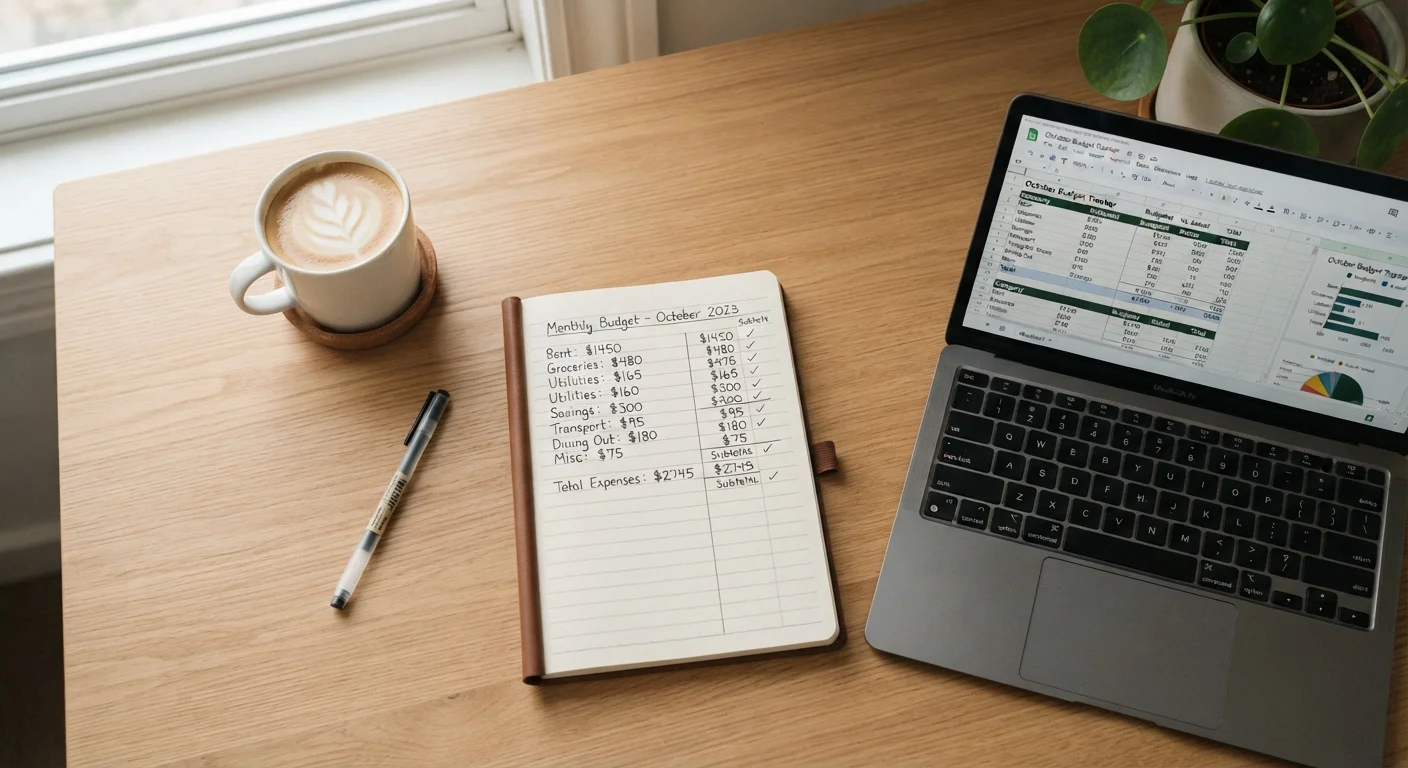
Photo credit: readerspanel.com
In this article
Pen-and-paper budgets and digital spreadsheets each have genuine strengths. Here's an honest look at what each approach does well and where each can fall short.
Key Takeaways
- Paper budgeting costs nothing and can improve spending awareness through the physical act of writing.
- Digital spreadsheets handle calculations automatically and scale easily as your finances grow more complex.
- Neither method guarantees results; consistency matters more than the tool you choose.
- Paper is harder to update mid-month; spreadsheets require at least basic formula knowledge to use well.
- Many people find a hybrid approach, paper for daily tracking and a spreadsheet for monthly review, works better than either alone.
Zero cost to start with basic supplies
A notebook and pen are all you need. There is no software to learn, no account to create, and no ongoing subscription.
Writing by hand may improve spending awareness
Physically recording each transaction slows the process down in a way that can make spending feel more deliberate, though individual results vary.
Spreadsheets eliminate manual arithmetic
Formulas total rows and columns instantly, reducing the chance of addition errors that compound over months of manual tracking.
Spreadsheets handle complexity without extra pages
Multiple income sources, shared household bills, and dozens of categories are manageable in one file that can be filtered, sorted, and charted.
Paper works anywhere without a device or connection
A notebook functions during a power outage, on a flight, or anywhere a screen is impractical or unavailable.
Spreadsheets are easy to copy and reuse each month
Duplicating a sheet template takes seconds, preserving your category structure while clearing last month's figures.
Paper math errors are easy to make
A single addition mistake can carry forward and distort totals for subsequent months if balances are rolled over without rechecking.
Paper does not scale for complex finances
Two incomes, variable pay, and many categories can fill a notebook quickly and make trend analysis nearly impossible without re-totaling everything by hand.
No backup if the notebook is lost
Unlike a cloud-stored file, a handwritten budget has no automatic copy. Losing it means losing the full record.
Spreadsheets require basic formula knowledge
Broken cell references or deleted rows can corrupt calculations silently, and troubleshooting takes time that could go toward actual budgeting.
Real-time entry on a spreadsheet is inconvenient
Logging a purchase mid-errand requires opening a device and file, which leads many people to batch-enter transactions and lose day-to-day awareness.
Shared spreadsheets can create version conflicts
When two people edit a shared file at the same time without a clear protocol, entries can overwrite each other or fall out of sync.
What each approach actually involves
A paper budget is any written record you maintain by hand: a notebook, a printed template, an index card system. You write income at the top, list expected expenses, and subtract as money goes out. No software, no login, no subscription.
A digital spreadsheet is a file, usually in a program like Google Sheets or Microsoft Excel, where formulas do the arithmetic. You enter numbers into cells, and the sheet totals, subtracts, and flags overages automatically. Templates are widely available at no cost.
Both are manual methods, meaning you enter transactions yourself rather than connecting a bank account. That separates them from budgeting apps, which come with their own trade-offs around automation and data privacy.
Advantages and disadvantages
The two methods share the same basic purpose but behave differently once you start using them day to day.
Zero cost to start with basic supplies
A notebook and pen are all you need. There is no software to learn, no account to create, and no ongoing subscription.
Writing by hand may improve spending awareness
Physically recording each transaction slows the process down in a way that can make spending feel more deliberate, though individual results vary.
Spreadsheets eliminate manual arithmetic
Formulas total rows and columns instantly, reducing the chance of addition errors that compound over months of manual tracking.
Spreadsheets handle complexity without extra pages
Multiple income sources, shared household bills, and dozens of categories are manageable in one file that can be filtered, sorted, and charted.
Paper works anywhere without a device or connection
A notebook functions during a power outage, on a flight, or anywhere a screen is impractical or unavailable.
Spreadsheets are easy to copy and reuse each month
Duplicating a sheet template takes seconds, preserving your category structure while clearing last month's figures.
Paper math errors are easy to make
A single addition mistake can carry forward and distort totals for subsequent months if balances are rolled over without rechecking.
Paper does not scale for complex finances
Two incomes, variable pay, and many categories can fill a notebook quickly and make trend analysis nearly impossible without re-totaling everything by hand.
No backup if the notebook is lost
Unlike a cloud-stored file, a handwritten budget has no automatic copy. Losing it means losing the full record.
Spreadsheets require basic formula knowledge
Broken cell references or deleted rows can corrupt calculations silently, and troubleshooting takes time that could go toward actual budgeting.
Real-time entry on a spreadsheet is inconvenient
Logging a purchase mid-errand requires opening a device and file, which leads many people to batch-enter transactions and lose day-to-day awareness.
Shared spreadsheets can create version conflicts
When two people edit a shared file at the same time without a clear protocol, entries can overwrite each other or fall out of sync.
For a broader look at how you might structure daily spending records alongside either method, see spending tracker setups worth knowing about.
Where paper budgeting struggles
Math errors accumulate when you budget by hand. A single addition mistake in January can distort every month that follows if you carry balances forward. Correcting errors means crossing out and rewriting, which makes a paper budget harder to read over time.
Paper also does not scale well. A single person with one income and six spending categories can manage a notebook easily. A household with two incomes, variable freelance pay, shared bills, and individual discretionary spending will fill pages quickly and may struggle to spot patterns without re-totaling everything manually.
Losing the notebook, or forgetting it at home when a purchase happens, breaks the record. There is no backup.
Paper and digital are both manual methods
Neither paper budgets nor spreadsheets connect to your bank account automatically. You enter every transaction yourself, which takes time but also means you are not granting any third party access to your financial data. If automation is a priority, a budgeting app is a separate category worth considering. See the pros and cons of budgeting apps for a balanced breakdown of that option.
Where spreadsheets create friction
A spreadsheet is only as good as its formulas. If you copy a template without understanding how the cells connect, a deleted row or a mistyped range can silently break calculations. Someone with no spreadsheet experience may spend more time troubleshooting than budgeting.
Spreadsheets also require a device. Logging a $4 coffee purchase while standing in line means opening an app, finding the file, and entering data before you forget. Many people batch-enter transactions once a week, which means the real-time awareness that paper can provide disappears.
If you share finances with a partner, live spreadsheets in shared cloud folders can cause version conflicts if both people edit at the same time without coordination.
Whichever format you use, the underlying framework you choose, such as percentage-based allocations versus hard dollar limits, shapes how useful your budget actually is. Comparing those two approaches can help you decide what to put inside your chosen format.
Choosing based on your situation
If you have never budgeted before, paper removes every technical barrier. A $2 notebook and a pen are sufficient. The writing-by-hand effect is real: research in cognitive psychology has found that handwriting engages memory processing differently than typing, which may help with spending recall, though the evidence on whether this translates directly to budget adherence is not conclusive.
If your finances involve multiple accounts, irregular income, or categories you want to trend over several months, a spreadsheet is more practical. Sorting, filtering, and charting are things paper cannot do.
A combined approach works for many people: a small notebook for daily entries and a monthly spreadsheet for review and planning. Common budget misconceptions often discourage people from starting at all; the format matters less than the habit of recording and reviewing regularly.
This article is for general informational purposes only and does not constitute personalized financial advice. Consult a qualified financial professional for guidance specific to your situation.

Author
Personal Finance Editorial Team
Personal Finance Editorial Team is the collective byline for our editorial team and contributor network. Articles published under this byline or an editorial pen name are researched, written, and reviewed according to our editorial standards for clarity, consistency, and independence before publication.
View all articles →