
Percentage-Based Budgeting vs. Dollar-Amount Budgeting
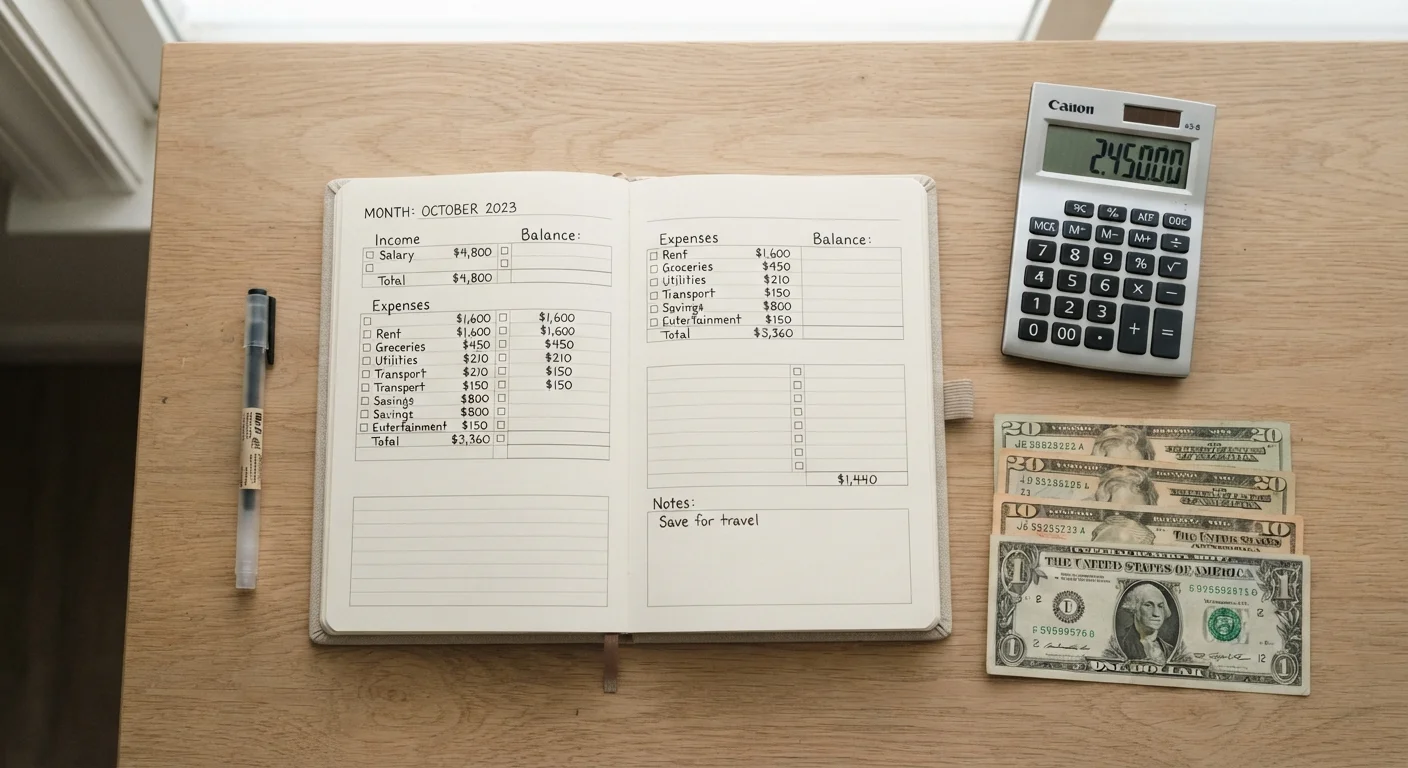
Photo credit: readerspanel.com
In this article
Should you allocate a share of your income or set hard dollar limits? Compare both approaches to see which gives you more control over your spending plan.
How each method works
Percentage-based budgeting divides your take-home income by category using shares rather than fixed numbers. A common framework allocates roughly 50% to needs, 30% to wants, and 20% to savings and debt repayment, though the exact splits vary by household. The 50/30/20 rule vs. the envelope method article covers one popular version of this approach in more detail.
Dollar-amount budgeting assigns a specific number to each category: $1,200 for rent, $400 for groceries, $150 for utilities, and so on. You work from a fixed total and allocate down to the line item. If you stay under a category's cap, you carry the surplus forward or shift it to savings; if you go over, you pull from another category.
Where percentage-based budgeting helps
The main advantage is automatic scaling. When a freelance month brings in $3,800 instead of the usual $5,000, a percentage plan adjusts every category without manual recalculation. Spending simply contracts with income.
Percentages also make it easier to set a savings rate as a non-negotiable share of whatever arrives. If you commit 15% to savings regardless of the month's total, that habit holds even when income dips. This can be harder to enforce with a fixed dollar target, because a lean month may make the target feel out of reach.
Start with your actual take-home pay
Base any budget on net income, meaning what lands in your account after taxes and deductions, not your gross salary. Using gross figures will cause you to overestimate every category from the start. If your income varies, use a conservative recent average rather than your best month.
The trade-off is precision. A percentage tells you roughly how much to spend on food, but not whether $312 or $389 is within bounds on a given month. Tracking becomes looser, which suits some people and frustrates others.
Where dollar-amount budgeting helps
Fixed dollar limits work well when your income is predictable and your major expenses are stable. A salaried worker who brings home the same amount every two weeks can map out the entire month in advance and know exactly when each category is exhausted.
Dollar caps also make overspending visible immediately. When your grocery line reads $387 against a $350 cap, the gap is concrete. You know the number to cut back to, not just a vague sense that the percentage feels high. For households tracking shared costs, this specificity reduces disagreements about what counts as within budget.
The downside appears when income shifts. A job change, a bonus, or a slow business month requires you to rewrite most of the plan. Without rebuilding, the old dollar figures may leave you over-allocated or under-saving. See budgeting on a tight income for strategies when a fixed-dollar plan stops stretching far enough.
| Criterion | Percentage-based | Dollar-amount | |
|---|---|---|---|
| Adapts to income changes | Automatic | Requires manual rebuild | |
| Precision on spending limits | Low: ranges vary by month | High: exact cap per category | |
| Setup complexity | Low: set shares once | Moderate: assign each line item | |
| Best income type | Variable or irregular | Steady, predictable | |
| Savings habit enforcement | Strong: savings scales with income | Depends on discipline | |
| Day-to-day tracking | Looser, requires estimation | Precise, easy to spot overruns |
Combining the two approaches
A hybrid model uses percentages to set category ceilings and dollar amounts to manage what happens inside each category. You might decide that housing stays at or below 30% of take-home pay, then set a specific dollar figure for rent, renters insurance, and utilities within that ceiling. The percentage protects the overall structure; the dollar amounts make day-to-day tracking concrete.
This approach works particularly well for annual planning. An annual home expense checklist can help you convert percentage targets into monthly dollar figures once you know what predictable costs look like across the full year.
Whichever structure you use, the format you record it in matters too. Paper budgeting vs. digital spreadsheets examines how your tracking method can affect how consistently you stick with a plan. Your spending categories themselves also carry information worth reading. What your budget categories are actually telling you explains how patterns across categories can flag problems before they compound.
This article is for general informational purposes only and does not constitute personalized financial advice. Consider speaking with a licensed financial professional about decisions specific to your situation.

Author
Personal Finance Editorial Team
Personal Finance Editorial Team is the collective byline for our editorial team and contributor network. Articles published under this byline or an editorial pen name are researched, written, and reviewed according to our editorial standards for clarity, consistency, and independence before publication.
View all articles →