
The Difference Between Saving and Investing (And Why You Need Both)
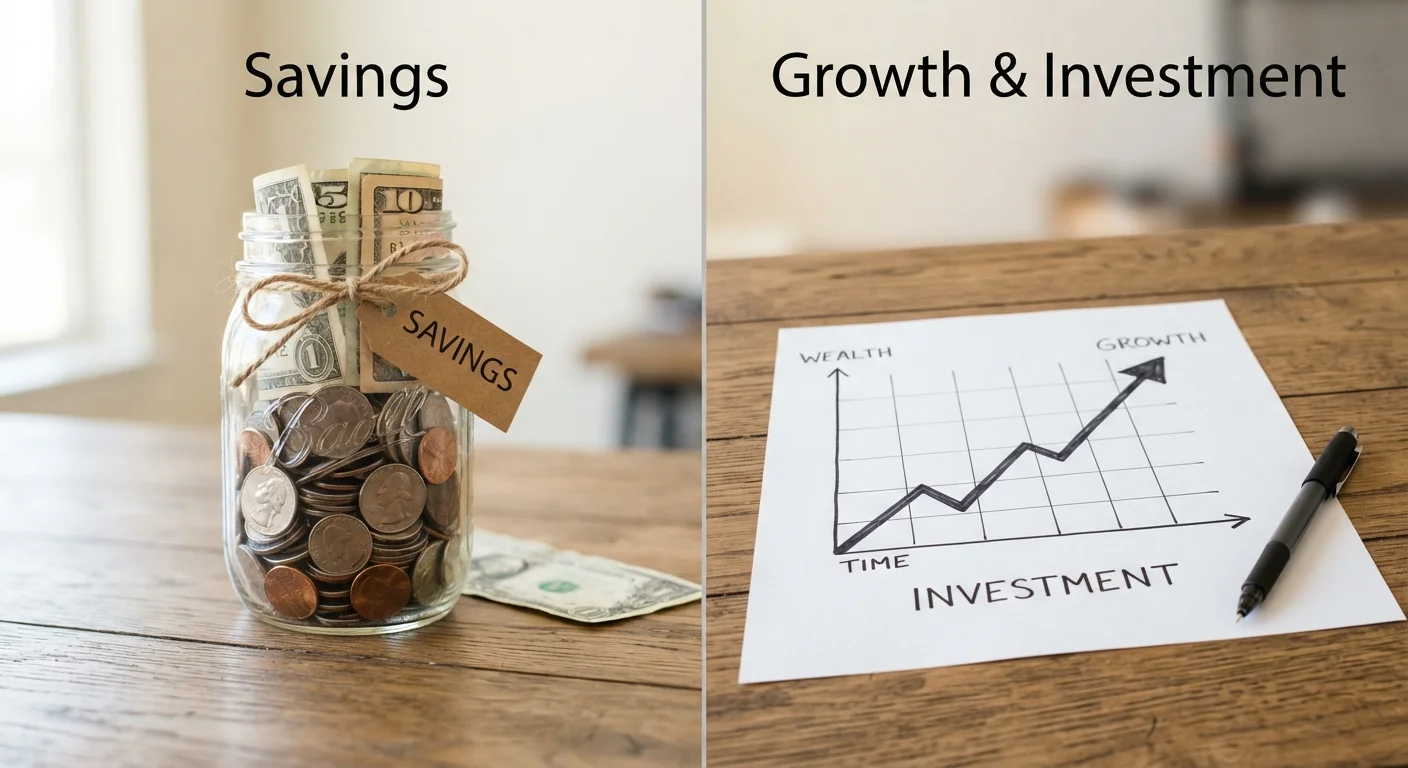
Photo credit: readerspanel.com
In this article
Saving and investing serve different purposes in a financial plan. Learn how each works and why relying on just one can leave gaps in your financial future.
Key Takeaways
- Saving protects money you may need within a few years; investing grows money you can leave untouched longer.
- Cash savings in a bank account lose purchasing power over time if interest rates trail inflation.
- Investing carries risk of loss, including loss of principal, and is not suitable for every financial goal.
- Most financial plans call for both: a savings cushion first, then investment contributions on top of it.
- Neither saving nor investing is a substitute for a budget that controls spending.
What each one actually does
Saving means parking money somewhere it stays safe and accessible. A checking account, a regular savings account, or a money market account are common examples. The goal is preservation and liquidity: you want the money there when you need it, with no chance it has shrunk. Different account types carry different terms and yields, but all of them protect your principal in exchange for modest interest.
Investing means buying an asset, such as a stock, bond, index fund, or real estate, that you expect to grow in value or produce income over time. The trade-off is risk. Asset prices move, sometimes sharply downward, and there is no guarantee you will get back what you put in. The potential for higher long-term growth is the reason people accept that risk.
The clearest way to separate them: saving prioritizes access and safety; investing prioritizes growth over a longer horizon.
Why saving alone is not enough
A savings account that earns 1% to 2% annually can look healthy on paper. But if inflation runs at 3% or higher, the purchasing power of those dollars falls each year. Over a decade, that gap compounds into a meaningful loss of real value.
3%+
Annual U.S. inflation rate (historical average)
The U.S. Bureau of Labor Statistics tracks the Consumer Price Index; long-run averages have generally run near or above 3%, which can outpace typical savings account rates.
56%
Americans with less than 3 months of emergency savings
Bankrate's annual Emergency Savings Report has repeatedly found that a majority of U.S. adults do not have enough liquid savings to cover three months of expenses.
This is the practical problem with holding every dollar in cash indefinitely. For goals that are years or decades away, such as retirement or a child's college costs, savings accounts typically do not keep pace. How inflation erodes cash savings over time is worth reading before deciding how much to hold in cash long-term.
Why investing alone is not enough either
Investment accounts are not liquid emergency funds. If you need cash in a hurry and markets are down, you may be forced to sell at a loss. That is the opposite of what a financial cushion is supposed to do.
Short-term goals, an upcoming car repair, a medical bill, or three months of rent, belong in savings. Putting that money in the market creates real risk of coming up short at exactly the wrong moment. Building financial stability means having the right tool for each purpose, not maximizing returns on every dollar.
How to think about using both
A practical sequence that many financial planners describe starts with an emergency fund in a savings account, typically three to six months of essential expenses. Once that cushion is in place, additional dollars can go toward investment accounts, where they have time to grow without needing to be touched.
Setting savings goals that hold up over time is its own challenge, and behavioral research has a fair amount to say about why people stall out. A working budget is what funds both the savings account and the investment contributions; without it, the distinction between saving and investing matters less because there is no surplus to allocate.
Automate both saving and investing
Automatic transfers take the decision out of your hands each pay period. Setting up a recurring transfer to a savings account and automatic contributions to a retirement or brokerage account means both goals get funded before discretionary spending takes over. Even small, consistent amounts add up significantly over years.
Neither savings nor investments operate in isolation. The two work together: savings absorbs short-term shocks so you never have to liquidate long-term investments at a bad time.
This article is for general informational purposes only and is not personalized financial advice. Consult a licensed financial adviser, accountant, or other qualified professional before making decisions about your own financial situation.
Frequently Asked Questions

Author
Personal Finance Editorial Team
Personal Finance Editorial Team is the collective byline for our editorial team and contributor network. Articles published under this byline or an editorial pen name are researched, written, and reviewed according to our editorial standards for clarity, consistency, and independence before publication.
View all articles →