
Cat Scratching: Redirecting a Natural Instinct Without Frustration
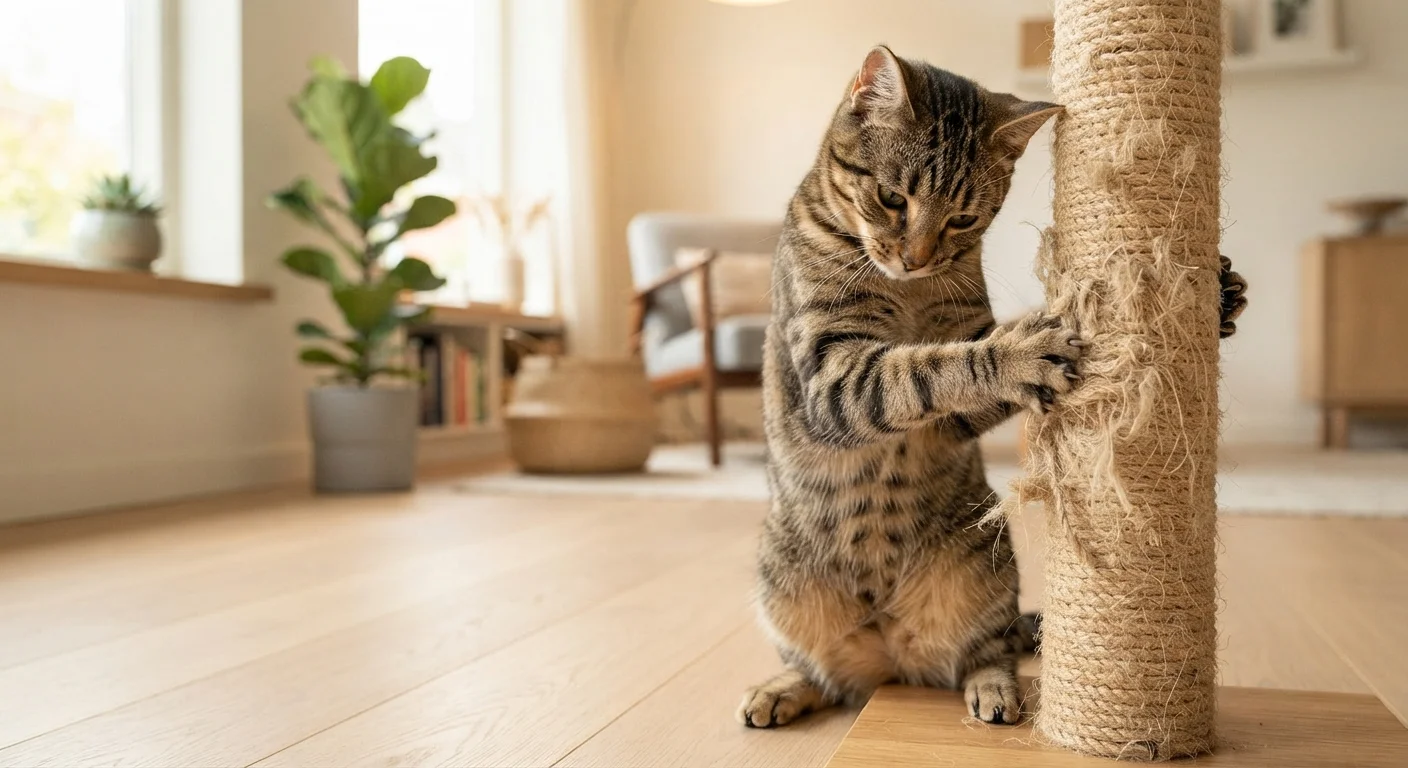
Photo credit: readerspanel.com
In this article
Scratching is normal cat behavior, not defiance. Learn why cats scratch and how to guide them toward appropriate surfaces in your home.
Key Takeaways
- Scratching is a biological need, not a behavioral problem or act of defiance.
- Cats scratch to shed claw sheaths, stretch muscles, and deposit scent marks.
- Post placement near preferred furniture dramatically increases acceptance.
- Consistent positive reinforcement, not punishment, shapes scratching habits.
- Most cats redirect successfully within two to four weeks of a consistent setup.
Why cats scratch in the first place
Cats scratch for at least three distinct reasons, and understanding each one changes how you approach the problem.
First, scratching removes the dead outer layer of the claw, called the sheath, revealing the sharper layer underneath. You may have found these crescent-shaped husks near your cat's favorite spot. Second, the motion of scratching stretches the flexor muscles of the spine, shoulders, and legs. Cats often scratch immediately after waking, in the same way a person might stretch their arms overhead. Third, cats have scent glands in their paw pads. Scratching deposits that scent on a surface and leaves a visual mark, both of which communicate the cat's presence to other animals (and, in the cat's mind, possibly to you).
None of this is misbehavior. Your cat is not targeting your sofa out of spite. The sofa simply happens to have the right texture, height, and location. Once you accept that the drive to scratch will not disappear, the goal shifts from stopping it to steering it.
Destructive scratching sometimes appears alongside other stress-related behaviors. If your cat also avoids the litter box or over-grooms, those signs together may warrant a vet check. See what litter box avoidance usually signals for more on reading behavioral clusters.
What you need before you start
Before working through the steps below, gather a few basics so you can stay consistent.
What you will need
Vertical sisal post
Provides a tall, stable surface cats can drag their full weight against while stretching.
Horizontal cardboard scratcher
Offers an alternative orientation for cats that prefer to scratch flat surfaces.
Double-sided tape or furniture tape
Applied to furniture surfaces to make them unappealing without harming the cat.
Small high-value treats
Used immediately after the cat interacts with the post to reinforce the behavior.
Soft nail caps
Applied over the claws to reduce surface damage while new habits form; requires trimmed nails first.
Nail clippers designed for cats
Regular trims reduce how much damage scratching causes and make nail cap application easier.
How to redirect scratching: step by step
Follow these steps in order. Skipping the placement stage is the most common reason redirection fails.
Identify every surface your cat currently scratches
Walk through your home and note the specific spots your cat targets: which furniture piece, which corner, which orientation (vertical or horizontal). This information tells you what your cat actually prefers, not what you wish it preferred. Write it down or take a photo so you can refer back.
Place an appropriate post directly next to each target surface
Position a post within one to two feet of each surface your cat currently uses. The post must be tall enough that your cat can stretch completely, which for most adult cats means at least 28 to 32 inches. A post that tips or slides will be abandoned. Test it by pressing on it yourself before introducing your cat.
Make the existing surfaces less appealing
Apply double-sided tape or a plastic furniture shield to the sections of furniture your cat targets. Cats dislike the sticky texture and will avoid it. This step does not punish the cat; it simply removes the option so the post becomes the path of least resistance.
Reward your cat for any contact with the post
Every time your cat sniffs, paws at, or scratches the post, immediately offer a small treat and calm verbal praise. Do not pick up your cat and place its paws on the post; that approach tends to produce resistance rather than curiosity. Let the cat discover the post on its own terms, then reward every interaction.
Trim your cat's nails every two to three weeks
Regular trims do not stop scratching, but they reduce the damage done to surfaces and to your skin during any accidental contact. Use nail clippers made for cats and remove only the clear tip of each claw, avoiding the pink quick inside. If your cat resists, trim one or two claws per session rather than forcing a full trim at once.
Gradually move posts toward their permanent locations
Once your cat uses a post consistently, move it a few inches every few days toward the location you prefer, such as beside a cat tree or in a corner. Moving it too quickly can break the new habit. If your cat returns to the furniture, move the post back and slow the transition.
Common sticking points and how to handle them
Even with the right posts in the right places, some cats take longer to switch. Here are the situations owners most often encounter.
The cat ignores the post entirely. Check the post's stability first. A post that wobbles when a cat leans into it will be rejected immediately. If it is stable, try a different texture. Some cats strongly prefer horizontal cardboard surfaces over vertical sisal. Offer both and let the cat decide.
The cat uses the post but still scratches the sofa. This usually means the post is not close enough to the original target. Move it within a foot of the furniture edge the cat prefers. Once the habit shifts reliably, you can inch the post toward its permanent location over several weeks.
Kittens and newly adopted cats. Young cats or cats new to your home have not yet established strong surface preferences, which makes this the easiest window to build good habits. Introduce posts immediately and reward any contact with them.
Enrichment also matters here. A bored or understimulated cat scratches more, often in places that get a strong reaction from owners. Building a fuller daily environment can reduce that pressure. The ideas in preventing boredom-related behavior problems in indoor cats complement a scratching plan directly.

Author
Pets & Animals Editorial Team
Pets & Animals Editorial Team is the collective byline for our editorial team and contributor network. Articles published under this byline or an editorial pen name are researched, written, and reviewed according to our editorial standards for clarity, consistency, and independence before publication.
View all articles →