
Litter Box Problems in Cats: What the Behavior Usually Signals
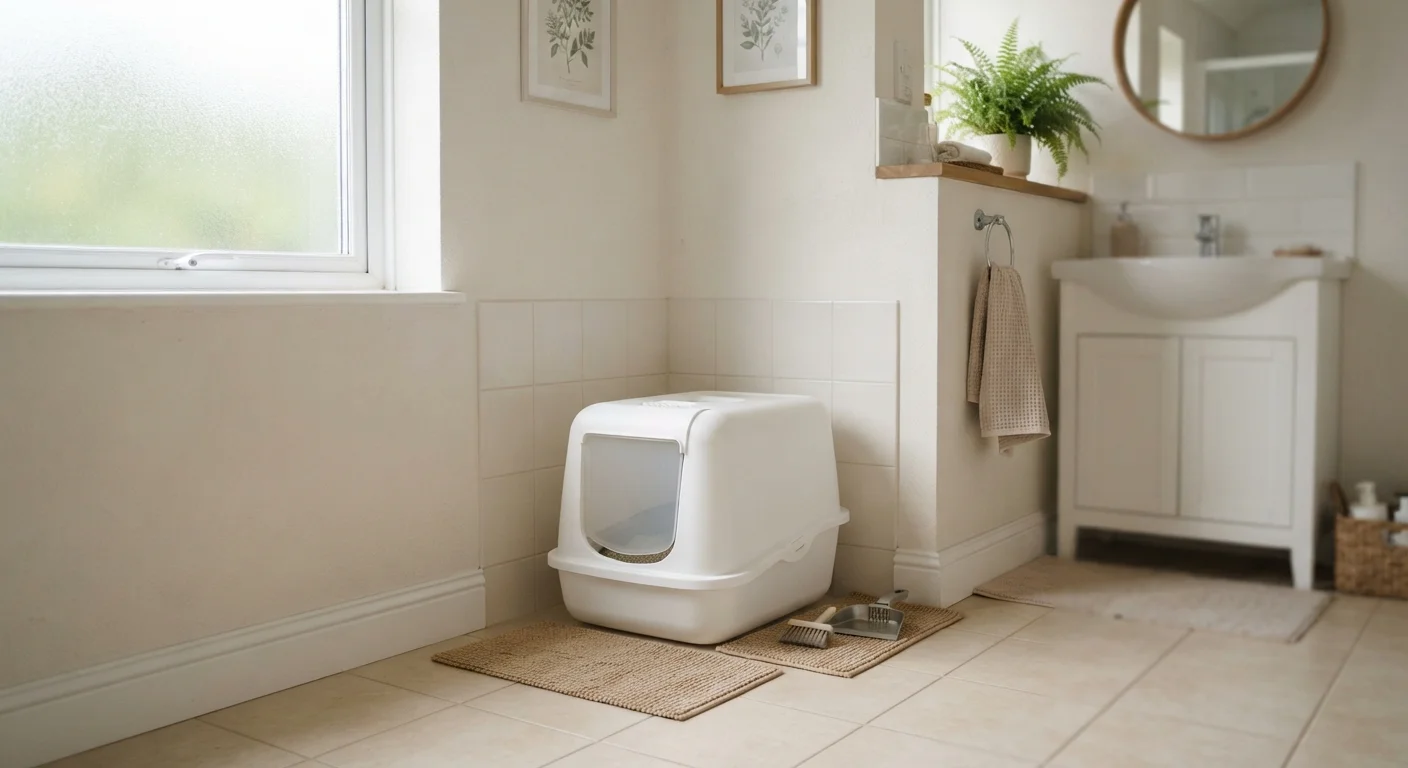
Photo credit: readerspanel.com
In this article
When a cat avoids the litter box, there's almost always a reason. Learn the common behavioral and environmental factors and when a vet visit is warranted.
Key Takeaways
- Litter box avoidance is almost always a signal, not a personality flaw or defiance.
- Medical causes like urinary tract infections must be ruled out before addressing behavior.
- Box placement, cleanliness, and litter type are the most common fixable triggers.
- Multi-cat households need at least one box per cat plus one extra.
- Punishing a cat for elimination outside the box makes the problem worse, not better.
Why litter box problems deserve a closer look
When a cat stops using the litter box consistently, many owners assume the cat is being difficult. That framing leads to frustration and delayed solutions. Cats are motivated by comfort, safety, and instinct, and when something about the box fails to meet those needs, they find an alternative. The behavior is a signal, and reading it correctly is the fastest path to fixing it.
Before assuming the cause is behavioral, a veterinary visit is the right first step. Urinary tract infections, bladder stones, kidney disease, and arthritis can all change where and how a cat eliminates. A cat straining to urinate outside the box, producing little to no urine, or crying while eliminating needs veterinary attention promptly. Once a medical cause is ruled out, the focus can shift to environment and routine. See our guide to reading your cat's body language at the vet for help recognizing stress signals before and during the appointment.
This article is for general informational purposes only and is not a substitute for veterinary advice. Always consult a licensed veterinarian for concerns about your cat's health.
Common mistakes that drive cats away from the box
Most litter box problems trace back to a handful of manageable errors. Understanding why each one happens makes it easier to correct.
Cleaning the box too infrequently.
Why it happens: Owners often underestimate how sensitive a cat's sense of smell is. A box that smells acceptable to a person may be intolerable to a cat.
Using strongly scented litter or cleaning products to mask odors.
Why it happens: Scented products seem like a logical fix for odor complaints, but the heavy fragrance is often what repels the cat in the first place.
Providing too few boxes for the number of cats in the household.
Why it happens: The general guideline is one box per cat plus one extra, but many owners start with one box and never add more as their household grows.
Switching litter types abruptly.
Why it happens: Owners change litters for cost or convenience without considering that cats form strong texture preferences early and resist sudden changes.
Punishing the cat after finding an accident.
Why it happens: Finding elimination in an unexpected place is frustrating, and punishment feels like a correction. Cats do not connect after-the-fact punishment to the earlier act.
Cats that feel anxious or understimulated are also more prone to elimination problems. Indoor enrichment strategies can reduce the background stress that makes cats fastidious about their box use. Predictable daily structure helps too; a consistent routine gives cats a sense of control that reduces anxiety-driven avoidance.
Straining or no urine output is urgent
A cat that visits the box repeatedly but produces little or no urine may have a urinary blockage. This is a medical emergency. Contact a veterinarian immediately, as a blockage can become life-threatening within hours.
When the problem is location, not the box itself
Box placement gets less attention than cleanliness or litter type, but it is often the deciding factor. Cats prefer to eliminate somewhere they feel safe from surprise. A box next to a loud appliance, in a high-traffic hallway, or tucked behind a door that swings and startles them will be avoided even if it is otherwise perfect.
In multi-cat homes, location problems compound quickly. A dominant cat can control access to a box positioned at the end of a hallway with no escape route. The other cat avoids it not because of the box itself but because the approach feels unsafe. Placing boxes in multiple areas of the home gives every cat a route that does not require passing through another cat's claimed space.
Covered boxes are another location-adjacent factor. They contain odors well from a human perspective, but from the cat's perspective, they trap smells inside and restrict sightlines, which makes some cats feel cornered. Switching to an open box in the same spot sometimes resolves avoidance without any other change.
Litter box habits intersect with other territorial behaviors. Understanding how cats manage their environment through instinct, including scratching and scent marking, gives useful context for why placement and safety matter so much to box acceptance.

Author
Pets & Animals Editorial Team
Pets & Animals Editorial Team is the collective byline for our editorial team and contributor network. Articles published under this byline or an editorial pen name are researched, written, and reviewed according to our editorial standards for clarity, consistency, and independence before publication.
View all articles →