
Crate Training From Day One: A Calm, Step-by-Step Approach for New Dog Owners
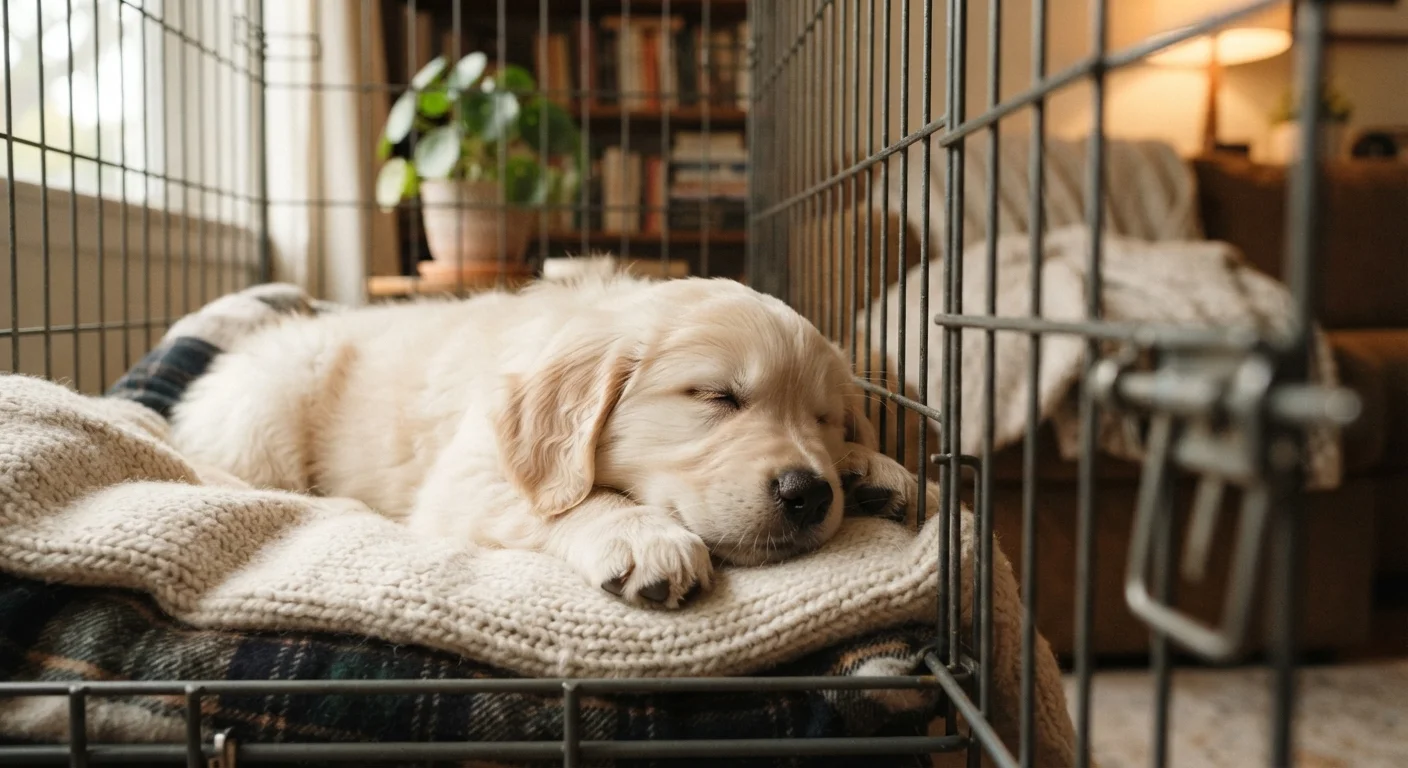
Photo credit: readerspanel.com
In this article
Used thoughtfully, a crate becomes a dog's safe retreat rather than a punishment. Follow these gradual steps to make the process stress-free for both of you.
Key Takeaways
- A crate should always be associated with calm, positive experiences, never with punishment.
- The crate must be large enough for the dog to stand, turn around, and lie down comfortably.
- Rushing the process is the most common reason crate training fails; move at the dog's pace.
- Prolonged confinement beyond a dog's age-appropriate bladder capacity causes stress and setbacks.
- Some dogs, particularly rescues, may need a slower and more patient introduction than others.
Why a crate works (when used correctly)
A crate is not a cage in the punitive sense. When introduced patiently, it becomes a small, predictable space where a dog can decompress, sleep undisturbed, and feel safe when the household is busy or when you are away. That sense of having a reliable retreat matters for a dog's overall well-being. See why a designated pet space supports animal well-being for more on that principle.
The approach works because most dogs, given time, gravitate toward enclosed spaces on their own. Watch any dog choose between an open floor and a spot under a coffee table, and the preference is often clear. A crate formalizes that tendency and gives you a tool for housebreaking, travel safety, and post-surgery recovery.
None of this happens automatically. A dog that is shoved into a crate and left there will associate it with fear, not rest. The gradual process described below is what makes the difference.
Den instinct
Dogs are naturally drawn to small, enclosed spaces where they feel secure. A well-introduced crate taps into this tendency, giving the dog a predictable retreat.
Confinement anxiety
Distress that arises specifically from being enclosed in a small space. It is different from general separation anxiety, though the two can overlap.
Counter-conditioning
A training method that changes an animal's emotional response to something by repeatedly pairing it with something the animal likes, such as food or calm praise.
Bladder capacity
The maximum time a dog can comfortably hold its urine. Puppies have far less capacity than adult dogs, which limits how long they can be crated without a bathroom break.
Choosing the right crate size
The crate should be large enough for the dog to stand at full height, turn in a complete circle, and lie stretched out on its side. Anything smaller is uncomfortable and will make the dog resist going in. Anything much larger removes the sense of enclosure that makes the space feel secure, and gives a puppy enough room to eliminate in one corner and sleep in another, which works against housetraining.
For puppies expected to grow significantly, many owners use a crate with a divider panel. The panel blocks off the back portion now and gets moved as the puppy grows, avoiding the cost of buying multiple crates.
Wire crates allow airflow and visibility, which some dogs prefer. Plastic travel crates feel more enclosed, which suits dogs that seem to want a den-like atmosphere. Neither type is universally better; observe your dog's response and adjust.
Setting up the crate before your dog arrives
Place the crate in a room where the family spends time, such as a living room or bedroom, rather than an isolated laundry room. Social isolation on top of confinement adds unnecessary stress, particularly in the early weeks.
Line the floor with a washable mat or blanket. Avoid anything fluffy that a young puppy might chew and swallow. If you have a piece of cloth with the scent of the dog's previous environment or littermates, placing it inside can ease the transition. A crate left open and accessible before any training starts lets a curious dog wander in and out on its own, which builds a neutral association before you even begin formal sessions.
If you are adopting a rescue dog, the first-month adjustment period brings its own considerations, and giving the dog time to decompress before heavy training often produces better results.
The step-by-step introduction process
Work through the following stages over several days. If your dog shows stress at any stage, pause and stay at the previous step longer before moving on.
- Open door, no pressure. Drop treats near the crate entrance and let the dog approach freely. Do not lure the dog all the way inside yet.
- Treat at the threshold. Toss a treat just inside the entrance. If the dog steps in to retrieve it, that is progress. Do not close the door.
- Feeding inside. Move the food bowl to just inside the crate at mealtimes. Over several meals, slide it progressively toward the back until the dog walks fully in to eat.
- Brief door closures. Once the dog enters willingly, close the door for ten to thirty seconds while the dog is eating or chewing a treat. Open it before any sign of anxiety. Gradually extend the duration over multiple sessions.
- Short absences. Leave the room for a minute while the dog is settled in the closed crate. Return calmly, do not make departures or arrivals dramatic events.
- Overnight or longer periods. Only attempt these after the dog settles in the crate without distress for at least thirty minutes during the day. Place the crate near your sleeping area initially so the dog can hear and smell you.
Building impulse control habits alongside crate training helps dogs learn to settle on cue, which makes crate time calmer for everyone.
Common mistakes and how to avoid them
Rushing through the stages is the most frequent problem. Owners who skip directly to closing the door for hours before a dog is comfortable almost always end up with a dog that fights the crate. Spending two extra days on the early steps saves weeks of backtracking.
Using the crate as punishment teaches the dog that going in means something bad happened. Never send a dog to its crate after scolding it.
Letting a puppy out the moment it cries teaches it that crying opens the door. Wait for a pause in the noise, however brief, before opening. If the crying is prolonged and sounds panicked rather than attention-seeking, the session was too long and you should shorten future sessions rather than ignore genuine distress.
High-value treats make a real difference
During crate introduction sessions, use treats the dog finds genuinely exciting, such as small pieces of cooked chicken or commercial soft treats, rather than its regular kibble. The higher the value of the reward, the faster a positive association forms. Reserve these treats specifically for crate training so they stay special.
Exceeding the dog's age-appropriate bladder capacity is another common error. A general guideline used in veterinary behavioral literature is that puppies can hold their bladders for roughly one hour per month of age, up to a maximum of about four to five hours. These are approximations; individual dogs vary, and a qualified veterinarian can give guidance specific to your puppy.
When crate training takes longer than expected
Some dogs, particularly those with unknown confinement histories or those showing signs of anxiety, need a much slower progression. If a dog consistently freezes, trembles, or refuses food near the crate after two weeks of patient work, the anxiety may be deeper than routine training can address. A consultation with a veterinary behaviorist or a certified applied animal behaviorist can identify whether a clinical anxiety issue is present.
True separation anxiety, which involves panic specifically tied to being left alone, is a separate condition. It often coexists with crate resistance but requires its own approach. The full guide on recognizing and addressing separation anxiety explains how to tell the difference and what a gradual independence-building plan looks like.
Patience, consistent routine, and stopping a session before the dog becomes distressed will move most dogs forward. Progress measured in days and weeks, not hours, is realistic and normal.
This article is for general informational purposes only and is not a substitute for professional veterinary or behavioral advice. Consult a licensed veterinarian or certified animal behaviorist if your dog shows signs of significant distress during training.
Frequently Asked Questions

Author
Pets & Animals Editorial Team
Pets & Animals Editorial Team is the collective byline for our editorial team and contributor network. Articles published under this byline or an editorial pen name are researched, written, and reviewed according to our editorial standards for clarity, consistency, and independence before publication.
View all articles →