
Certifications and Safety Marks: A Consumer's Reference Guide
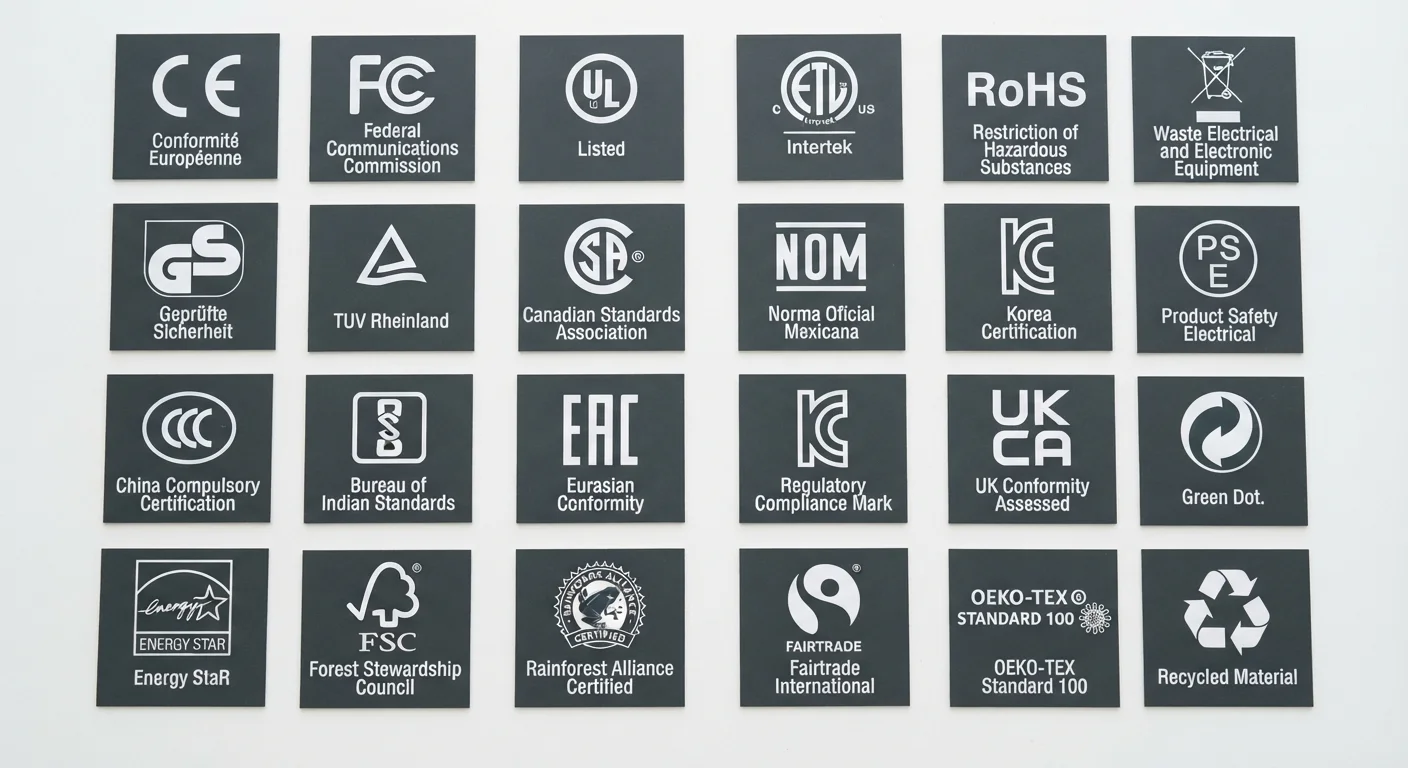
Photo credit: readerspanel.com
In this article
UL, Energy Star, USDA Organic, and more: this reference explains what common certification marks mean and which organizations stand behind them.
Why certification marks matter
A certification mark is only as reliable as the organization issuing it and the standards behind it. Some marks are administered by independent, accredited testing bodies that physically evaluate products. Others are self-reported by manufacturers with no third-party verification. Knowing the difference changes how much weight you should give any given label.
This guide covers the most common marks American consumers encounter, who administers each one, and what a product must demonstrate to earn it. For a broader look at which label claims are legally regulated versus purely promotional, see what product labels actually tell you.
Third-party certification
Evaluation of a product by an independent organization that is separate from both the manufacturer and the buyer. Third-party certification generally carries more weight than a manufacturer's self-declaration because the certifier has no financial stake in the product passing.
Accreditation
Formal recognition that a testing laboratory or certification body meets established competence standards, typically granted by a government agency or an internationally recognized accreditation body such as ANAB or ILAC. Accreditation is not the same as certification.
Self-certification
A declaration by a manufacturer that its product meets a particular standard, without independent verification. Self-certification is common for some product categories but provides weaker assurance than third-party testing.
Certification mark
A logo or label applied to a product to indicate it meets specific standards set by the certifying organization. The mark itself does not explain the underlying criteria; consumers need to look up what the issuing body actually requires.
Mandatory vs. voluntary standard
A mandatory standard is required by law or regulation for products sold in a given market; a voluntary standard is optional and typically issued by standards organizations or industry groups. Products can choose to certify to voluntary standards to signal quality or safety.
Periodic inspection
An audit or factory visit conducted by a certification body after initial approval to verify that a product continues to meet the required standard. The frequency and rigor of inspections vary significantly between certification programs.
Safety certifications for electrical and consumer products
UL (Underwriters Laboratories) is a nonprofit safety organization that tests products against published safety standards. A UL Mark on a product means a sample of that product was tested in a UL facility or by a UL-recognized laboratory. UL also conducts periodic factory inspections to verify ongoing compliance. The mark does not mean every individual unit was tested, but it does mean the product design met the standard at the time of certification.
ASTM International publishes voluntary technical standards, many of which are adopted by regulators. When a product references an ASTM standard number (such as ASTM F963 for toy safety), it typically means the manufacturer self-certifies conformance. Third-party testing to an ASTM standard offers stronger assurance than a self-declaration alone.
The CPSC (Consumer Product Safety Commission) is the federal agency that enforces mandatory safety rules for many consumer goods. A CPSC mark or reference does not mean the Commission approved the product; it means the product is required to meet certain federal rules. Consumers can check the CPSC recall database to verify whether a product has been flagged for safety issues.
Energy and environmental certifications
Energy Star is a program administered by the U.S. Environmental Protection Agency (EPA). Products that carry the Energy Star label have been tested by EPA-recognized laboratories and found to meet specific energy-efficiency thresholds. The EPA publishes product lists on its website, so consumers can confirm whether a particular model is currently certified rather than relying solely on what is printed on the box.
WaterSense is also an EPA program, applied to plumbing fixtures and irrigation products. Certified products must use at least 20 percent less water than standard alternatives while meeting performance specifications. Like Energy Star, the program requires third-party testing before a product can carry the label.
The EPEAT registry, managed by the Global Electronics Council, evaluates electronics on environmental criteria including materials, energy use, and end-of-life management. Products are registered at bronze, silver, or gold tiers depending on how many criteria they meet.
Food and agricultural certifications
The USDA Organic seal is regulated by the National Organic Program (NOP), part of the U.S. Department of Agriculture. Products displaying this seal must contain at least 95 percent organically produced ingredients by weight. Certifying agents, which are third parties accredited by the USDA, inspect farms and processors annually. The term 'organic' without the seal may appear on products with lower organic content thresholds, so the distinction matters.
The Non-GMO Project Verified butterfly label is issued by a private nonprofit. It indicates the product has been evaluated against the organization's standard for avoiding genetically modified organisms. This is a voluntary, third-party program; it is not a federal government certification. The USDA does not currently operate a national mandatory GMO-free standard, though it administers a separate voluntary bioengineered food disclosure program.
Fair Trade Certified is administered by Fair Trade USA, a nonprofit. It covers labor practices, pricing, and community investment standards for farmers and workers. Fair Trade International operates a parallel system used by some other certifiers globally. The specific rules and auditing frequency differ between these organizations, so they are not interchangeable despite similar names. For related reading on how nutrition claims interact with label language, see nutrition claims on packaging.
How to verify a certification before you buy
Most major certification bodies publish searchable product databases online. The EPA hosts Energy Star and WaterSense product lists, UL maintains a Product iQ database, the USDA NOP publishes a list of accredited certifiers, and Fair Trade USA lists certified products and producers. Searching by product name or model number takes about two minutes and removes any guesswork about whether a claim is current.
Certification can lapse. A product may have been certified in a prior year but failed a renewal audit, or a manufacturer may not have renewed. Checking the certifying body's database rather than trusting packaging alone addresses this risk.
Reading the actual standard behind a certification tells you exactly what was and was not tested. Most certification bodies publish their standards publicly. When comparing products on technical specifications alongside certification status, comparing products using specification sheets explains how to read the numbers that accompany those marks. If a label claim feels unclear or potentially misleading, consumer protection rights most shoppers don't know covers the federal and state rules that govern advertising accuracy.

Author
Smart Shopping Editorial Team
Smart Shopping Editorial Team is the collective byline for our editorial team and contributor network. Articles published under this byline or an editorial pen name are researched, written, and reviewed according to our editorial standards for clarity, consistency, and independence before publication.
View all articles →