
Specification Sheets: How to Compare Products on Paper
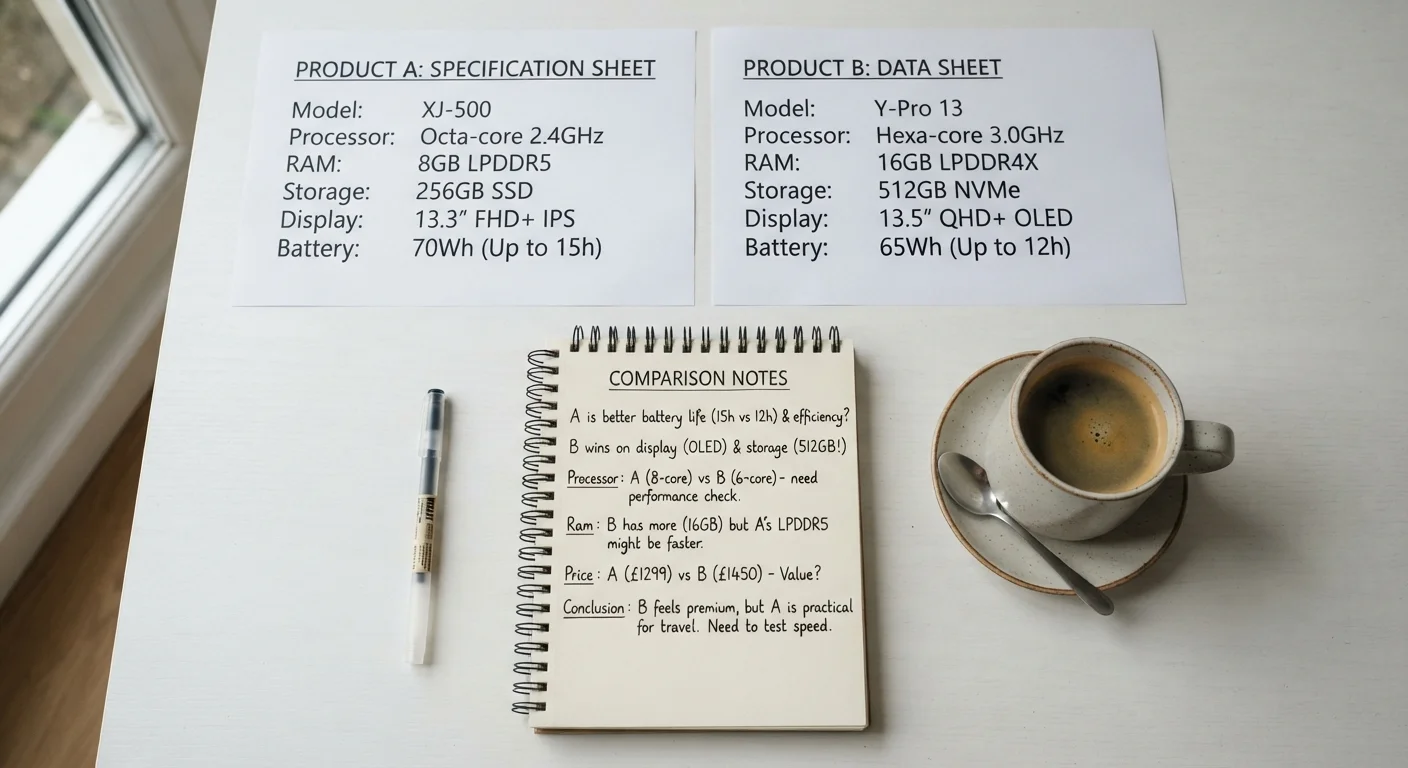
Photo credit: readerspanel.com
In this article
Spec sheets are packed with numbers, but which ones matter? Learn to read technical specifications to make cleaner, more informed comparisons.
Key Takeaways
- Spec sheets use standardized measurements, but manufacturers sometimes test under conditions that favor their products.
- Matching units before comparing numbers prevents the most common reading mistakes.
- Not every listed specification matters for your use case; identifying the relevant ones saves time.
- Omitted specs can be as informative as listed ones when comparing products side by side.
- Third-party certifications add an external check that manufacturer-reported figures alone cannot.
Why spec sheets are worth your time
Product pages and packaging are written to sell. Specification sheets, by contrast, are written to inform engineers, procurement teams, and technically minded buyers. That makes them one of the more reliable documents a consumer can read, though they still require careful interpretation.
Manufacturers control what they publish, so a spec sheet tells you what a company chose to measure and disclose. When two products list different attributes entirely, that gap itself is informative. The anatomy of a misleading product description often shows up not in false numbers but in selectively omitted ones.
The steps below give you a repeatable method for pulling usable comparisons out of any spec sheet, regardless of product category.
What you will need
How to read and compare spec sheets
Collect spec sheets from the same source type
Pull the official spec sheet from each manufacturer's website rather than relying on retailer listings. Retailer pages sometimes carry outdated or truncated figures. If a manufacturer publishes multiple documents (a marketing datasheet and a full technical datasheet), use the technical one.
List only the specifications relevant to your use
Write down the three to five measurements that directly affect how the product will perform for you. A laptop buyer comparing battery life, weight, and display resolution gets more from a focused list than from copying all forty lines of a full spec sheet. Every category has a small set of load-bearing specs; identify yours before you start transcribing numbers.
Normalize units before recording any figures
Manufacturers sometimes publish the same type of measurement in different units. One audio product may list frequency response in Hz/kHz; another uses only Hz throughout. One appliance lists capacity in cubic feet; another uses liters. Convert everything to a single unit before writing figures into your comparison. A number-to-number comparison across different units produces a meaningless result.
Check the test conditions behind each figure
Many specifications are valid only under specific test conditions. Battery life is commonly measured at low screen brightness with Wi-Fi off. Noise ratings for appliances are often measured in an anechoic chamber, not a real kitchen. Look for footnotes, asterisks, or a separate test methodology section. If two products were tested under different conditions, their figures are not directly comparable even when the units match.
Note what each sheet omits
Record which of your target specifications are missing from each sheet. A product that lists output power but omits efficiency rating, while a competing product lists both, tells you something about what the first manufacturer chose not to disclose. Absence is data. Do not fill gaps with assumptions or averages from similar products.
Cross-check with third-party test data where available
Consumer-facing testing organizations and standards bodies sometimes publish independent measurements for common product categories. Where that data exists for your product type, compare it against the manufacturer's published figures. A large gap between the two warrants scrutiny. Third-party certifications, when present on a spec sheet, indicate that an external body has verified at least some of the claims.
Once you have worked through the steps above, you will have a short list of figures that actually separate the products you are considering. That list is far more useful than a raw printout of every number each manufacturer published.
For a broader look at how labeling and certification data fit alongside spec figures, see the certifications and safety marks reference guide and the article on what product labels actually tell you.
Build a simple comparison grid
A three-column table with rows for each relevant spec is all you need. Put product names across the top and your normalized figures in each cell. Leave a cell blank when a spec is not listed rather than estimating it. A grid with deliberate blanks shows you the information gaps at a glance, which is more useful than a complete-looking table built on guesses.
When the numbers still leave you uncertain
Spec sheets answer quantitative questions well. They answer qualitative questions poorly. A figure for tensile strength tells you nothing about how a product feels in daily use, and a listed battery capacity does not capture how software affects real-world runtime.
If two products are close on every measured dimension that matters to you, specifications alone will not resolve the tie. That is a reasonable stopping point. The comparison shopping without the research spiral guide covers how to set a decision boundary and move forward without indefinite rechecking.
For products where brand origin affects quality, the article on generic vs. name brand explains when manufacturing source matters and when shared specs are enough to call two products equivalent.

Author
Smart Shopping Editorial Team
Smart Shopping Editorial Team is the collective byline for our editorial team and contributor network. Articles published under this byline or an editorial pen name are researched, written, and reviewed according to our editorial standards for clarity, consistency, and independence before publication.
View all articles →